
How to Clean Carpet Stains: A Step-by-Step Guide for Every Stain Type
The Short Answer
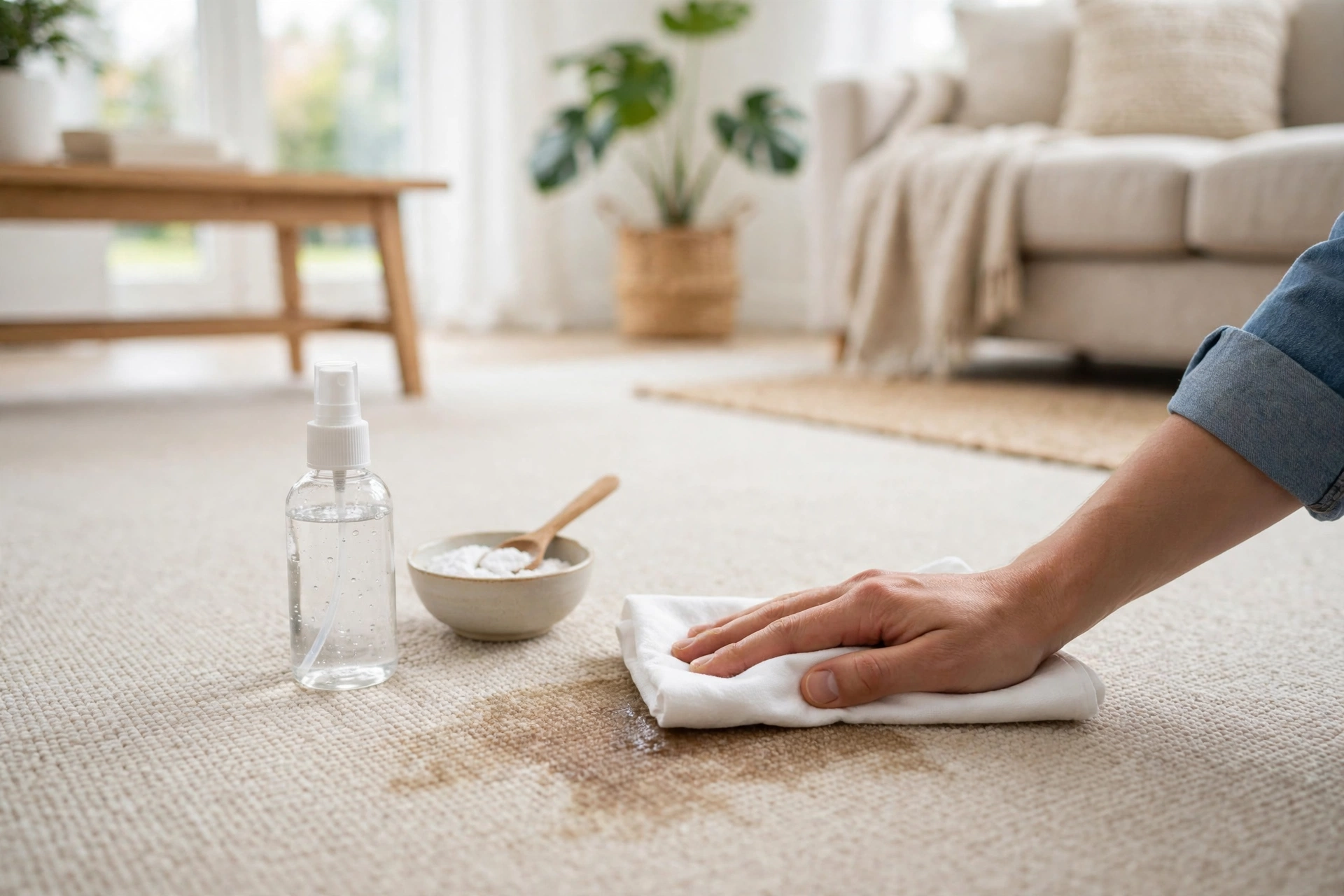
To clean a carpet stain, act fast: blot (never rub) to lift as much as possible, then work from the outside of the stain inward with cold water and a few drops of clear dish soap. Blot again with clean water to rinse, then let the area air-dry completely. Most fresh stains come out with this one method — the stain type only changes the details, which are covered below.
What Is the Fastest Way to Clean a Carpet Stain?
The fastest way to clean a carpet stain is to blot it within the first few minutes, before the liquid sinks into the fibers and padding. Press a clean white cloth firmly onto the stain, lift, refold to a clean section, and press again until no more color transfers. Speed matters more than the cleaning product you choose.
Follow these steps in order:
- Blot immediately. Press a clean white cloth or paper towel firmly onto the stain. Lift, refold to a clean section, and press again. Repeat until no more color transfers.
- Never rub. Rubbing spreads the stain outward and pushes it deeper into the fibers. It can also damage the carpet texture permanently.
- Remove solids first. For anything solid or semi-solid (food, wax, mud), gently scrape up what you can with a dull knife or spoon before applying any liquid.
- Apply your cleaning solution sparingly. Dampen, do not soak. Over-wetting can push the stain into the padding and cause mold or a returning stain.
- Work outside-in. Start at the outer edge of the stain and move toward the center so the stain does not spread.
- Rinse by blotting. After cleaning, blot with a cloth dampened in plain cold water to remove soap residue. Leftover soap attracts dirt and causes the stain to reappear.
- Dry completely. Place a dry towel over the area with something heavy on top for a few hours, or point a fan at it. Do not walk on the spot until it is fully dry.
What Should You Use to Clean Carpet Stains?
For most everyday stains, one simple solution handles the job. Keep these supplies on hand before you start, so you never have to leave a fresh stain waiting while you search for them.
- Clear dish soap + cold water. Mix 1 tablespoon of clear (not colored) dish soap into 2 cups of cold water. This is the safest all-purpose carpet stain remover.
- White cloths or paper towels. Colored towels can transfer dye to wet carpet.
- Baking soda (for odors). After cleaning, sprinkle baking soda on the damp area, let it dry, then vacuum. It absorbs lingering smells.
- White vinegar solution (optional, for some stains). Mix equal parts white vinegar and cold water. Useful for coffee and some food stains — but skip it on stone-adjacent areas and always test first.
- Hydrogen peroxide 3% (for tough light-colored carpets only). Use only on light carpets, and always test in a hidden spot first. Never use it on dark or wool carpets.
What to Avoid
- Hot water on protein stains (milk, blood, egg, pet urine). Heat sets protein stains permanently. Always use cold water first.
- Bleach on colored or wool carpets. Bleach removes color along with the stain.
- Colored cleaning cloths or printed paper towels. The dye can transfer to your carpet.
- Scrubbing brushes on loop or Berber carpet. Aggressive scrubbing can snag and fuzz the fibers.
- Over-wetting. Soaking the carpet pushes stains into the padding, where they wick back up as the carpet dries.
How Do You Clean Different Types of Carpet Stains?
The basic method above stays the same. What changes is the first move for each stain type. Use this table to find yours, then read the matching section below.
| Stain type | First move | Method | Avoid |
|---|---|---|---|
| Coffee | Blot immediately, then cold water | Dish soap solution, blot and rinse | Hot water (can set it) |
| Red wine | Blot, then cover with salt or baking soda to absorb | Dish soap solution after vacuuming up the absorbent | Red-colored cloths |
| Pet stains (general) | Blot, then cold water | Dish soap solution; enzyme cleaner for old stains | Heat, which sets protein stains |
| Candle wax | Let it harden, then scrape | Iron on low over a paper towel to melt and lift remaining wax | Scraping while soft (spreads it) |
| Blood | Blot with cold water only | Cold water + dish soap, repeated blotting | Hot water (sets blood permanently) |
| Old, dried stains | Vacuum loose debris first | Dish soap solution, longer dwell time (10-15 minutes), repeat | Expecting one pass to work — old stains need patience |
| Wool rug stains | Blot gently with cold water only | Mildest soap solution, blot gently, dry flat | Bleach, vinegar, heat, vigorous scrubbing |
How Do You Clean Pet Stains from Carpet?
Pet stains are the most-searched carpet problem after the general stain question itself, because they combine a visible stain with a smell that returns if the padding is affected. For a fresh pet stain, blot up as much liquid as possible with paper towels, then clean with the cold dish soap solution (1 tablespoon clear dish soap in 2 cups cold water). Blot, rinse-blot with plain water, and let the area dry fully before judging the result.
- Dog pee and dog urine stains: Use cold water only, never hot. Heat bonds the protein in urine to carpet fibers. After cleaning, sprinkle baking soda over the damp area, let it dry completely (6-12 hours), then vacuum to remove odor.
- Dog poop stains: Remove solids first with a dull knife or paper towel, then clean the remaining mark with the dish soap solution. Disinfect the area afterward with a carpet-safe cleaner if the label allows it.
- Blood stains: Treat blood exactly like a protein stain — cold water only, from the first blot to the last rinse. Even warm water can set blood.
- Old pet stains: Old stains need an enzyme cleaner, because enzymes break down the dried proteins that soap alone cannot lift. Apply the enzyme cleaner, let it dwell for the full time on the label (usually 10-15 minutes), blot, and repeat. Two or three rounds are normal for old stains.
If the smell survives after the stain is gone, the padding underneath is likely affected. Surface cleaning cannot reach padding; that is the point to call a professional with extraction equipment.
How Do You Clean Coffee Stains from Carpet?
Coffee is one of the most common carpet stains, and fresh coffee is one of the easiest to remove. Blot immediately with a clean white cloth, then clean with the cold dish soap solution (1 tablespoon clear dish soap in 2 cups cold water), working outside-in. Blot with plain water to rinse, then dry completely. Do not use hot water first — heat can set a coffee stain, especially on light carpets.
For the full coffee guide — including old coffee stains, dried coffee stains, coffee without vinegar, coffee in car carpet, and coffee on white carpet — see the dedicated coffee stain guide in this series (planned; no link yet as that guide is not published).
How Do You Clean Carpet Stains with Baking Soda?
Baking soda does not remove a stain by itself — it absorbs moisture and odor, which makes it the best finishing step after cleaning. After you have blotted and cleaned the stain with the dish soap solution, sprinkle a generous layer of baking soda over the still-damp area. Leave it until the carpet is fully dry (at least 6 hours, overnight is better), then vacuum slowly in two directions. The baking soda pulls remaining smell out of the fibers as it dries, then vacuums away cleanly.
Baking soda also works as a first absorber for fresh liquid stains: for red wine or a wet spill, covering the area with baking soda or salt draws liquid up out of the fibers before you start cleaning. Vacuum up the absorbent first, then clean what remains with the dish soap solution.
How Do You Clean Carpet Stains with Vinegar?
A vinegar solution helps with some stains, especially coffee and light food stains, because its acidity breaks down residue. Mix equal parts white vinegar and cold water, apply sparingly with a cloth (never pour it directly on the carpet), blot, then rinse-blot with plain water. Always test the solution on a hidden spot first and wait 10 minutes to check for color change.
Vinegar is not a universal stain remover. Never use it on wool or silk rugs, and skip it on carpets next to natural stone floors, because vinegar can damage stone. If the vinegar smell bothers you, it fades completely as the carpet dries — usually within a few hours with good airflow.
How Do You Clean Carpet Stains with Hydrogen Peroxide?
Hydrogen peroxide (3%, the standard drugstore strength) is a mild bleaching agent, so it is useful only on light-colored carpets for stubborn stains that survived the dish soap method. Apply a small amount to a white cloth, dab it on the stain, let it sit for 10-15 minutes, then blot and rinse-blot with plain water. Test it first on a hidden corner and wait 24 hours — if the test spot lightens, do not use it on that carpet.
Never use hydrogen peroxide on dark carpets, wool, or silk. It will lighten the fibers. For those carpets, repeat the dish soap method or use a carpet cleaner instead.
How Do You Clean Carpet Stains with OxiClean?
OxiClean (sodium percarbonate) dissolves in water to release oxygen, which lifts stains without chlorine bleach. Dissolve 1 scoop of OxiClean in 2 cups of warm (not hot) water, apply the solution sparingly to the stain with a cloth, let it dwell for 10-15 minutes, then blot and rinse-blot with plain cold water. It works well on old food and drink stains that resisted the dish soap method.
Test OxiClean on a hidden spot first, and never use it on wool or silk. Do not mix it with vinegar or other cleaners — combining cleaning products can create harmful fumes or cancel out the cleaning action.
How Do You Clean Wool Carpet Stains?
Wool rugs and wool carpets need gentler treatment than synthetic carpet, because wool fibers felt, shrink, and lose dye when they are agitated while wet or exposed to harsh chemicals. For wool, use cold water only and the mildest soap solution (half the usual amount: 1/2 tablespoon clear dish soap in 2 cups cold water). Blot very gently, never scrub, and dry the rug flat, away from direct heat, so it keeps its shape.
- Never use bleach, oxygen bleach, or vinegar on wool unless the rug’s care label explicitly allows it.
- Never use hot water on wool. Heat plus agitation is what causes felting and shrinkage.
- For wool rug stains, the same gentle method applies: blot, mild soap, rinse-blot, dry flat. For valuable, antique, or handmade rugs, professional cleaning is worth the cost — a ruined rug costs far more than a cleaning.
- If you are unsure what your rug is made of, check the label on the back or test your solution on a hidden corner first.
How Do You Remove Old, Set-In Carpet Stains?
Old stains are harder but not hopeless. The difference is time and repetition: a dried stain needs a longer dwell time and usually two or three full cleaning cycles. Vacuum the area thoroughly to remove loose, dried material, apply the dish soap solution, and let it sit for 10-15 minutes so it can loosen the dried residue. Blot firmly, rinse-blot with plain water, and repeat the whole cycle.
If color remains after two or three rounds, try the vinegar solution (test in a hidden spot first) or the OxiClean solution for non-wool carpets. For stains that survive all of this, a rented carpet cleaner or a professional cleaning is the next step — not a stronger chemical. A stain that has been through a hot dryer or steam cleaner may be permanently set; if the carpet has already been heat-treated, home methods are unlikely to remove it fully.
How Long Should Carpet Dry After Stain Removal?
Most spots dry within 6-12 hours with good airflow. Thick carpets or padding that got wet can take up to 24 hours. Do not walk on the area or replace furniture until it is fully dry, or you risk pressing dirt back into damp fibers. Point a fan at the spot and open a window if possible; drying time is the most-skipped step, and it is the one that prevents stains from coming back.
When Should You Call a Professional Carpet Cleaner?
Call a professional when the stain covers a large area or has soaked into the padding, when the stain survived three rounds of home cleaning, when the carpet is wool, silk, or a valuable handmade rug, when there is a lingering smell after the stain is gone (the padding may need treatment), or when you are dealing with flood water or sewage — that is not a DIY job. For everyday spills, home cleaning is enough. For the cases above, a professional’s extraction equipment reaches what blotting cannot.
Frequently Asked Questions
Does vinegar really clean carpet stains?
Vinegar solution helps with some stains, especially coffee and light food stains, because its acidity breaks down residue. It is not a universal stain remover, and it should never be used on wool or silk rugs. Always test it on a hidden spot first, and rinse well afterward — leftover vinegar smell fades as the carpet dries.
Will baking soda remove a carpet stain by itself?
Baking soda alone does not remove stains — it absorbs moisture and odors. Its real job comes after cleaning: sprinkled on a damp, cleaned area, it pulls out remaining smell as it dries, then vacuums away. For the stain itself, you still need the blotting and soap method.
Why does a stain come back after cleaning?
This is called wicking. If the stain reached the carpet padding, or soap residue was left behind, dirt and stain material rise back to the surface as the carpet dries. Prevent it by using less liquid, rinsing out all soap by blotting with plain water, and drying the area completely.
Sources and further reading: Carpet and Rug Institute — general carpet care guidance.