How to Remove Sweat Odor From FR Clothing: A label-safe wash routine that works
To remove sweat odor from FR clothing, you usually don’t need “stronger chemicals.” You need a better process: separate loads, correct detergent, and better rinsing—without using additives that FR guidance often prohibits.
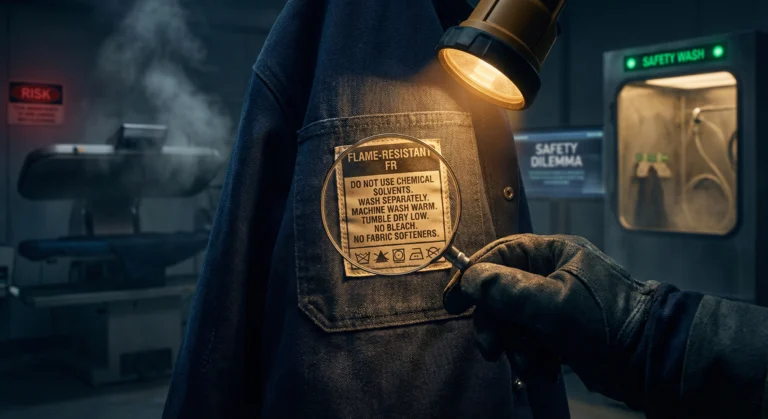
Safety note: Always follow the garment care label and your workplace safety program. If FR gear is contaminated with fuel or hazardous chemicals, remove it from service and follow workplace procedures.
Quick Links:
- /fr-clothing-care/
- /hard-water-fr-clothing/
- /best-detergent-for-fr-clothing/
- /ppe-decontamination-retirement-guide/
Remove sweat odor from FR clothing: why odors linger
Sweat odor can persist because:
- bacteria byproducts bind to fabric
- detergent residue traps odor (especially with hard water)
- overdrying “bakes in” odor over time
- cross-contamination from oily workwear in the same load
Remove sweat odor from FR clothing: step-by-step routine
1) Wash FR garments separately
Many FR guides recommend washing FR/AR garments separately to reduce contamination and improve cleaning.
2) Turn inside out
Inside-out washing helps expose the “sweat side” of the garment to detergent and water flow.
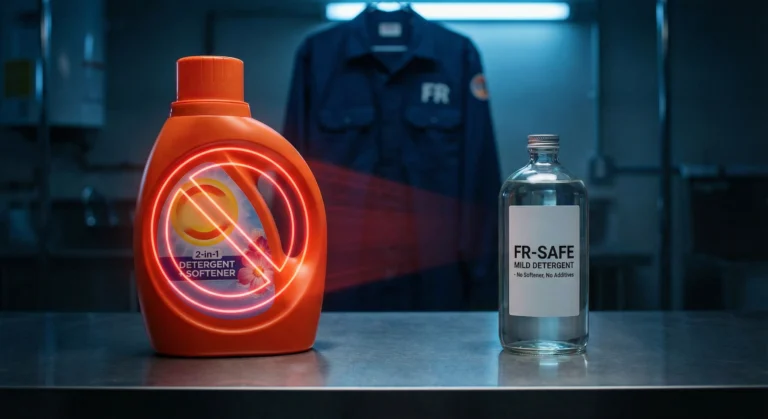
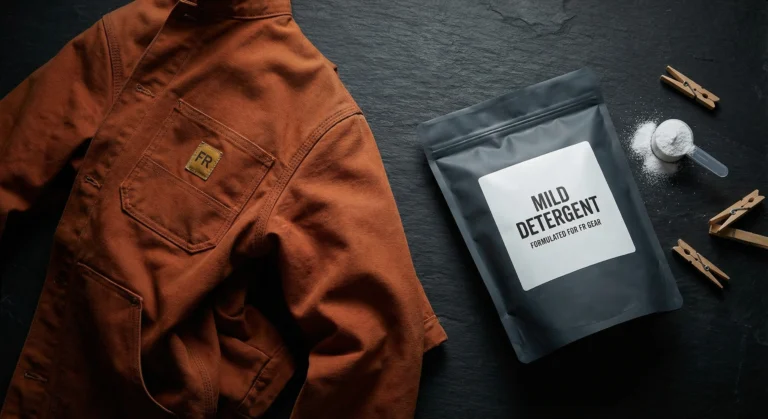
3) Use a mild detergent (no built-in additives)
Avoid “2-in-1 detergent + softener” products. Use a straightforward detergent that matches your label restrictions.
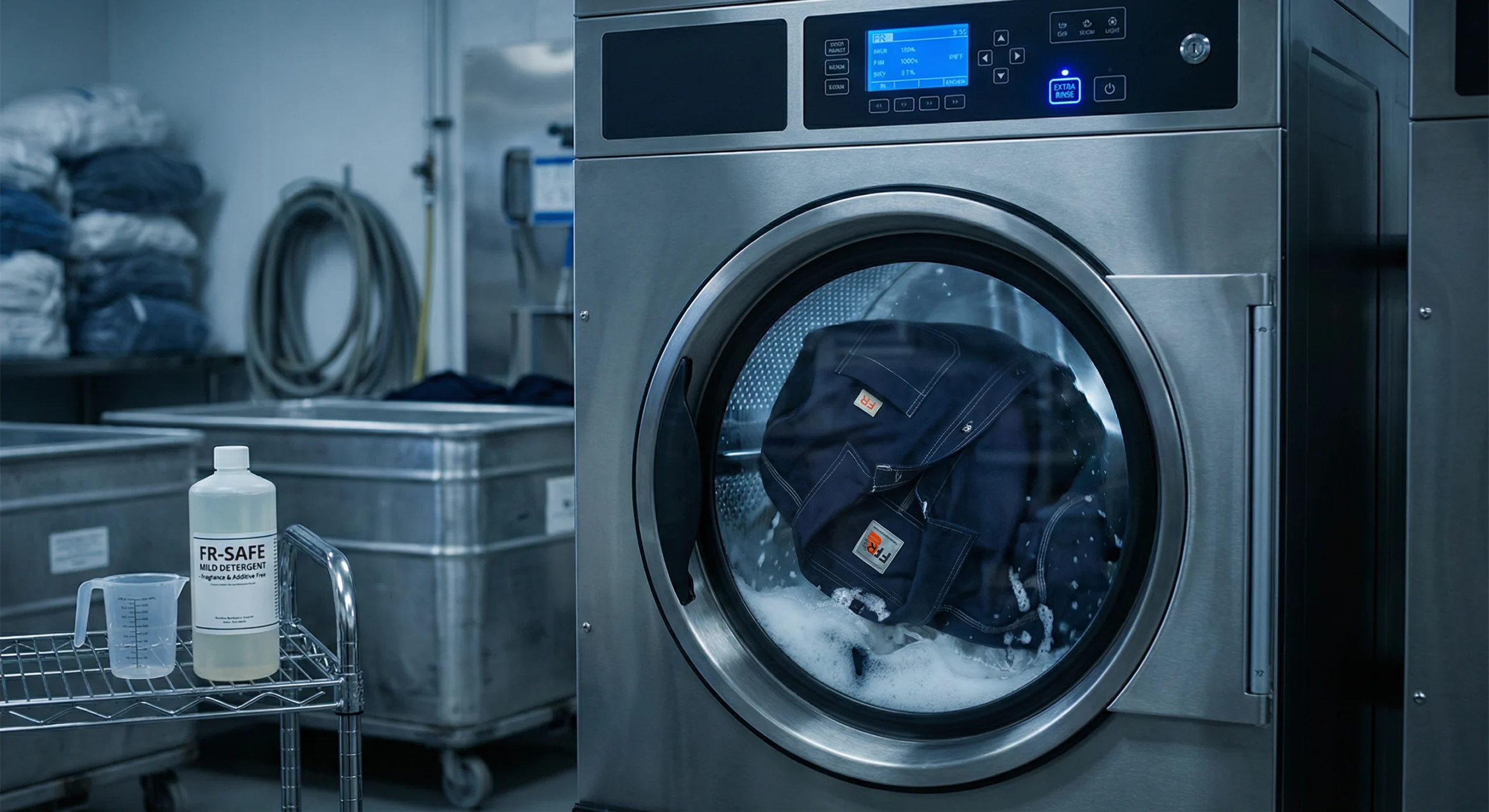
4) Double rinse (especially in hard water)
A double rinse helps remove detergent film that can hold odors. If your washer has “extra rinse,” turn it on.
5) Dry low and don’t over-dry
Low heat reduces fabric stress and helps prevent long-term odor set-in.
What NOT to do (common odor mistakes on FR gear)
- Don’t use fabric softener or dryer sheets (they leave residue).
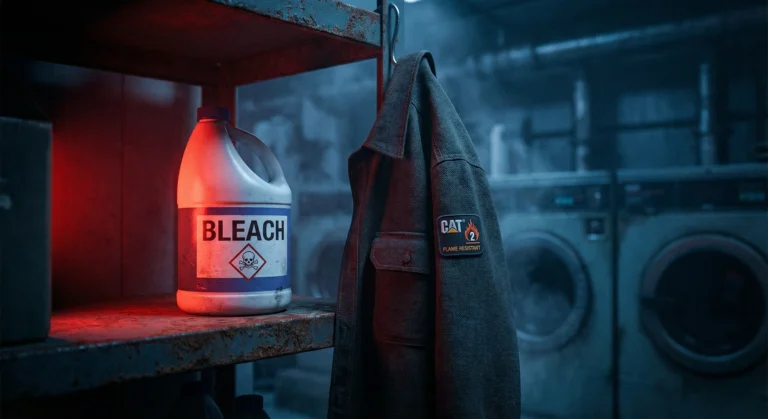
- Don’t use chlorine bleach.
- Don’t use “oxygen bleach / peroxide” products unless your care label explicitly allows them.
When odor is a safety red flag (not “sweat”)
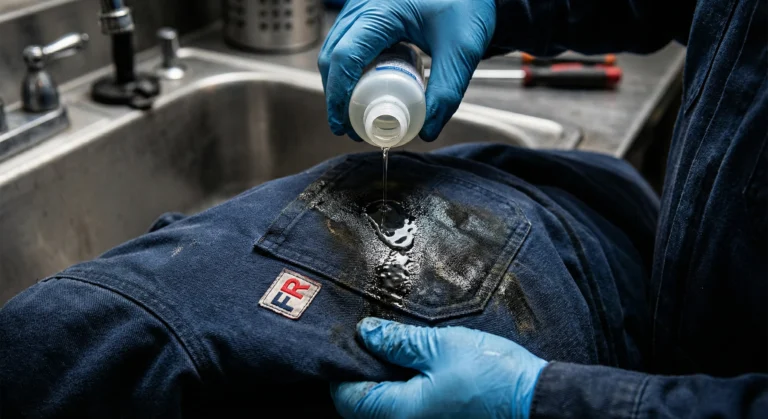
If the odor is fuel/solvent-like (diesel, gasoline, chemical vapors), treat it as a contamination issue:
- stop using heat drying if odor remains
- escalate to your workplace program or industrial laundering
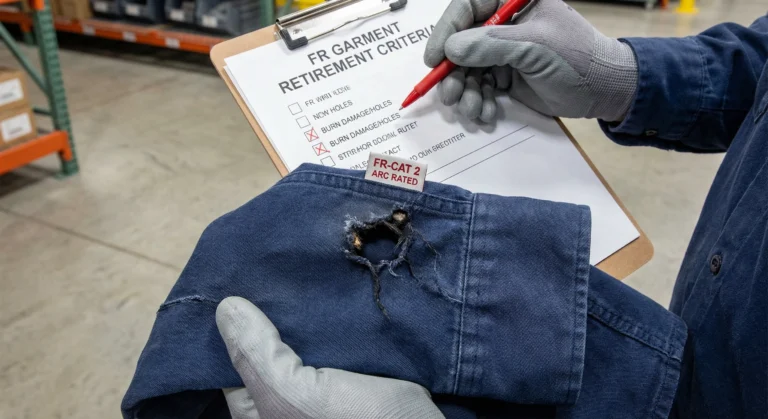
- consider removal-from-service rules for hazardous contamination