

FR clothing shrinkage: How to prevent shrinking FR workwear
FR clothing shrinkage is one of the most common complaints about flame-resistant workwear — and most of the time, the real culprit is dryer heat (and over-drying), not the washer.
So, does FR clothing shrink? Some FR garments can shrink — especially cotton-based ones washed in hot water or tumble-dried on high heat. The good news is that shrinkage is largely preventable: with the right wash routine, your FR workwear keeps its fit and its protective qualities. This guide explains why FR clothing shrinkage happens, which garments are most at risk, and the simple, label-friendly habits that prevent it.
Safety note: Always follow the garment care label and your workplace safety program.
Quick links:
- /fr-clothing-care/
- /hard-water-fr-clothing/
- /best-detergent-for-fr-clothing/
- /ppe-decontamination-retirement-guide/
FR clothing shrinkage: what causes it?
FR garments shrink for the same basic reasons as regular clothing: fibers relax and contract in the wash, and heat tightens them further in the dryer. The difference is that with FR workwear, a poor fit is also a safety issue — a garment that has shrunk too much may no longer meet your workplace safety program’s fit requirements.
Which FR garments shrink the most? Cotton-based FR fabrics — including flame-retardant treated cotton — are the most prone to shrinkage, and much of it happens in the first few wash cycles. Inherent FR fibers such as aramid blends are more dimensionally stable, but they are not immune: sustained high dryer heat can still tighten fibers and shorten garment life across all FR fabric types.
- hot wash water, which relaxes and contracts cotton fibers
- heat + time in the dryer — the single biggest driver of shrinkage
- over-drying (especially on high heat), which compounds the damage
Some FR guidance notes that a large portion of shrinkage happens in the first few washes, so your early laundering choices matter.
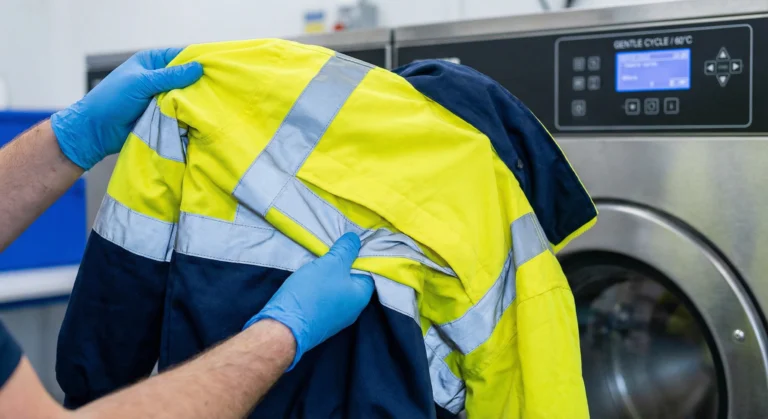
FR hi-vis garments deserve special attention, since reflective trim adds another heat-sensitive component. If you wear FR hi-vis, pair the routine below with our guide to washing FR hi-vis workwear.
FR clothing shrinkage prevention: the safest routine
1) Follow the label temperature cap
Use the garment care label as your rule. Different FR fabrics have different temperature limits, and the label reflects what the manufacturer actually tested. If you manage mixed loads, a conservative baseline is a warm wash within label limits — never hot. Hot water is the fastest way to shrink cotton-based FR garments.
Also Read: Best Wash Temperature for FR Clothing
2) Use low heat drying (or line dry)
Low heat is the safest default for shrink control. If shrinkage is your number-one issue, skip the dryer entirely and line dry when possible. Otherwise, use low heat, check garments early, and remove them while slightly damp to finish air-drying. Eliminating high heat removes the biggest shrinkage risk in a single step.
3) Don’t over-dry
Over-drying increases shrinkage risk and stresses fabric over time. Set shorter cycles, check garments before the cycle ends, and remove them promptly. The final stretch of a hot dryer cycle — when clothes sit baking at full heat — does the most damage.
4) Don’t “solve dirt” with extra heat
If garments are heavily soiled, improve cleaning through:
- washing separately from non-FR laundry
- turning garments inside out
- pre-treating with a mild, FR-safe detergent
- adding an extra rinse — then adjusting only within label limits
For the complete wash-and-dry routine in one place, see our FR clothing care guide.
FR clothing shrinkage troubleshooting (quick fixes)
- If your garment already shrank: avoid trying to “stretch it back” aggressively (you can damage seams).
- Instead, prevent additional shrinkage by switching to low heat and shorter drying time.
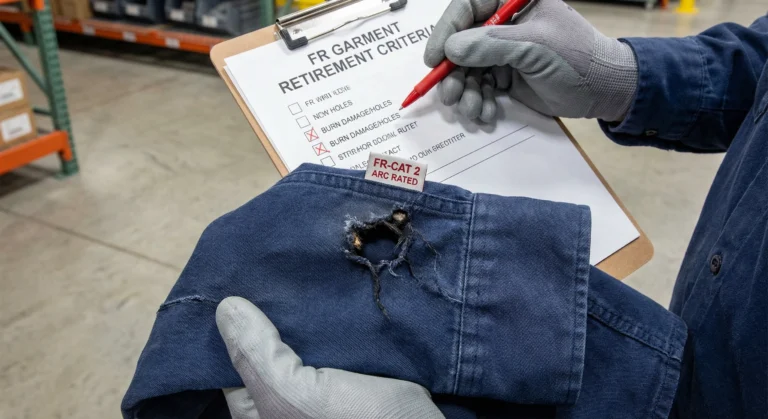
- Re-check the fit against your safety program’s requirements — a garment that no longer fits properly may need to be retired rather than rescued.
- For the replacement garment, wash cold or warm from the very first cycle, since early washes matter most.
FAQs
Does FR clothing shrink?
Yes, some FR garments can shrink, especially cotton-based ones washed in hot water or tumble-dried on high heat. The fibers relax and contract in the wash, and dryer heat tightens them further. Shrinkage is largely preventable, though: wash cold or warm, dry on low heat, and follow the garment’s care label every time.
How do you prevent FR clothing from shrinking?
Wash FR clothing in cold or warm water, never hot, and dry on low heat or hang it up instead of using high dryer heat. Avoid over-drying, which compounds shrinkage, and check garments before the cycle ends. Because much shrinkage happens in the first few washes, start this routine from the very first cycle.
Will shrunken FR clothing stretch back out?
Usually not fully. Once fibers have contracted and tightened, aggressive stretching risks damaging seams and the garment’s protective qualities, so prevention is the only reliable fix. Instead, stop further shrinkage with low heat and shorter drying times, and re-check the fit against your safety program’s requirements before wearing it again.
Can FR clothing shrink in the first wash?
Yes. A large portion of shrinkage happens in the first few washes, especially for cotton-based FR fabrics exposed to hot water or high dryer heat. That is why the first cycle matters most: wash cold or warm from the start, dry on low heat or line dry, and never let a new garment over-dry.
Does line drying prevent FR clothing shrinkage?
Mostly, yes. Line drying removes dryer heat, the single biggest driver of shrinkage, so garments keep their size and fit far better than tumble-dried ones. It also protects heat-sensitive reflective trim on hi-vis FR garments. If you must use a dryer, choose low heat, shorten the cycle, and remove garments promptly.


4 Comments