
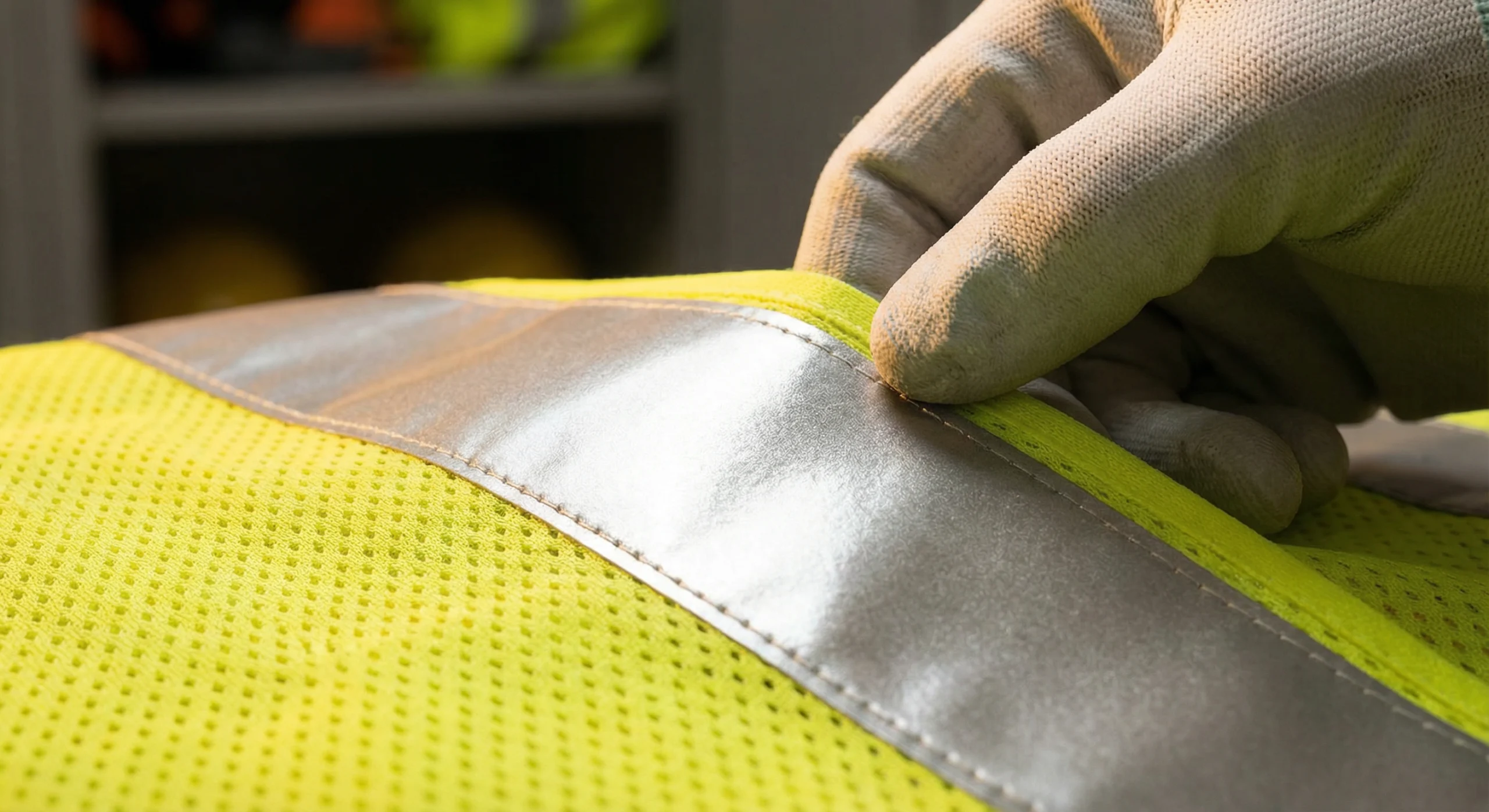
Hi‑vis workwear is “safety equipment you wear.” The goal isn’t just to get it clean—it’s to keep the fluorescent background bright in daylight and the retroreflective trim effective at night. Heat, harsh chemistry, abrasion, and residue are the most common reasons hi‑vis gear loses performance.
Quick Links
Quick rules (save this)
- Follow the garment care label first (it controls warranty/compliance).
- Wash hi‑vis separately from oily/greasy workwear when possible.
- Turn garments inside out to protect reflective trim from abrasion.
- Use a normal consumer detergent; avoid harsh stain treatments unless approved.
- Keep drying conservative—high heat can shorten reflective trim life.
1) How hi‑vis works (simple)
- Fluorescent fabric helps you stand out in daylight by converting UV light into visible light.
- Retroreflective tape/trim bounces light back toward headlights at night.
That’s why both dirt/grease and washing mistakes can reduce visibility.
2) Safest home-wash method (baseline)
Use this as your default unless your label says otherwise:
- Close zippers and Velcro (prevents snagging and premature tape wear).
- Turn inside out.
- Machine wash with consumer detergent at moderate temperature (see manufacturer limits below).
- Use an extra rinse if possible (helps remove detergent residue film).
- Dry on low heat or air dry (label first).
3) Temperature, bleach, and stain removers (what usually damages trim)
Many reflective-trim manufacturers publish care guidance. A widely used benchmark is 3M’s guidance for Scotchlite reflective fabrics:
- Home laundering = consumer washer + consumer detergent at moderate water temperatures (up to 60°C / 140°F).
- If bleach is needed = non‑chlorine bleach only.
- Avoid high-alkaline treatments (including many aggressive stain-removal products).
- High-temperature tumble drying can limit garment life.
Important: Your garment may contain multiple components (outer fabric + reflective trim + prints). The strictest compatible rule wins.
4) Drying rules (don’t cook your visibility)
- Low heat is safest.
- If your workplace uses industrial laundering, make sure the laundry provider knows the garment’s hi‑vis/reflective requirements.
- If trim looks dull after drying, treat heat as a likely culprit and adjust.
5) 60‑second inspection checklist (after washing)
Replace or escalate if you see:
- reflective tape peeling, cracking, or lifting edges
- tape looks significantly duller/gray
- fluorescent fabric is faded (compare to a new garment if possible)
- tears/holes that reduce coverage (especially around the torso/arms/legs)
6) Standards note
Hi‑vis garments are typically made to recognized standards (examples include ANSI/ISEA 107 in the U.S., CSA Z96 in Canada, and EN ISO 20471 in the UK/EU). Your jobsite may require a specific class/type—maintenance matters because dirty/damaged garments can undermine the safety intent of these standards.
FAQ
Can I use fabric softener on hi‑vis gear?
Avoid it unless the label explicitly allows it. Softeners can leave a coating that reduces reflective performance.
Can I dry clean hi‑vis?
Sometimes—but it depends on the trim and the garment label. If any component says “do not dry clean,” treat that as the rule.
How often should I wash hi‑vis clothing?
Wash when it’s dirty—oil/grease and heavy soil reduce visibility. Don’t “save washes” at the cost of visibility.
Sources (for references)