

How to Wash Hi‑Vis Clothing Without Ruining Reflective Tape (Simple Rules)
Learning how to wash hi vis clothing reflective tape without ruining it comes down to controlling four things: temperature, chemistry, abrasion, and drying. Reflective trim is made of tiny glass beads or prismatic elements bonded to the fabric with a heat-activated adhesive — and that bond weakens with every harsh wash. The good news: a tape-friendly wash routine keeps hi-vis gear compliant and bright for its full rated life.
Safety note: Always follow the garment care label and your workplace safety program. Washing can protect reflective tape, but it cannot restore performance once the tape is damaged.
Quick Links:
- Hi-Vis Workwear Care: Wash Guide for Reflective Tape
- Best Way to Dry Hi-Vis Clothing Without Damaging Reflective Tape
- How to Wash FR + Hi-Vis Workwear Without Ruining It
- Reflective Tape Peeling or Cracking? Causes, Prevention, and When to Replace
How to wash hi vis clothing reflective tape: the safe baseline
The reflective stripes on hi-vis clothing are most vulnerable to heat and chemical attack, not water itself. A safe baseline is warm water at or below 40°C (104°F), a mild liquid detergent, a gentle or normal cycle, and the garment turned inside out. Go up to 60°C (140°F) only when heavy soiling demands it — and only if the care label allows it. Once you know how to wash hi vis clothing reflective tape properly, this routine becomes second nature.
| Wash setting | Tape-safe choice | Why it matters |
|---|---|---|
| Water temperature | Warm: 30–40°C (86–104°F) | Hot water softens the adhesive that bonds tape to fabric |
| Wash cycle | Gentle or normal — never heavy-duty scrub | Long aggressive cycles bend and flex tape until it cracks |
| Load | Wash alone or with similar soft items | Jeans, zippers, and hooks abrade the reflective face |
| Detergent dose | Mild liquid, measured dose | Over-dosing leaves residue that dulls the reflective surface |
| Bleach | Non-chlorine only, when the label allows | Chlorine bleach attacks tape edges and fluorescent dyes |
| Fabric softener | None | Softener coats the glass beads and reduces reflectivity |
Step-by-step: safest home wash method
Follow these steps every time, and the reflective tape will last as long as the garment itself:
- Turn the garment inside out and close all zippers, snaps, and hook-and-loop tabs. This keeps hard hardware away from the reflective face.
- Wash with similar soft fabrics on a gentle or normal cycle. Never wash hi-vis items with jeans, boots, or anything abrasive.
- Use warm water — 30 to 40°C (86 to 104°F) — for routine washing. Choose hotter water only when the care label allows it and the soil truly demands it.
- Measure a mild liquid detergent; do not over-dose. Add an extra rinse cycle if your machine offers one, since detergent residue dulls the reflective surface.
- Skip chlorine bleach, fabric softener, and high-alkaline stain treatments. If the garment is FR-rated, follow the stricter rules in our guide to washing FR + hi-vis workwear.
- Remove the garment promptly when the cycle ends — leaving wet garments sitting can stress the tape adhesive and invite odors.
Water temperature: the number that matters most
Heat is the number-one way an ordinary wash damages reflective tape. The adhesive layer bonding the tape to the fabric softens in hot water and high-heat drying, loosening edges and shortening tape life. Most care labels allow washing up to 40°C (104°F), and many permit 60°C (140°F) for heavy soiling — but staying at the cooler end of the label’s range protects the tape longest. For lightly soiled gear, cool or warm water cleans fine; reserve hotter temperatures for genuine contamination.
Detergent rules: what to use and what to avoid
Use a standard mild liquid detergent at the measured dose — more is not better. Excess detergent leaves residue on the reflective face and dulls the tiny glass beads that do the reflecting. Avoid powder detergents with optical brighteners on fluorescent fabric, since they can shift the garment’s color and reduce daytime visibility.
Never use chlorine bleach on hi-vis clothing: chlorine attacks both the fluorescent fabric dyes and the reflective tape’s edges. If whitening or disinfection is needed, use a non-chlorine (oxygen-based) bleach, and only when the care label allows it. Skip fabric softener entirely — its waxy coating dulls the beads and encourages tape edges to lift.
What destroys reflective tape fastest
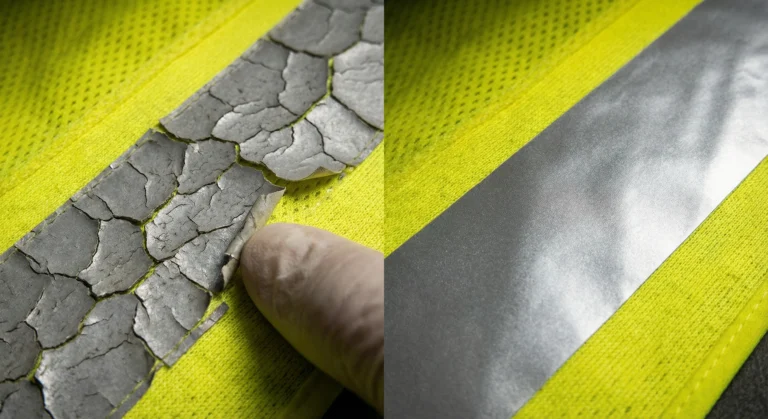
A few habits cause most tape damage: hot water and high-heat drying, chlorine bleach, fabric softener, aggressive high-alkaline stain removers, and washing with heavy abrasive loads. If your tape is already lifting, see our full guide to reflective tape peeling and cracking for what is fixable and what is not.
- Washing hotter than the care label allows
- Chlorine bleach and bleach-containing boosters
- Fabric softener and dryer sheets
- Heavy-duty scrub cycles and abrasive wash loads
- High-heat tumble drying and over-drying
Drying rules that keep tape bonded
How you dry hi-vis clothing matters as much as how you wash it. Air drying is the gentlest option and gives reflective tape the longest life — hang garments in the shade, since prolonged direct sunlight degrades fluorescent fabric. If you must machine dry, choose low heat, remove the garment promptly, and never over-dry: high-heat drying softens the tape adhesive and is the fastest route to peeling. Full settings are covered in our guide to the best way to dry hi-vis clothing.
Can you machine wash hi-vis clothing with reflective tape?
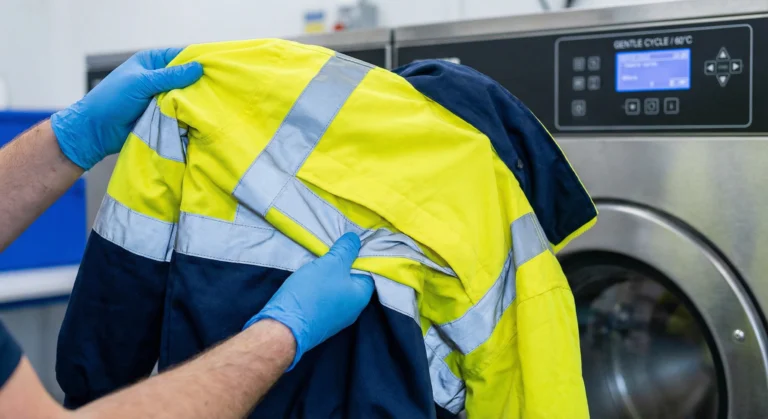
Yes — machine washing is safe when the settings are right. Use a gentle or normal cycle with warm water at or below 40°C (104°F) and a mild liquid detergent, with the garment turned inside out. Avoid chlorine bleach, fabric softener, and hot water, and always check the care label first, since some certified garments have stricter rules.
Separate hi-vis items from heavy or rough loads so zippers and denim cannot scuff the reflective bands during the spin cycle.
What happens if you wash hi-vis clothing in hot water?
Hot water softens the adhesive that bonds reflective tape to the garment, which can loosen tape edges, shorten tape life, and dull the fluorescent fabric. An occasional hot wash within the care label’s limit will not destroy certified tape immediately, but repeated hot washing wears the bond down much faster than warm water.
Stay at the cooler end of the label’s temperature range unless heavy soiling or contamination genuinely demands hotter water.
60-second inspection after washing
After every wash, take a minute to check the tape — early damage is much cheaper to catch than a failed inspection:
- Peeling edges or loose corners on the reflective bands
- Cracks or fine lines running across the tape
- Significant dulling — the tape looks gray instead of bright
If you spot any of these, escalate per your workplace program. Our inspection checklist for when to replace hi-vis clothing shows exactly what to look for.
When washing cannot save the garment
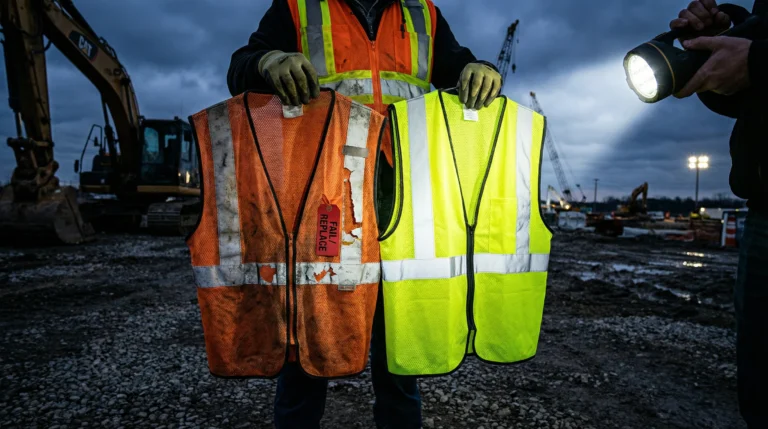
A good wash routine protects reflective tape, but it cannot restore it. If the tape is peeling, cracking, or visibly dull despite correct washing, the garment may no longer meet the visibility standard it was certified to — at that point, inspection and retirement are the only safe options, not another wash.
Workplace requirements: review OSHA’s PPE guidance for how employers must maintain protective clothing in reliable condition.
What water temperature is safe for washing hi-vis clothing with reflective tape?
Most reflective tape handles wash water up to 40–60°C (104–140°F), but cooler is safer for the adhesive bond. Use warm water for everyday dirt and reserve hotter settings for genuine contamination — always following the garment care label. Hotter water shortens tape life, so treat temperature as the single most important wash control.
Can I use bleach or fabric softener on hi-vis reflective clothing?
Skip chlorine bleach — it attacks both the reflective tape and the fluorescent fabric. Fabric softener is equally harmful: it leaves a waxy coating that dulls the glass beads and can lift tape edges over time. If whitening is needed, use only non-chlorine bleach, and choose a mild, fragrance-light detergent instead of softener.
How should I dry hi-vis clothing to protect the reflective tape?
Air dry whenever possible, away from direct sunlight. If you must machine dry, choose low heat and remove the garment promptly — never over-dry or use high heat, which softens the tape adhesive and invites peeling. Drying on low for a short cycle is a compromise, but line drying gives reflective tape the longest life.


4 Comments