Can You Dry Clean FR Clothing? (Label Rules, Risks, and Safer Options)
Sometimes yes—but you must follow the care label (and your workplace safety program).
Dry cleaning is a common point of confusion because different manufacturers and user guides don’t always agree.
This post shows you how to decide safely.
Safety note: Always follow the garment care label and your workplace safety program. Do not dry clean safety workwear unless the label explicitly allows it.
Quick Links
1) Why there’s conflicting advice
Some FR brands explicitly allow dry cleaning
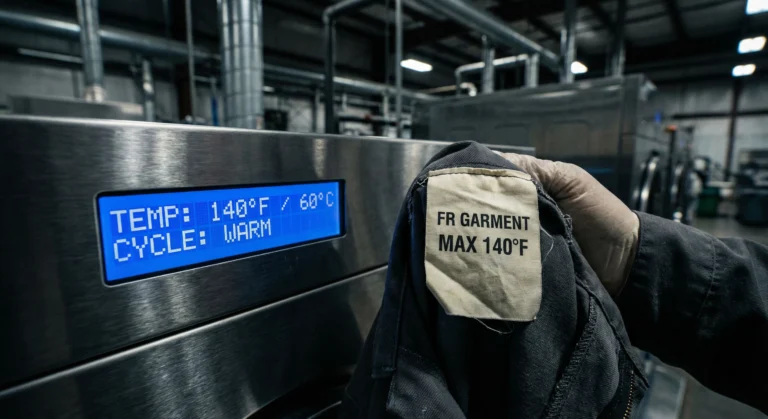
For example, Carhartt’s FR care instructions say their FR items are dry cleanable, while still prohibiting bleach/softener/starch and setting wash temperature limits. 2
Some NFPA-style user guidance says “Do not dry clean”
The NFPA 2112 user information guide hosted by 5.11 states: “Do not dry clean. Solvents may damage your garment.”
Some FR guidance says FR performance may remain—but residue can be a hazard
Ariat Crew’s FR FAQ states: dry cleaning does not affect FR properties, but also warns that dry cleaning chemical residue left on the fabric could burn.
Takeaway: The correct answer is not universal. It depends on:
- your garment label
- your hazard environment
- whether residue/contamination is a concern
- your employer’s compliance requirements
2) A safe decision framework (use this every time)
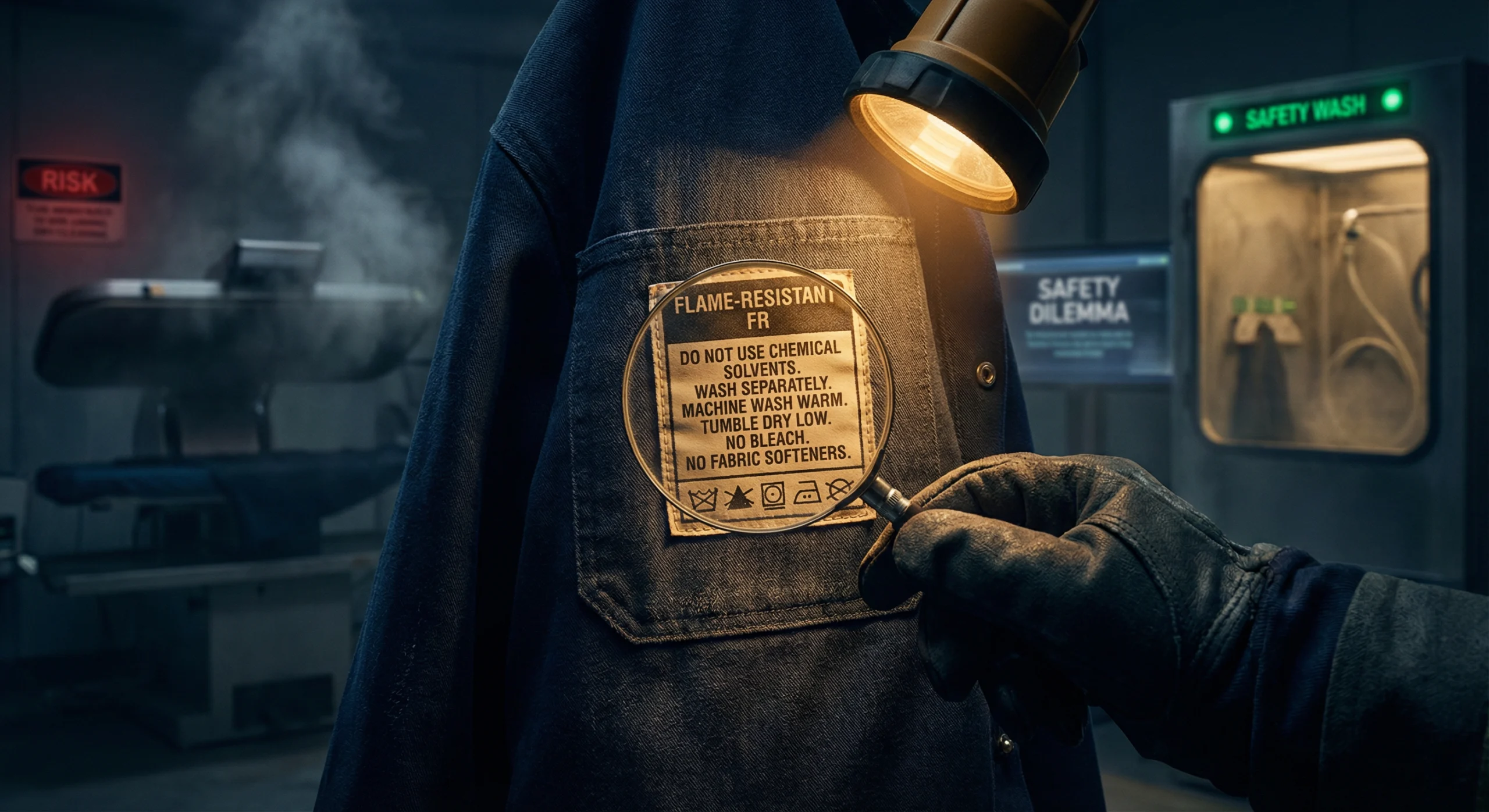
Step A — Check the care label (this is the top rule)
- If it says Do not dry clean → don’t dry clean.
- If it says Dry cleanable → you may dry clean, but proceed carefully and ensure the cleaner understands FR workwear.
Step B — Consider your hazard exposure
If your garment has been exposed to hazardous/caustic materials, NFPA-style guidance may require remove-from-service/retirement unless properly decontaminated by qualified authority. 1
In other words: dry cleaning is not a “magic reset” for hazardous contamination.
Step C — Consider residue risk (especially for flash fire environments)
Even when dry cleaning is permitted, some guidance warns that chemical residue could create burning risk. 3
If you dry clean, you want a process that minimizes residue and returns garments clean and neutral.
3) If you do dry clean FR: how to reduce risk (practical checklist)
- Tell the cleaner it’s FR/arc-rated protective wear
- Ask how they control residue (final rinse/finish process)
- Inspect and smell the garment after
- If there is a strong solvent smell or oily feel, don’t wear it until resolved.
- Follow your program’s inspection rules
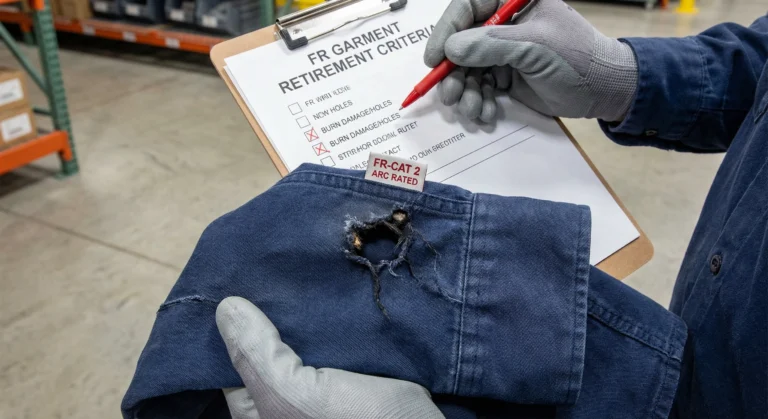
NFPA-style user guidance emphasizes routine inspection and removal from service for damaged garments.
4) Safer alternatives to dry cleaning (for many situations)
When in doubt:
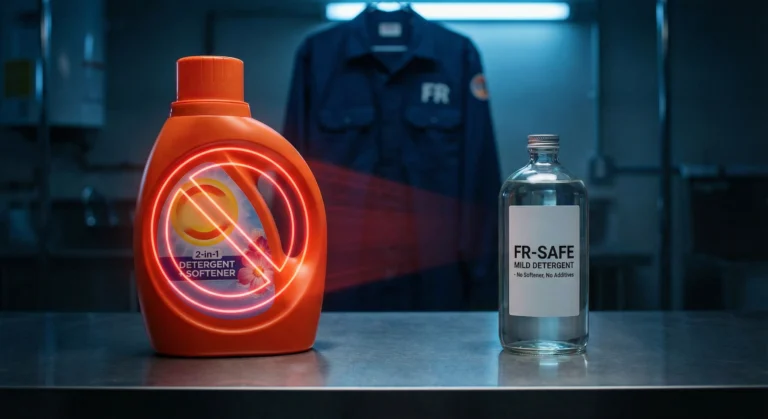
- use label-approved detergent for FR clothing
- double rinse
- keep drying conservative (low heat; remove promptly)
NFPA-style user guidance provides an in-house wash routine and explicitly says do not dry clean (in that guide’s context).
FAQ
Does dry cleaning remove flammable contamination better than washing?
Not always—and for hazardous contamination, OSHA guidance highlights PPE decon and retirement methods must be compatible with both the contaminant and the PPE material, and chemical decon should be done only if recommended by qualified professionals due to hazards and compatibility issues.
My brand says “dry cleanable” but another guide says “don’t.” What do I do?
Follow (1) your garment label and (2) your workplace program. When still unclear, choose the more conservative path (home wash per label or a professional uniform laundry that understands FR programs), because residue and compatibility concerns are real. 1