
Wash Nomex Clothing: How To Clean Nomex Safely (Do’s And Don’ts)
How to wash Nomex clothing the safe way: use a conservative, label-first routine. Nomex is an inherently flame-resistant aramid fiber, which means its protection is built into the fiber and cannot wash out. Even so, harsh detergents, bleach, high heat, and oily lint can weaken the fabric or leave flammable residues — so cleaning Nomex is about removing contaminants without damaging fiber strength.
Safety note: Always follow the garment care label and your workplace safety program. Nomex resists ignition, but fuel-soaked or chemically contaminated FR gear must be removed from service and decontaminated per your employer’s procedures — it is not normal laundry.
Quick Links
- Best detergent for FR clothing
- Safe wash temperatures for FR clothing
- How to wash FR + hi-vis workwear
- What is FR clothing (inherent vs treated)
How do you wash Nomex clothing safely?
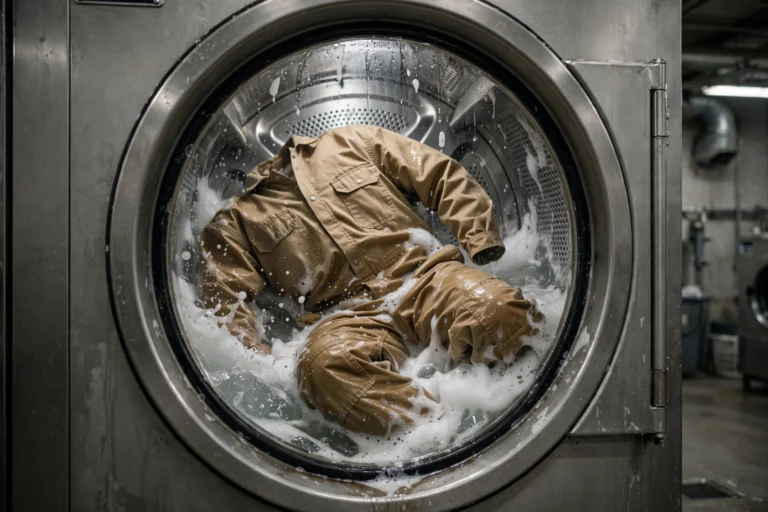
To wash Nomex clothing safely, launder it separately in warm water at 140°F (60°C) or below using a mild liquid detergent with no bleach, softener, or starch. Close all fasteners, rinse thoroughly to remove chemical residues, then tumble dry low or line dry. Remove the garment promptly and always follow the care label first.
Nomex workwear costs far more than ordinary uniforms, so a disciplined wash routine protects both the worker and the investment. The sections below cover each decision — fiber type, temperature, detergent, load separation, and drying — plus the mistakes that shorten garment life.
1) Why Nomex is different from treated-cotton FR
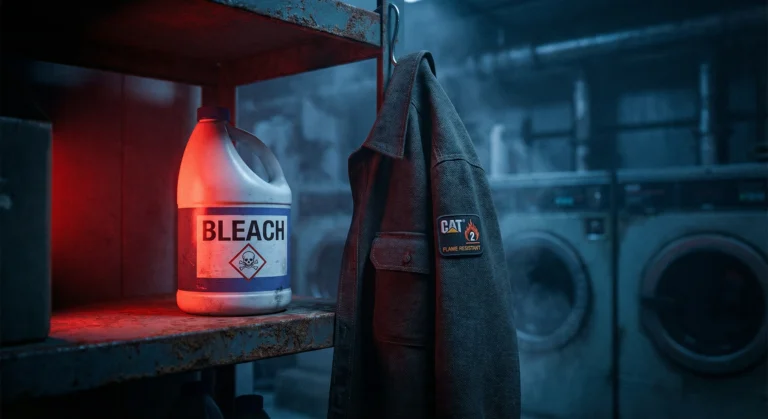
Nomex is an aramid fiber whose flame resistance is inherent — engineered into the polymer itself — so it cannot wash out, wear off, or be removed by laundering. That is the key difference from treated-cotton FR, where a chemical finish on ordinary cotton gradually degrades with wash cycles (see our guide to inherent vs treated FR clothing). With Nomex you never worry about “losing” protection in the wash, but you must protect the fiber itself: chlorine bleach and strong oxidizers attack aramid fibers and reduce tensile strength, while softeners and starch leave flammable residues that add fuel to a garment designed to resist ignition.
2) Water temperature: warm, not hot
The safe default is warm water at 140°F (60°C) or below — or whatever lower limit your care label sets. Warm water lifts body oils and everyday soil effectively without accelerating fiber wear, while hot water and “sanitize” cycles increase shrinkage and degrade aramid fibers faster over repeated washes. Our safe wash temperature guide for FR clothing explains the label logic in detail. If a garment is heavily soiled, improve the process first — pre-treat, wash separately, add an extra rinse — and only raise the temperature within label limits.
3) Detergent: mild and residue-free
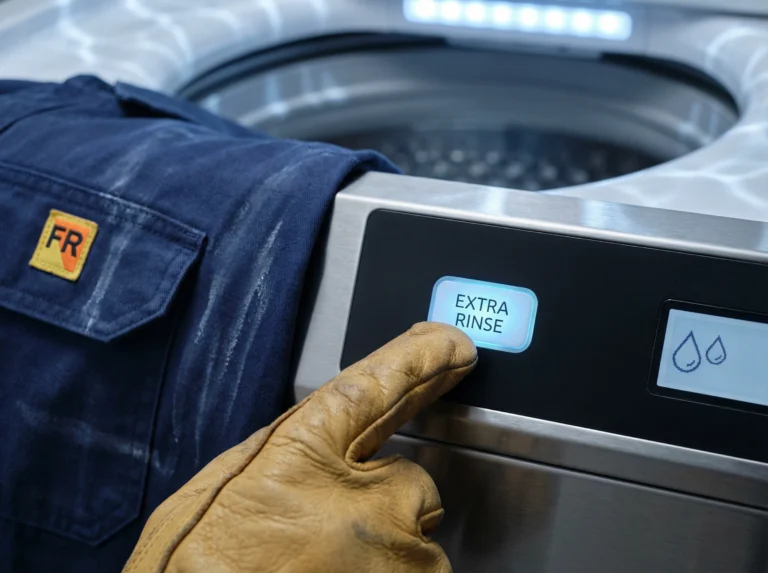
Use a mild liquid detergent at the dose its own label recommends — nothing exotic. Keep three things out of a Nomex load: chlorine bleach (it attacks aramid fibers and shortens garment life), fabric softener and dryer sheets (they coat fibers with waxy, flammable residues), and starch (the same fuel-adding problem). Oxygen “oxy” boosters and high-alkaline degreasers are also best avoided unless the garment manufacturer explicitly permits them. A thorough extra rinse matters as much as detergent choice, because residues left in the fabric can mask contamination.
4) Wash Nomex separately, inside out
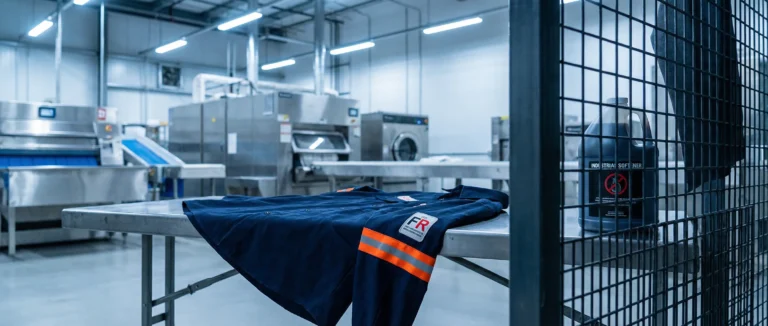
Wash Nomex garments separately from everyday laundry. Regular cotton loads shed flammable lint that clings to aramid fabric, and mixed loads can transfer oils or chemicals onto protective gear. Turn garments inside out and close all zippers, snaps, and hook-and-loop fasteners to reduce abrasion in the drum. If you also wear FR garments with reflective trim, the same separation logic applies — see our guide to washing FR and hi-vis workwear together.
5) Drying and finishing
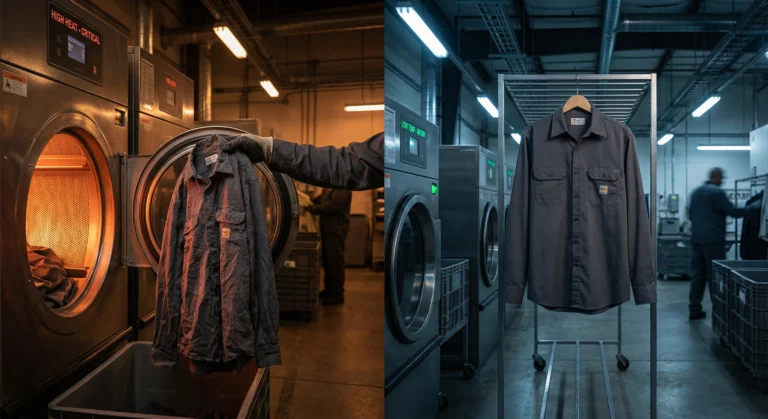
Tumble dry on low if the care label allows it, or line dry — air drying is the gentlest option and costs nothing. Remove garments promptly; over-drying bakes in wrinkles and needlessly ages the fiber. Never try to “cook out” fuel, diesel, or solvent odors in a hot dryer: lingering petroleum odor signals contamination, and heat plus fuel vapor is a fire risk. Treat contaminated gear as a safety issue — OSHA’s PPE guidance requires protective equipment to be maintained in a clean and reliable condition — and follow your employer’s decontamination procedures.
6) What shortens the life of Nomex
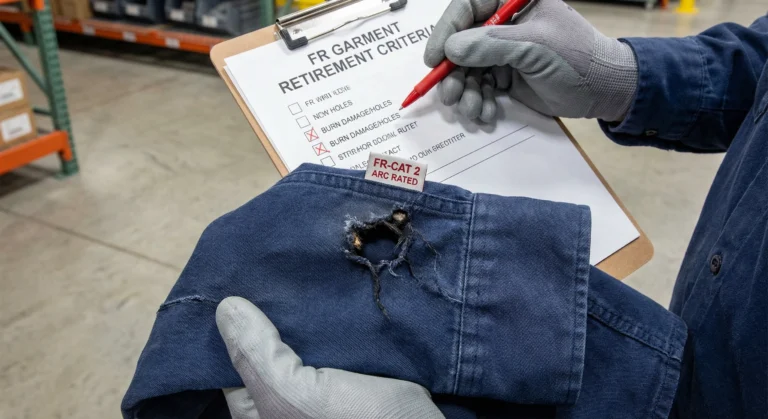
Beyond the washer, three things age Nomex fastest: prolonged UV and sunlight exposure, which degrades aramid fibers over time; repeated chlorine bleach or strong oxidizer contact; and wearing contaminated gear, since ground-in oils and chemicals keep attacking the fiber between washes. Physical damage matters too — inspect for thin spots, cuts, broken seams, and abrasion, and retire garments that no longer meet your safety program’s criteria.
Nomex wash do’s and don’ts
| Rule | Do | Don’t |
|---|---|---|
| Detergent | Use a mild liquid detergent at the label dose | No chlorine bleach, fabric softener, or starch |
| Water temperature | Wash warm: 140°F (60°C) or below | No hot water or “sanitize” cycles |
| Load | Wash separately, inside out, fasteners closed | Don’t mix with lint-shedding cotton laundry |
| Rinsing | Add an extra rinse for heavy soil | Don’t leave detergent or chemical residue behind |
| Drying | Tumble dry low or line dry; remove promptly | No high heat, no over-drying, no “baking out” fuel odors |
Can you use bleach on Nomex clothing?
No — never use chlorine bleach on Nomex. Chlorine attacks aramid fibers, reducing fabric strength and shortening garment life, and the FR protection is no reason to risk it. If a label or manufacturer explicitly allows a specific bleach alternative, follow it exactly; otherwise stick to a mild detergent and an extra rinse for dingy garments.
For grayed or dingy garments, a longer warm soak with mild detergent followed by an extra rinse is the label-safe alternative to bleach.
Can you put Nomex clothing in the dryer?
Yes, if the care label allows it — use low heat and remove the garment promptly. High heat and over-drying degrade aramid fibers over time; line drying is the gentlest option. Never use a hot dryer to ‘bake out’ fuel or solvent odors — that’s a contamination issue, not a drying one, and heat plus fuel is a fire risk.
Shake garments out before hanging to reduce wrinkles without an iron, and skip the dryer sheet entirely.
Frequently Asked Questions
Can washing Nomex clothing remove its flame resistance?
No. Nomex is an inherently flame-resistant aramid fiber, so its protection is built into the polymer chain and cannot wash out, wear off, or be laundered away. Unlike treated-cotton FR, which relies on a chemical finish that degrades over time, Nomex stays protective for the garment’s life — provided harsh chemicals like chlorine bleach haven’t damaged the fibers.
What water temperature should you use to wash Nomex clothing?
Wash Nomex in warm water at 140°F (60°C) or below, or whatever lower limit the care label sets. Warm water removes body oils and light soil without accelerating fiber wear, while hot water and sanitize cycles degrade aramid fibers and increase shrinkage. For heavy soil, improve the process — pre-treat, wash separately, add an extra rinse — before raising the temperature.
Can you use fabric softener on Nomex clothing?
No. Fabric softeners and dryer sheets coat fibers with waxy, flammable residues that add fuel to the garment and can mask contamination — the opposite of what FR workwear needs. Starch is equally off-limits for the same reason. Use a plain mild detergent and rinse thoroughly; if static is an issue, line drying usually solves it without additives.
Sources for references
- NWCG documentation quotes the DuPont Nomex Aramid Fiber Laundering Guide
- CrewBoss provides a practical overview of Nomex product care
- OSHA: Personal Protective Equipment – Overview (PPE must be maintained in a clean and reliable condition)