Starch On FR Clothing: Why You Should Avoid Starch On FR Clothing
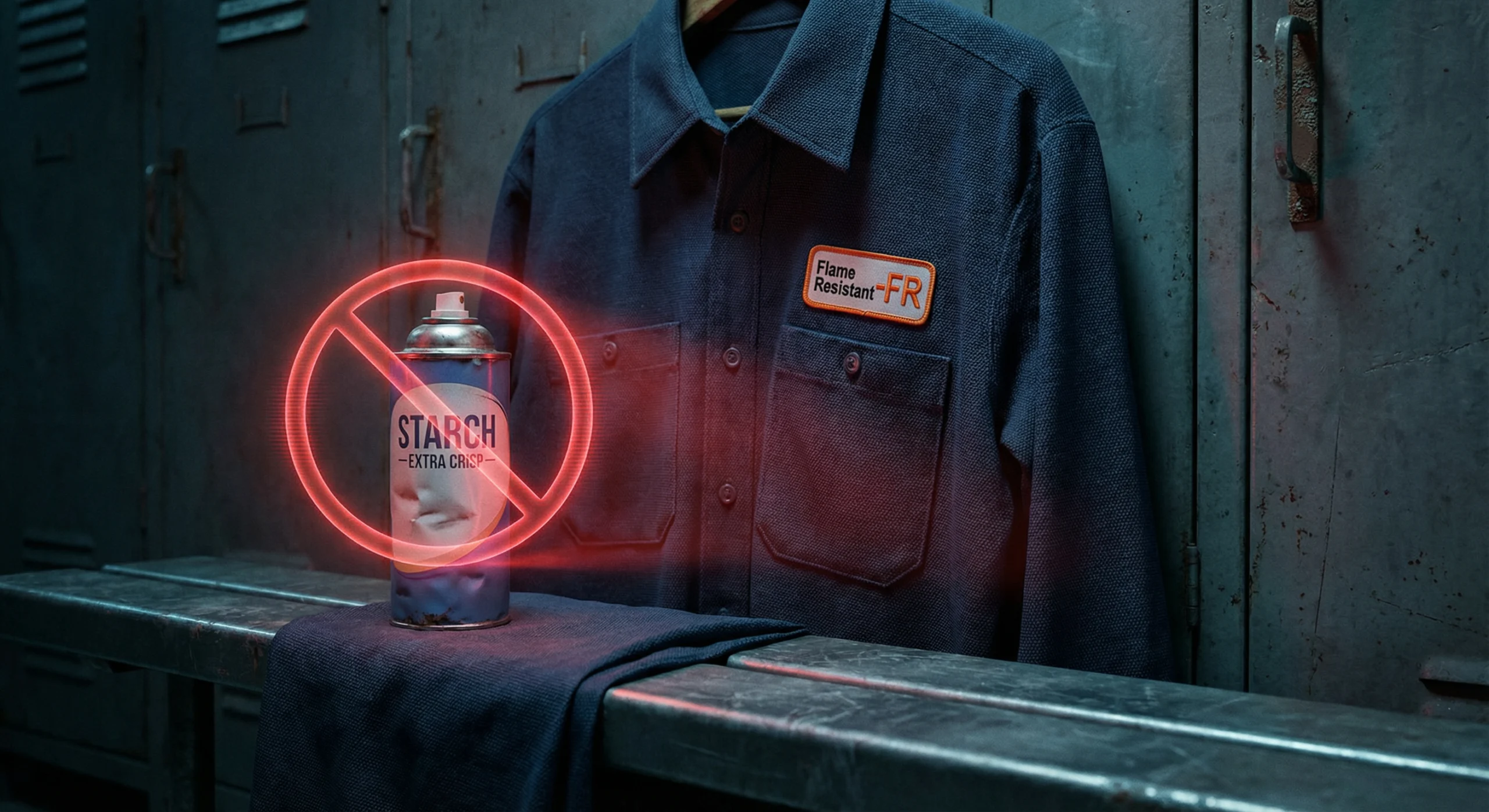
Starch on FR clothing is usually a bad idea. Even if starch doesn’t “remove” flame resistance, it can leave a flammable layer on top of protective fabric—which is exactly what you don’t want on FR/arc-rated workwear.
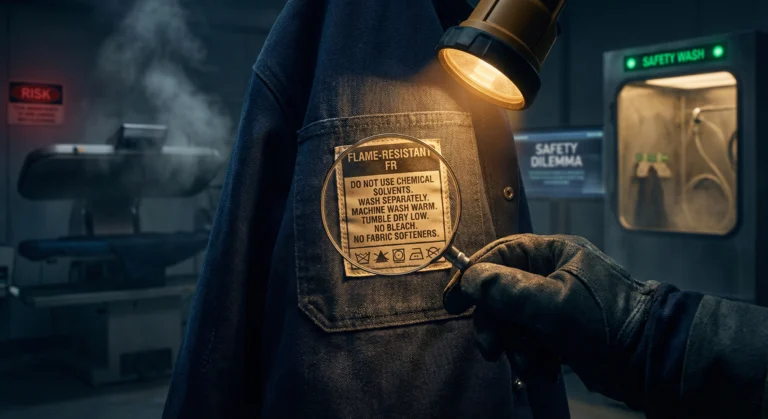
Safety note: Always follow the garment care label and your workplace safety program. Do not use bleach/softeners/additives unless the label explicitly allows them.
Quick Links:
- /Best car for fr-clothing/
- /fabric-softener-for-fr-clothing/
- /dryer-sheets-fr-clothing/
- /best-detergent-for-fr-clothing/
- /ppe-decontamination-retirement-guide/
Starch On FR Clothing: The Core Problem
Starch is designed to coat fabric to make it feel crisp. On protective garments, that coating can become part of the fuel load on the fabric surface.
1) What FR Guidance Commonly Says About Starch
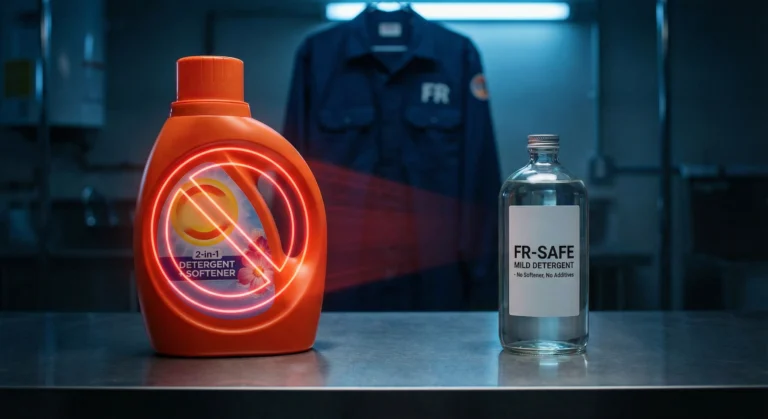
Multiple FR care guides list starch on their “do not use” lists, alongside softeners and bleach/peroxide products.
2) What To Do If Your FR Clothing Feels Wrinkled Or Limp (Without Starch)
Try these safer options:
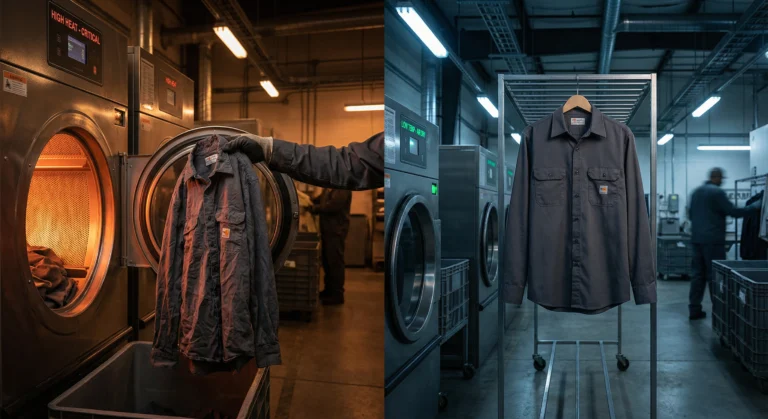
- Dry on low heat and remove promptly
- Hang immediately after drying
- If ironing is allowed by your label, use a low setting and a protective cloth barrier (label-first)
3) What Not To Substitute
Avoid “spray starch alternatives” or any product that claims crispness by coating the fabric unless your manufacturer explicitly approves it.
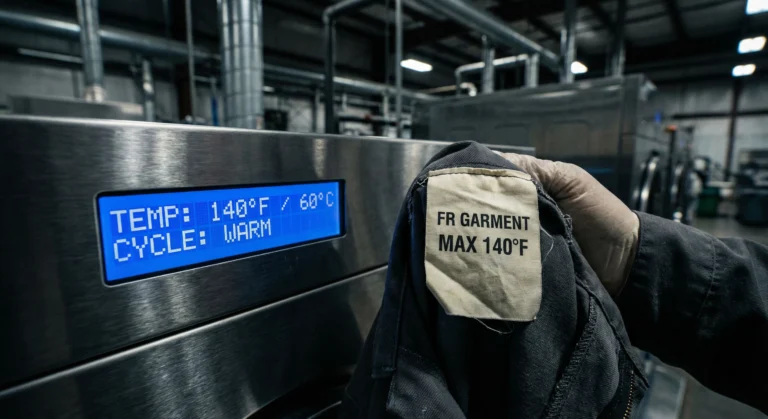
Also Read: FR laundering temperature limits
FAQ
Does starch remove FR protection?
Some sources note starch doesn’t necessarily erode flame resistance—but it is flammable, and adding flammable material to protective clothing is a safety risk.
Is it okay to starch only collars/cuffs?
Still not recommended. A small area can still contribute to burn risk and also creates a slippery slope for non-compliant care.
References