
NFPA 2112 Explained: The FR Standard for Flash Fire Protection
If you work in oil, gas, or petrochemicals, you’ve probably seen “NFPA 2112” printed on FR garment labels. But what does that code actually certify — and what doesn’t it cover? This guide explains it in plain English.
What Is NFPA 2112?
NFPA 2112 is the US standard titled “Standard on Flame-Resistant Clothing for Protection of Industrial Personnel Against Short-Duration Thermal Exposures from Fire.”
In simple terms: it’s the rulebook that defines what counts as proper flame-resistant workwear for flash-fire hazards — the sudden, intense fires common in refineries, drilling sites, and chemical plants.
NFPA itself is the National Fire Protection Association, the nonprofit that writes most US fire-safety standards. When a garment is “NFPA 2112 compliant,” it means it passed the tests this standard requires.
What Does NFPA 2112 Cover?
The standard sets minimum performance requirements for FR fabrics and garments. To comply, a garment must:
- Resist ignition and self-extinguish — the fabric must stop burning once the flame is removed (tested on both new fabric and after repeated washings).
- Not melt or drip — molten fabric causes the worst burn injuries; NFPA 2112 bans it.
- Limit heat transfer — in the instrumented manikin test (a sensor-covered dummy exposed to flash fire), the predicted body burn must not exceed 50%. This is the headline pass/fail number.
- Resist thermal shrinkage — the fabric must not shrink excessively under heat, which would press hot material against skin.
- Carry proper labeling — compliant garments must be labeled with tracking info so compliance can be verified.
Note what the standard does not do: it doesn’t tell your employer which garments to buy or how to care for them. That companion role belongs to NFPA 2113 — the standard for selection, care, use, and maintenance of FR garments. (2112 = the garment’s performance; 2113 = how you choose and look after it.)
“NFPA 2112 Compliant” vs “Certified” — What the Label Means
You’ll see both terms on labels and product pages:
- Compliant generally means the garment was built to meet the standard’s requirements.
- Certified (usually by UL — Underwriters Laboratories) means an independent lab actually tested it and verified compliance.
For regulated workplaces, certified garments with a proper tracking label are the safer bet — the label lets safety auditors verify exactly what was tested.
NFPA 2112 vs NFPA 70E: Don’t Confuse Them
This is the #1 mix-up in FR workwear.
| NFPA 2112 | NFPA 70E | |
| Hazard | Flash fire (oil, gas, chemical) | Arc flash (electrical) |
| Industries | Oil & gas, petrochemical, refining | Electricians, utilities, electrical maintenance |
| Rating system | Pass/fail (50% max body burn) | CAT levels 1–4 (cal/cm²) |
| Garment marking | NFPA 2112 label | Arc rating + CAT level |
A garment can carry both certifications — many FR coveralls do — but one does not automatically include the other. If you do electrical work, you need the arc rating (70E); if you work around flash-fire risk, you need 2112.
A detailed NFPA 2112 vs NFPA 70E guide is coming soon.
Who Needs NFPA 2112 Garments?
Typically required for workers exposed to flash-fire hazards:
- Oil and gas extraction and refining
- Petrochemical plants
- Fuel transport and storage
- Any site where combustible atmospheres make flash fire a credible risk
Your employer’s hazard assessment decides — but if your FR label cites NFPA 2112, flash fire is the hazard it was built for.
Care Requirements Under NFPA 2112
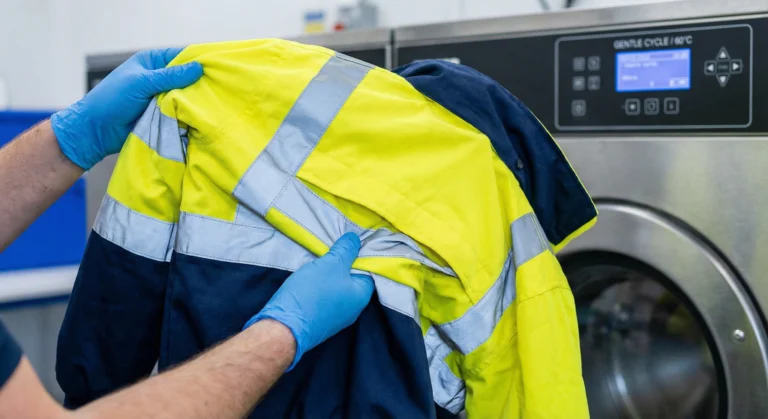
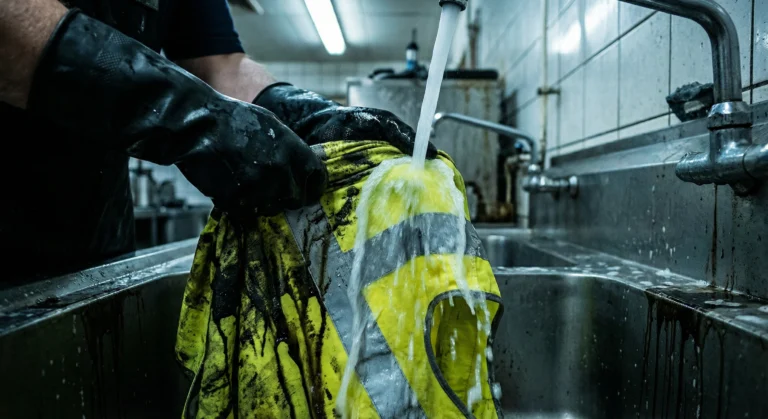
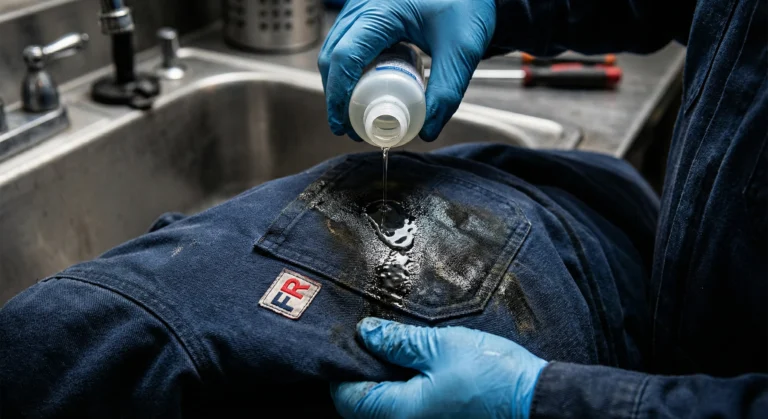
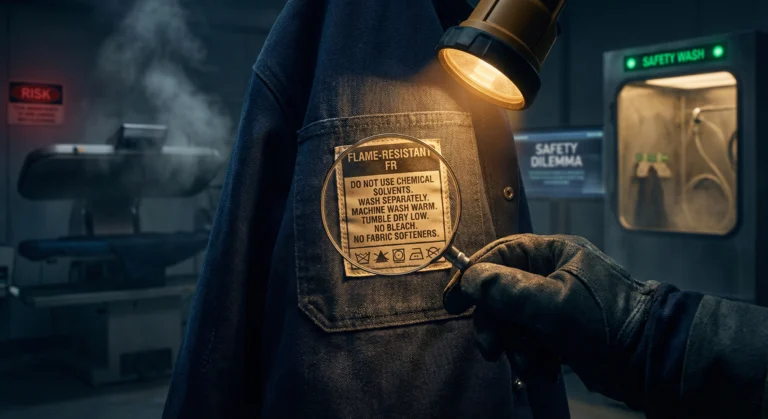
The standard’s companion guidance (and the manufacturers who certify to it) is strict about laundering — because the wrong wash chemistry can undo the protection:
- Never use chlorine bleach — it degrades flame resistance
- Never use fabric softeners — they’re oil-based and can add fuel
- Never use starch
- Wash FR garments separately, turned inside out
- Follow the garment’s care label over any general guide
Get the full routine in our FR clothing care guide.
What “NFPA 2112 CAT 2” Means (Common Confusion)
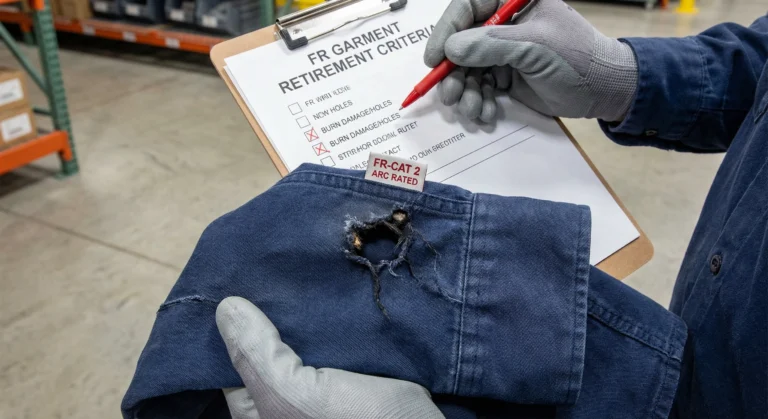
Short answer: NFPA 2112 doesn’t have CAT levels — CAT 1–4 belongs to NFPA 70E (arc flash). If you see “CAT 2” on a garment alongside an NFPA 2112 mark, the CAT rating comes from its separate 70E/arc-flash certification. Same garment, two different tests.
FAQs
What is the full form of NFPA 2112?
It’s section 2112 of the National Fire Protection Association’s standards: “Standard on Flame-Resistant Clothing for Protection of Industrial Personnel Against Short-Duration Thermal Exposures from Fire.”
Is NFPA 2112 required by OSHA?
OSHA doesn’t name NFPA 2112 directly in most general-industry rules, but OSHA’s PPE requirements (1910.132) demand protection matched to the hazard — and NFPA 2112 is the recognized benchmark employers use to prove their FR garments are adequate for flash fire. Many company safety programs mandate it outright.
Does NFPA 2112 cover arc flash?
No. Arc flash is covered by NFPA 70E. A garment can be certified to both, but NFPA 2112 alone only addresses flash fire.
How often is NFPA 2112 updated?
NFPA revises its standards on roughly a 3–5 year cycle. Always check that you’re referencing the current edition — your safety supplier or the NFPA website lists it.
Can NFPA 2112 garments be repaired?
Minor repairs are allowed but must use FR-compliant materials and methods — a regular cotton patch on an FR garment creates a weak point that can ignite. Follow NFPA 2113 guidance and your employer’s policy.