
When To Replace Hi Vis Clothing: Inspection Checklist For Reflective Safety Gear
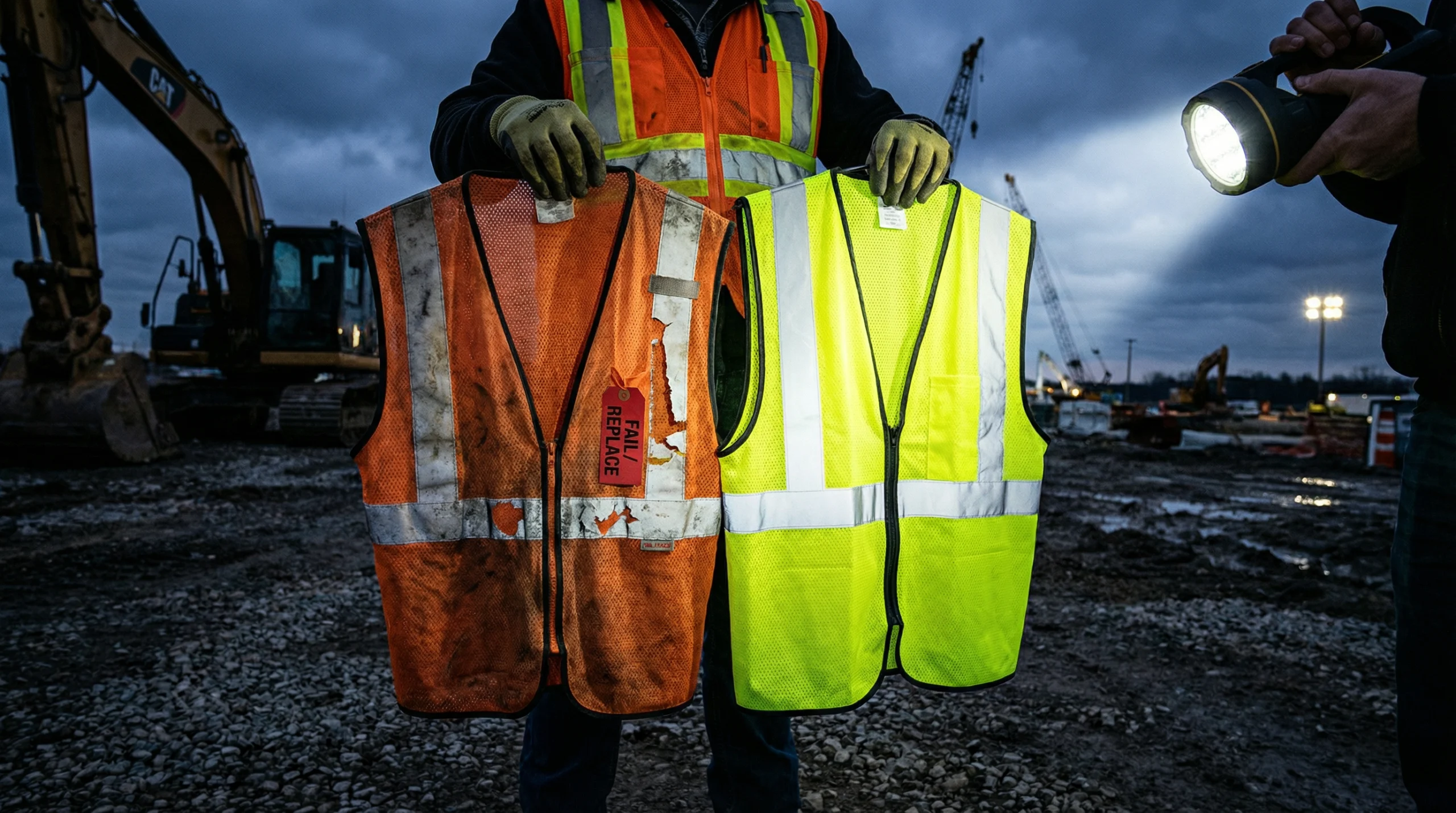
When to replace hi vis clothing is not about age—it’s about performance. If the fluorescent background is faded or the reflective tape is peeling/cracked/dull, the garment may no longer protect you properly.
That means replacement should be driven by condition, not the calendar. Sun, sweat, and repeated washing steadily eat away at certified performance, and under general workplace safety duties PPE only counts when it actually protects — so judge every garment against the bar set by the ANSI/ISEA 107 visibility classes. A two-minute check before every wear is all it takes to catch the signs early.
Safety note: Always follow the garment care label and your workplace safety program. Replace hi-vis gear if reflective trim is peeling/cracked or visibility is reduced.
Quick Links:
- /hi-vis-reflective-care/
- /wash-hi-vis-clothing-reflective-tape/
- /wash-hi-vis-oil-grease/
- /ppe-decontamination-retirement-guide
when to replace hi vis clothing: the 7 biggest signs
Replace hi-vis clothing when it stops performing, not on a fixed schedule. The biggest signs are faded fluorescent fabric, peeling or cracked reflective tape, dull tape at night, tears or seam failure, permanent grime, poor fit, and a site policy that requires replacement. Inspect every garment against these seven signals before each wear and retire it the moment one fails.
1) Faded or dulled fluorescent fabric
Daytime visibility depends on fluorescent brightness. If the garment looks “washed out,” replace sooner. Compare it side-by-side with a new garment when you can — fluorescence fades gradually, so your eyes adjust and you may not notice how far it has slipped until you see the difference.
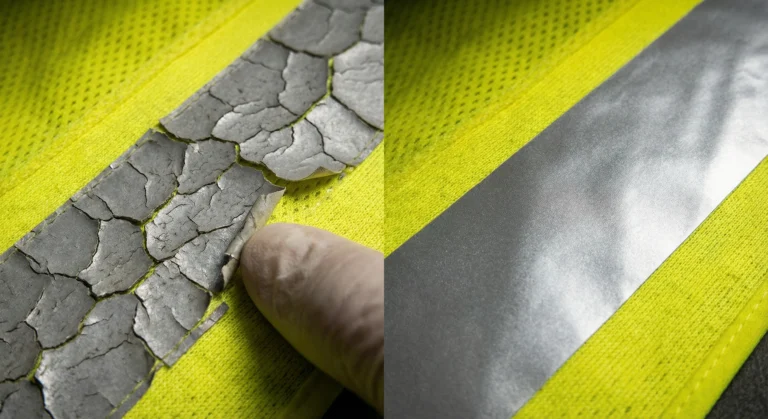
2) Reflective tape is peeling or cracking
Peeling/cracking reduces night visibility. If damage is across working areas, replacement is usually the safest move. Check shoulders and seams first, because flexing breaks the tape bond there before anywhere else.
3) Reflective tape looks dull/gray at night
If headlights don’t “pop” the tape like they used to, treat it as performance loss. A quick check with a flashlight in a safe area tells you in seconds whether the tape still has its snap.
4) Tears, holes, fraying, or seam failure
Coverage and garment integrity matter. Damage reduces safety and durability. Even small holes near reflective bands matter, because they break up the continuous stripes the garment was certified for.
5) Permanent grime/oil film that won’t come out
Heavy soils can cover both fluorescent material and reflective trim. If two proper washes cannot lift it, the soil is permanent — and every layer of film dims both the fluorescent dye and the tape.
6) Poor fit (too loose or too tight)
High-vis clothing must be suitable for actual conditions. Poor fit can reduce coverage and visibility. A vest that rides up or gaps at the sides loses the 360-degree visibility the design was certified for.
7) Employer/site policy says replace
Some jobsites require replacement at specific inspection intervals. Log each replacement date so the next inspection has a clear paper trail.
How do you inspect hi-vis for retirement?
Hold the garment under bright light and check for faded fluorescence, peeling or cracked reflective tape, holes, fraying, and seams pulling apart. Then shine a flashlight on the tape in a dark room to confirm it still reflects strongly. If any check fails, retire the garment immediately rather than waiting for the next scheduled inspection.
Simple routine: check, clean, re-check
Run this loop every time you gear up — it takes about two minutes and catches most failures before they matter.
- Inspect under bright light for fading/damage — fading shows first on shoulders and upper back, where sun hits hardest.
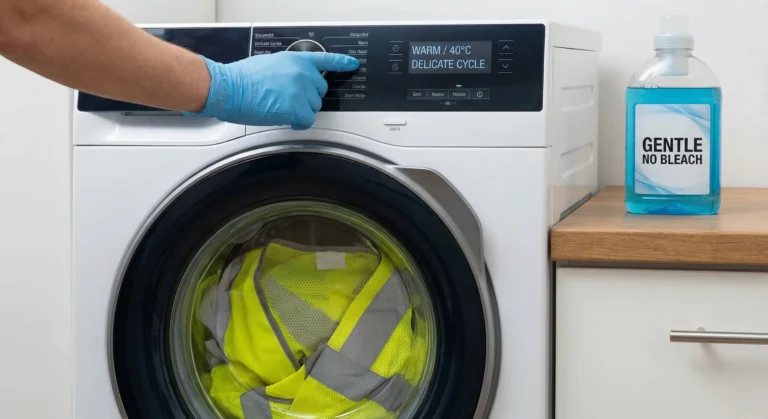
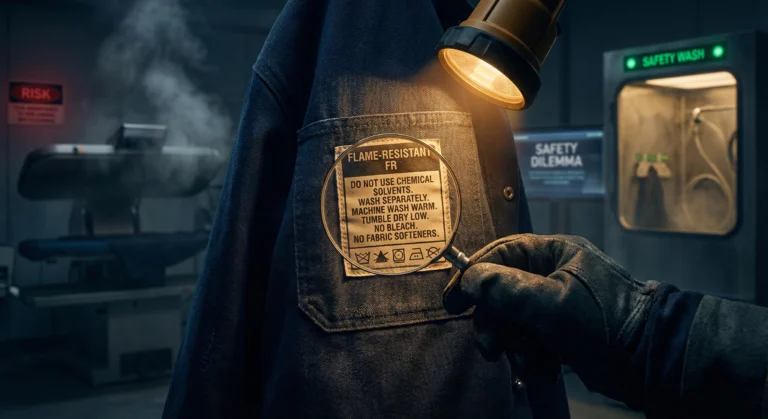
- Clean according to the label — cold water, mild detergent, no bleach or fabric softener. For flame-resistant garments, double-check the best wash temperature for FR clothing so heat doesn’t damage the tape or the treatment.
- Re-check reflective performance at night (safe environment) — a phone flashlight works fine for a quick check.
How long does hi-vis clothing last?
Most manufacturers rate hi-vis garments for around 25 wash cycles, but that is a ceiling, not a promise—hot water, harsh detergents, and sun exposure can kill fluorescence much sooner. Condition always decides, so treat the wash counter as a backup signal. Start each wash with the best detergent for FR clothing, and log wash dates or set an inspection reminder.
Safety note
UK HSE guidance emphasizes high-visibility clothing should be maintained in a clean state and good working order, and that damaged clothing will not protect properly. That same mindset applies for any Tier 1 jobsite: condition matters. If your hi-vis is also flame-resistant, the retirement rules are stricter — see our guide to replacing FR clothing. Under OSHA’s PPE guidance, damaged or degraded gear no longer counts as compliant protection.
Sources for references
- HSE guidance explains that high-visibility clothing must be maintained in
- 3M’s reflective material guidance
How often should you replace hi-vis clothing?
Inspect before every wear. Most hi-vis garments are rated for around 25 wash cycles — but retire on condition: faded fluorescence or cracked, peeling tape means it’s done, whatever the counter says.
Does hi-vis clothing expire if unworn?
Unused hi-vis stored clean, dry, and dark lasts longer, but UV and age still degrade fluorescence over time — inspect it before use even if it’s been sitting in storage.
Can you extend hi-vis clothing lifespan?
Wash cold and inside out, use mild detergent, never bleach or fabric softener, and hang dry or tumble dry low. Gentle care is the only real way to stretch its life.

6 Comments