NFPA 70E Arc Flash Boundary Explained
Before anyone opens an electrical panel, one invisible line has to be established: the arc flash boundary. Step inside it and the PPE rules change completely — which is why every electrical safety program lives or dies on getting it right.
What is the NFPA 70E arc flash boundary? It is the distance from a prospective arc source at which incident energy equals 1.2 calories per square centimeter, the threshold for the onset of a second-degree burn. Inside that distance, arc-rated PPE and qualified-person rules apply; outside it, distance alone is considered protective.
What the Arc Flash Boundary Is
NFPA 70E defines the arc flash boundary as the distance from a prospective arc source at which the incident energy from an arc flash equals 1.2 calories per square centimeter — the widely accepted threshold for the onset of a second-degree burn.
In plain terms: it’s the line where arc-flash heat drops to the second-degree-burn threshold. Inside it, unprotected skin is at serious risk; outside it, distance alone protects you.
The boundary exists so everyone on the job knows exactly where the danger zone starts — no guessing, no “I was only standing nearby.”
How Boundary Distances Are Determined
NFPA 70E offers two paths, and they don’t always give the same answer:
- Incident energy analysis — an engineering calculation based on the specific equipment: available fault current, protective device clearing time, working distance, and system voltage. This is the preferred method because it reflects reality. The calculated boundary goes on the equipment label.
- The NFPA 70E tables — Table 130.7(C)(15)(a) provides default arc flash boundary distances by equipment type and voltage class, for use when no incident energy analysis has been done. These are conservative by design.
The analysis wins either way: it’s specific to your equipment, while the table is a one-size-fits-all estimate.
Common Table Values
The values below are the widely published defaults from NFPA 70E’s tables for common 600-volt-class equipment. Always confirm against the current edition of NFPA 70E — table numbers are revised between editions, and your site’s incident energy analysis overrides the table wherever one exists.
| Equipment (600V class and below) | Typical table arc flash boundary |
|---|---|
| Panelboards and motor control centers (MCCs) | 3 ft 6 in (about 1.1 m) |
| Metal-clad switchgear | Larger than panelboards — check the table |
| Medium-voltage equipment (1 kV–15 kV and above) | Substantially larger — several meters; see the table or the equipment label |
Higher voltage and fault current push the boundary farther out — for anything above 600 volts, read the table or the incident energy study.
What Changes Inside the Boundary
Crossing the arc flash boundary (when an arc flash hazard exists) triggers the full NFPA 70E protection regime:
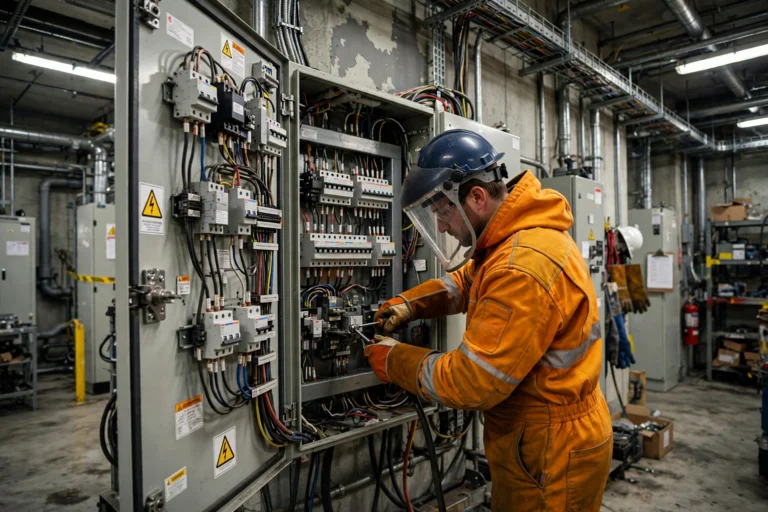
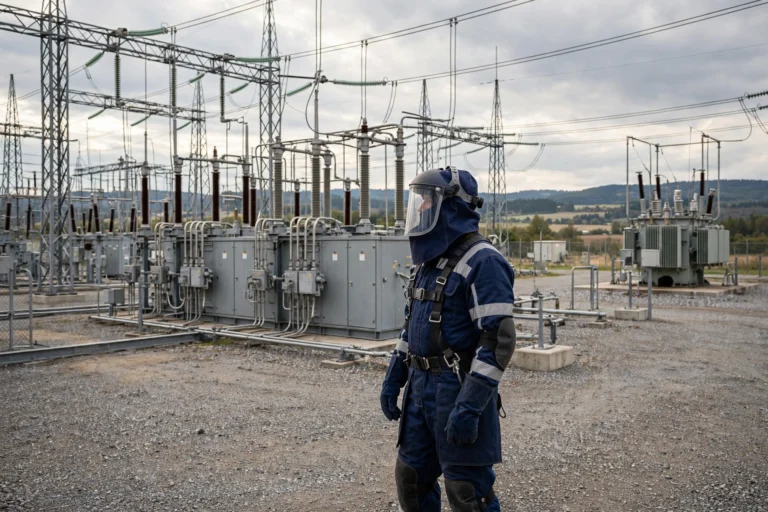
- Arc-rated clothing and PPE matched to the incident energy at the working distance — not generic work clothes. The required protection level comes from the label or the analysis. (See arc flash PPE categories for how the ratings work.)
- Qualified persons only. Unqualified workers stay outside it, behind barricades.
- Barricades and warning signs marking the boundary so nobody crosses it casually.
- An energized work permit in most cases where work happens inside the boundary on energized equipment.
Outside the boundary, none of this applies — which is why the boundary’s exact location matters so much.
Don’t Confuse It With Shock Boundaries
The arc flash boundary is about heat. NFPA 70E also defines shock protection boundaries — the Limited Approach Boundary and Restricted Approach Boundary — which are about electric shock from exposed energized conductors. Different lines, different distances, different purposes — a worker can be inside one and outside the other. Your electrical safety program must address both.
Who Sets the Boundary on Your Site?
The employer does, through the electrical safety program — via the incident energy analysis on the arc flash label, or the NFPA 70E tables where no analysis exists. If your equipment has neither, getting a proper analysis done is the upgrade worth budgeting for.
That employer duty is backed by the general PPE rules: OSHA’s Personal Protective Equipment overview explains that employers must assess hazards, provide suitable protective equipment, and maintain it in a sanitary and reliable condition.
How to Read an Arc Flash Label
The label on the equipment is the fastest way to find the boundary in the field, but it only helps if the crew knows what each value means. Before work starts, confirm the label matches the equipment in front of you and that it has not been covered, damaged, or left over from an older study.
- Arc flash boundary — the distance to keep unprotected people and unqualified workers behind, marked with barricades where needed.
- Incident energy at the working distance — the heat value the PPE must be rated to meet or exceed.
- Required PPE category or arc rating — the clothing and equipment level for work inside the boundary.
- Working distance and system voltage — the conditions the calculation assumed; if the working position changes, the protection may change too.
Do you need an arc flash boundary if the panel is de-energized?
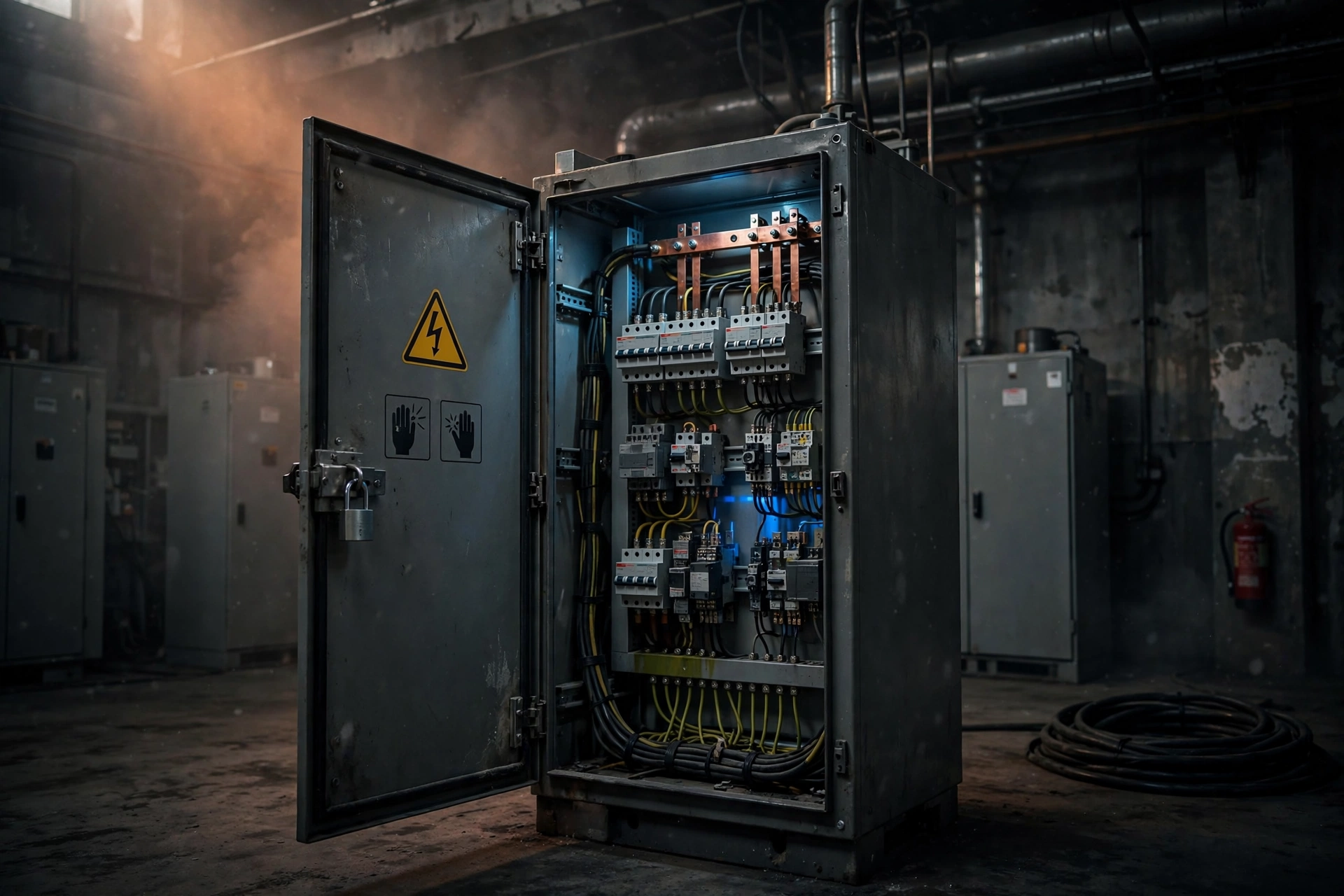
Not in the same way, provided the equipment has been properly de-energized, locked out and tagged out, and verified as de-energized under an electrically safe work condition. Once that condition is established, the arc flash hazard is controlled at the source. Until then, treat the equipment as energized and respect the boundary.
Where do I find the boundary distance for my panel?
Check the arc flash warning label on the equipment — it lists the boundary from the incident energy study. If there’s no label and no study, NFPA 70E’s tables give default distances by equipment type and voltage.
FAQs
What is the arc flash boundary in simple terms?
Is the arc flash boundary the same for all equipment?
Can I cross the arc flash boundary without arc-rated PPE?
Related: Arc Flash PPE Categories · NFPA 70E Arc Flash Label Requirements · OSHA vs NFPA 70E