How to Remove Pet Urine Smell: From Carpet, Floors, and Furniture
The Short Answer
To remove pet urine smell, first clean the stain itself with cold water and dish soap, then neutralize the odor: apply an enzyme cleaner to the area and let it dwell for the full time on the label, or apply equal parts white vinegar and cold water, blot it up, and finish with baking soda on the damp area. Let everything dry completely (6–12 hours) before judging the smell — a damp area always smells stronger than a dry one.
How Do You Remove Pet Urine Smell from Carpet?
Pet urine smell survives when urine reaches the carpet padding, because surface cleaning cannot reach padding. For the carpet itself, the process has two stages: clean the stain, then neutralize the odor.
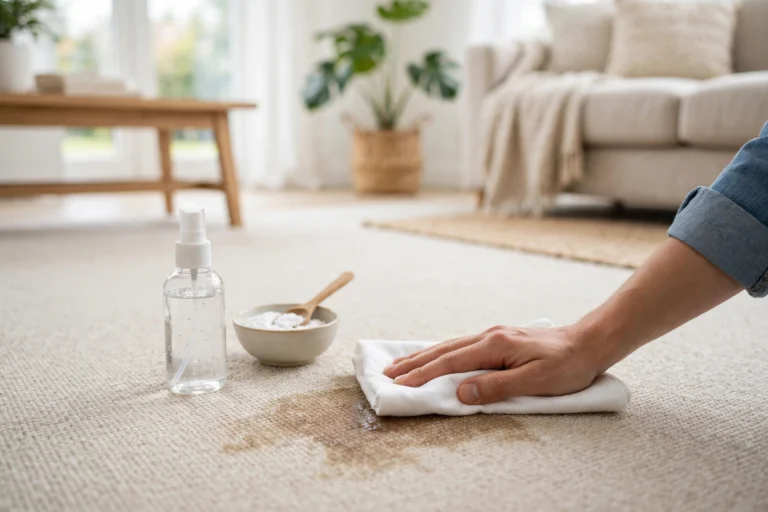
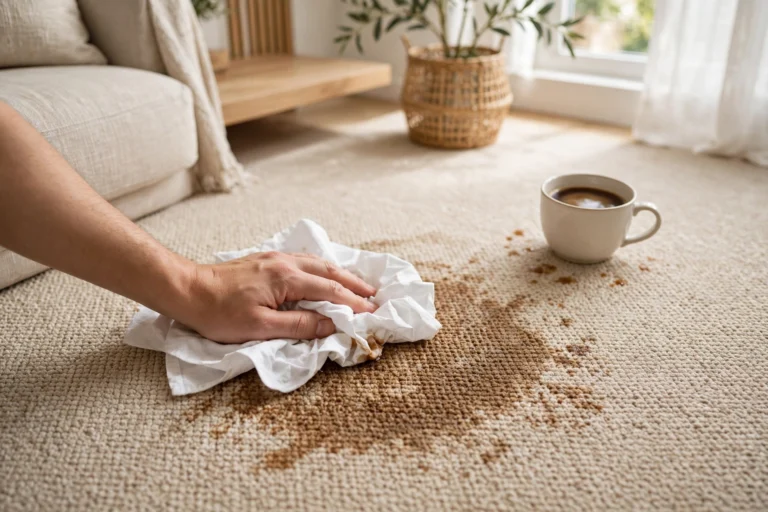
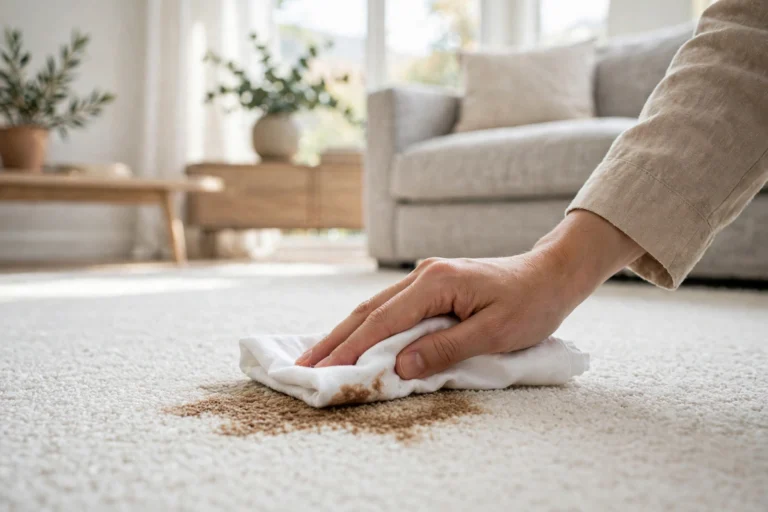
- Clean the stain first. Blot up any liquid, then clean with 1 tablespoon clear dish soap in 2 cups cold water, working outside-in. Blot and rinse-blot with plain water.
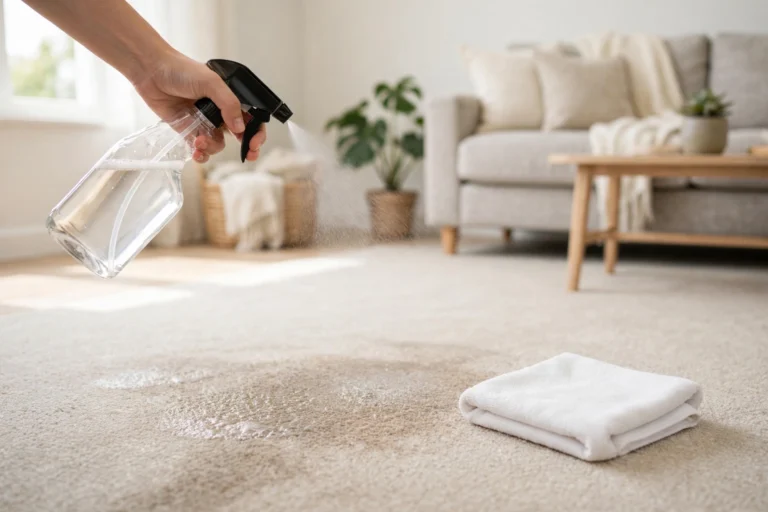
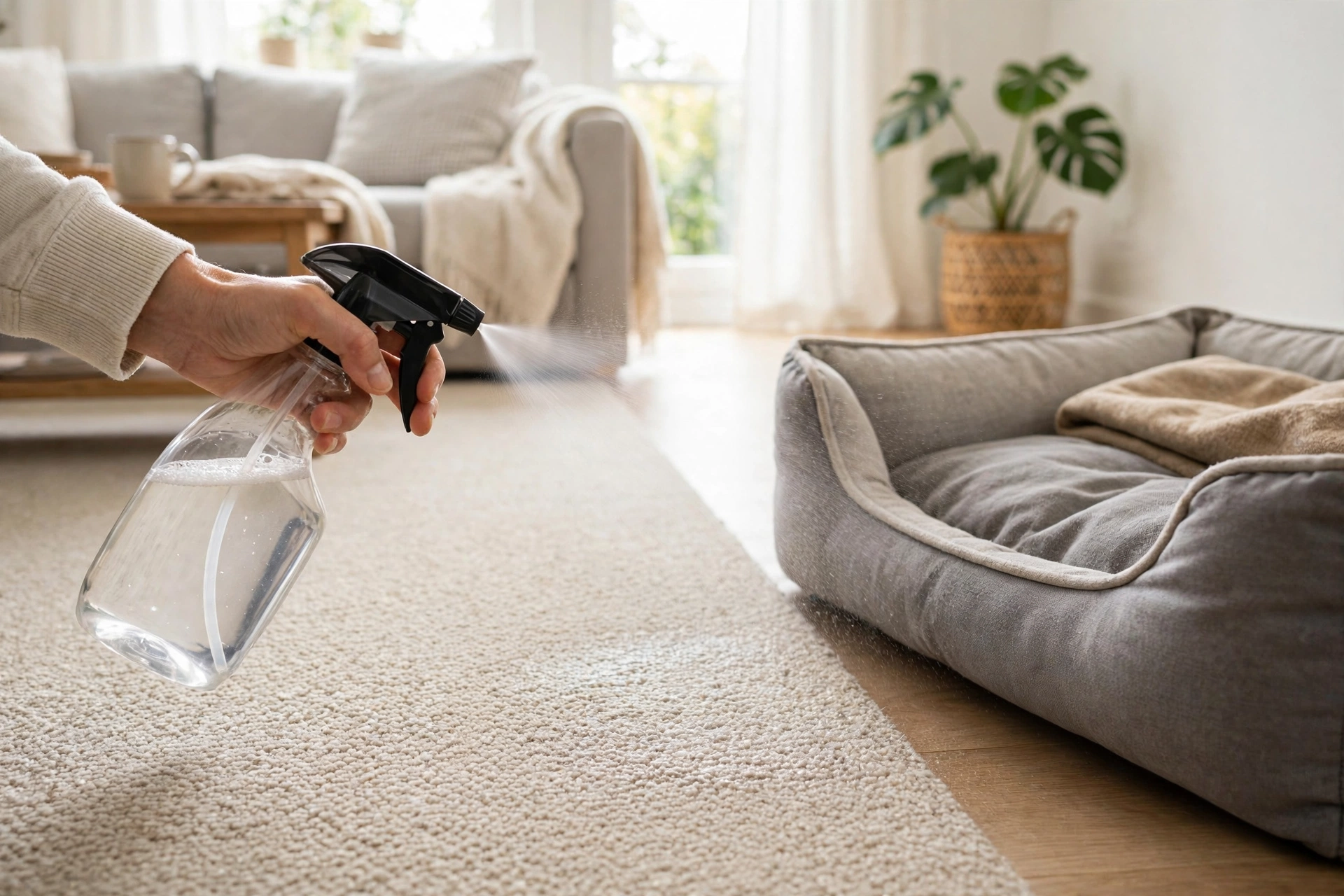
- Apply an enzyme cleaner generously. The area must be damp all the way through, not just on the surface, because the smell lives where the urine reached. Let it dwell for the full label time (usually 10–15 minutes for light smells, up to 24 hours for old, deep smells).
- Blot up the excess and let the carpet dry completely (6–12 hours, longer if the padding got wet).
- Finish with baking soda. Sprinkle baking soda over the dry area, leave it for 2–4 hours, then vacuum slowly in two directions.
If the smell returns after the carpet is fully dry, the padding is saturated. A professional extraction cleaning reaches the padding; in severe cases, the padding itself must be replaced. No surface product fixes saturated padding, and that is an honest limit worth knowing before buying a third bottle of cleaner.
How Do You Remove Old Pet Urine Smell from Carpet?
Old pet urine smell comes from dried uric acid crystals, which reactivate with moisture and release odor again. This is why an old smell can seem gone and then return on a humid day. The fix is an enzyme cleaner, because enzymes break down the uric acid crystals that soap and vinegar cannot dissolve.
Apply the enzyme cleaner generously enough to reach the padding, cover the area with a damp towel to keep it moist, and let it dwell for the full label time — up to 24 hours for old smells. Blot up the excess, let the carpet dry completely, and finish with baking soda and vacuuming. Two treatments are normal for old smells; if the smell survives two full enzyme treatments, the padding is the source and needs professional attention.
How Do You Remove Pet Urine Smell from Hardwood Floors?
Hardwood floors are sealed, so urine usually sits on the finish rather than soaking in — unless the finish is worn or the urine sat for a long time. Wipe up the urine immediately with paper towels, then clean the area with a damp cloth and a small amount of dish soap in cold water. Wring the cloth well — standing water damages wood.
For lingering smell, apply an enzyme cleaner made for hard floors, let it dwell for the label time, and wipe it up. Do not flood a wood floor with any liquid, and never use vinegar in large amounts on wood — vinegar can dull some floor finishes. If the wood is darkened or warped where urine sat, the urine soaked through the finish into the wood itself, and sanding and refinishing that section is the real fix.
How Do You Remove Pet Urine Smell from a Couch?
Couch cushions absorb urine the same way carpet padding does, so the approach is similar: blot up as much liquid as possible, clean the fabric with the dish soap solution (1 tablespoon clear dish soap in 2 cups cold water), and apply enzyme cleaner generously enough to reach the cushion filling. Let it dwell for the full label time, blot up the excess, and let the cushion dry completely — ideally outdoors or near airflow for 12–24 hours.
Check the cushion’s care label first. If the cover is removable and machine-washable, wash it separately in cold water — but only after treating the stain, because heat from a dryer sets urine permanently. If the cushion filling itself smells after treatment, the filling may need replacing; covers can be washed, but saturated foam is very hard to deodorize fully.
How Do You Remove Pet Urine Smell from Wood Floors?
Wood floors (including laminate and engineered wood) follow the same rules as hardwood: wipe up urine immediately, clean with a well-wrung damp cloth and a small amount of dish soap, and use an enzyme cleaner made for hard floors for lingering smell. The key difference from carpet is liquid control — wood floors must never be flooded, because water seeps into seams and edges and causes swelling and warping.
For urine smell in the gaps between boards, apply enzyme cleaner sparingly with a cloth rather than pouring it, let it dwell, and wipe it up. If the smell persists in the gaps after two treatments, the urine has likely reached the subfloor, and that section needs professional attention.
What About Other Surfaces: Rugs, Tile, Mattress, and Concrete?
- Rugs: Treat like carpet — enzyme cleaner, full dwell time, complete drying. Small rugs can be taken outside for airflow, which speeds drying considerably.
- Tile floors: Urine rarely soaks into tile, but it collects in grout lines. Clean tile with dish soap and water, then scrub grout lines with a baking soda paste (3 parts baking soda to 1 part water), let it sit for 10 minutes, and rinse.
- Mattress: Blot up liquid, apply enzyme cleaner sparingly (mattresses must not be soaked), let it dwell, blot up the excess, and sprinkle baking soda over the damp area. Let it dry completely (12–24 hours) before making the bed.
- Concrete: Concrete is porous and absorbs urine deeply. Apply enzyme cleaner generously, let it dwell for the full label time, and repeat. Sealing the concrete afterward with a concrete sealer prevents the smell from returning.
- House smell in general: If the whole house smells, the source is usually one or two spots, not the whole house. Find the spots with your nose close to the floor (or a blacklight in a dark room — dried urine glows under UV light), treat those spots, and ventilate the house for a day. Air fresheners mask the smell; they do not remove it.
What Mistakes Make Pet Urine Smell Worse?
- Using ammonia-based cleaners. Ammonia smells like urine to dogs and cats, which encourages them to mark the same spot again.
- Using hot water or steam. Heat sets urine proteins and locks in the smell permanently.
- Judging the smell before the area is dry. A damp area always smells stronger than a dry one — wait until it is fully dry before deciding the treatment failed.
- Masking instead of cleaning. Air fresheners and scented sprays cover the smell for hours and leave the urine untouched.
- Skipping the padding. If the smell returns after surface treatment, the padding or filling is the source — surface products cannot fix it.
Frequently Asked Questions
Does vinegar remove pet urine smell?
Vinegar neutralizes odor on the surface, because its acidity counteracts the ammonia compounds in urine. It does not break down dried uric acid crystals, so for old smells, an enzyme cleaner is the better choice. For fresh smells, the vinegar method works well: apply equal parts white vinegar and cold water, blot it up, then finish with baking soda on the damp area and vacuum once dry.
Why does pet urine smell come back after cleaning?
The smell returns for two reasons: the urine reached the padding or cushion filling, where surface cleaning cannot reach it; or dried uric acid crystals reactivated with moisture (humidity, a damp carpet, or a new spill). The first case needs professional extraction or padding replacement. The second case needs an enzyme cleaner, which breaks down the crystals instead of just covering them.
Can you get pet urine smell out of carpet without an enzyme cleaner?
For fresh smells, yes — the dish soap method followed by vinegar and baking soda usually works. For old or deep smells, enzyme cleaner is strongly recommended, because it is the only household product that breaks down dried uric acid crystals. Without it, old smells tend to return whenever the carpet gets damp.
Sources and further reading: Carpet and Rug Institute — general carpet care guidance.