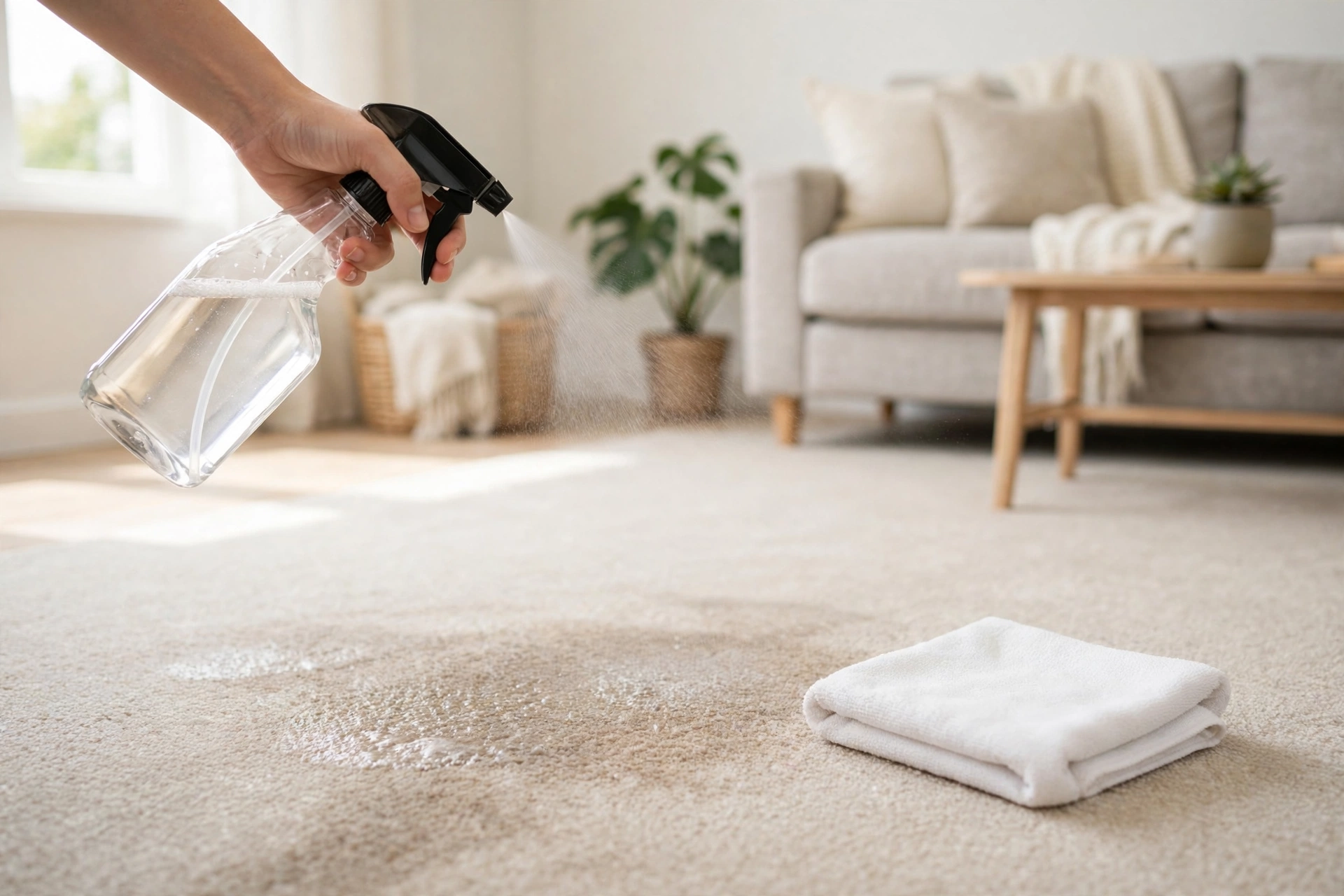
How to Clean Pet Urine from Carpet: Fresh, Old, and Dried Stains
The Short Answer
To clean pet urine from carpet, blot up as much liquid as possible with paper towels, then clean with cold water and a solution of 1 tablespoon clear dish soap in 2 cups cold water, working outside-in. Blot with plain water to rinse, then sprinkle baking soda on the damp area, let it dry completely (6–12 hours), and vacuum. Never use hot water or ammonia cleaners — heat sets urine permanently, and ammonia smells like urine to pets.
How Do You Clean Fresh Pet Urine from Carpet?
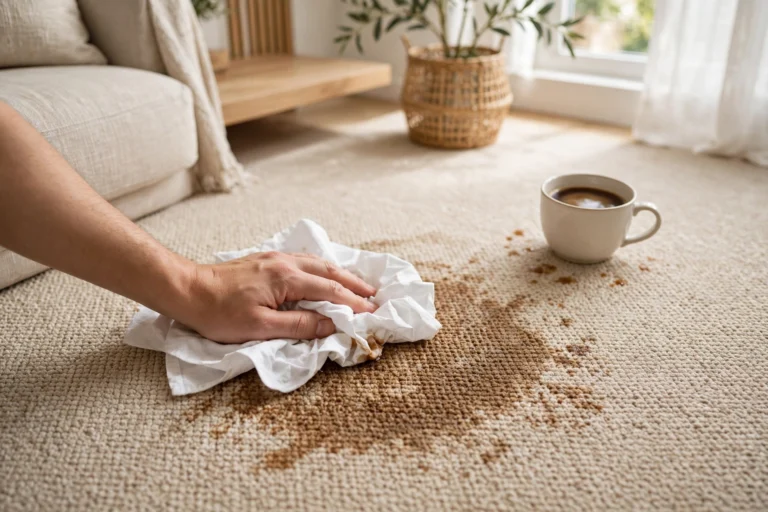
Fresh pet urine is the easiest to clean, because it has not yet dried into the fibers or reached the padding. Speed matters: blot the area immediately with thick layers of paper towels, standing on them to press the liquid out. Keep replacing the towels until they come up nearly dry.
- Blot up the urine. Press paper towels firmly onto the spot, replacing them as they soak through. Do not rub.
- Rinse with cold water. Pour a small amount of cold water (about 1/2 cup) over the spot to dilute what remains, then blot it up again. Repeat once.
- Clean with dish soap solution. Apply 1 tablespoon clear dish soap in 2 cups cold water with a cloth, working outside-in. Blot firmly.
- Rinse-blot with a cloth dampened in plain cold water to remove all soap residue.
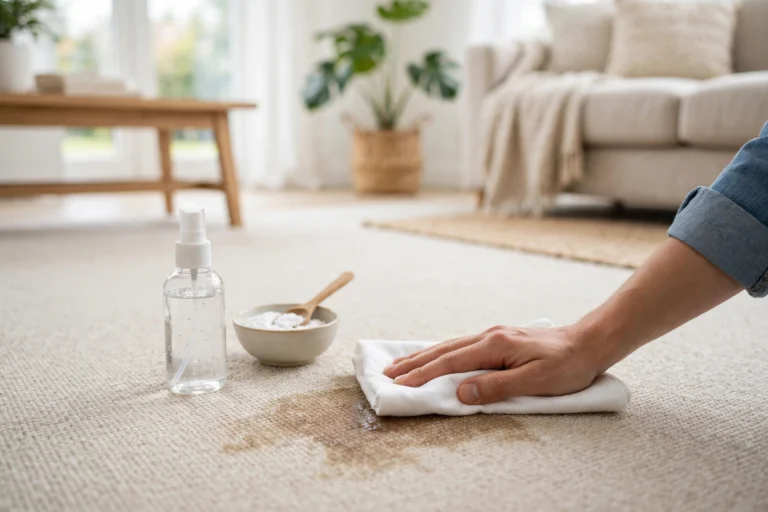
- Deodorize with baking soda. Sprinkle baking soda generously over the damp area, let it dry completely (6–12 hours, overnight is better), then vacuum slowly in two directions.
- Check for smell. Sniff the area close up once it is fully dry. If no smell remains, the job is done.
Do not use hot water at any step. Heat bonds the proteins in urine to carpet fibers and makes the stain and smell permanent.
How Do You Clean Old Pet Urine from Carpet?
Old pet urine needs an enzyme cleaner, because dried urine contains proteins and uric acid crystals that dish soap alone cannot break down. Enzyme cleaners contain live bacteria that digest those proteins — but they only work if they stay wet long enough to do the job.
- Vacuum the area to remove loose, dried material.
- Apply the enzyme cleaner generously — the area must be damp all the way through, not just on the surface, because old urine has usually reached the padding.
- Cover with a damp towel and let it dwell for the full time on the label (usually 10–15 minutes for light stains, up to 24 hours for old, deep stains — follow the label, not a guess).
- Blot up the excess, then clean lightly with the dish soap solution to remove cleaner residue.
- Rinse-blot and dry completely, then finish with baking soda and vacuuming as above.
If the smell returns after enzyme treatment, the padding underneath is saturated. Surface cleaning cannot fix saturated padding; a professional extraction cleaning, or in severe cases padding replacement, is the next step.
How Do You Deep Clean Pet Urine from Carpet?
Deep cleaning means getting the cleaning solution all the way to the padding, not just the carpet surface. After blotting and cleaning the surface as above, apply the enzyme cleaner or dish soap solution generously enough to dampen the padding, then use a wet/dry vacuum to extract the liquid — press the nozzle firmly and make slow passes until almost no moisture comes up. Repeat the apply-and-extract cycle twice.
A rented carpet cleaner with an upholstery attachment does the same job more effectively, because it injects solution and extracts it in one pass. If you rent one, use cold water and a pet-stain cleaning solution, never hot water, and make extra extraction-only passes at the end so the carpet dries within 12–24 hours. Carpet that stays wet longer than 24 hours risks mold.
How Do You Clean Dried Pet Urine from Carpet?
Dried pet urine looks like a faint yellow stain, but the smell is the real problem — dried uric acid crystals reactivate with moisture and release odor. Dampen the stain lightly with cold water and let it sit for 5 minutes to soften the crystals, then apply enzyme cleaner generously and let it dwell for the full label time. Blot, rinse-blot, and dry completely, then finish with baking soda and vacuuming.
Do not steam-clean a dried urine stain before treating it with enzyme cleaner. Steam heat sets the proteins and locks in both the stain and the smell permanently.
How Do You Clean Pet Urine from Carpet Naturally?
The natural method uses only household items: cold water, clear dish soap, white vinegar, and baking soda. Blot up the urine, clean with the dish soap solution (1 tablespoon clear dish soap in 2 cups cold water), rinse-blot with plain water, then apply a solution of equal parts white vinegar and cold water to neutralize odor. Blot again, then sprinkle baking soda on the damp area, let it dry completely, and vacuum.
Note the limit of the natural method: vinegar neutralizes odor on the surface, but it does not break down dried uric acid crystals the way an enzyme cleaner does. For fresh stains, the natural method works well. For old or dried stains, an enzyme cleaner is the better choice.
How Do You Clean Pet Urine from Wool Carpet?
Wool needs the gentlest version of this method: cold water only, half the soap (1/2 tablespoon clear dish soap in 2 cups cold water), and very gentle blotting. Do not use vinegar, hydrogen peroxide, or OxiClean on wool unless the rug’s care label explicitly allows it, and never use an enzyme cleaner on wool unless the label says it is wool-safe — some enzymes damage wool fibers. Dry flat, away from direct heat. For a valuable wool rug, professional cleaning is worth the cost.
How Do You Clean Pet Urine from Carpet with Vinegar?
Vinegar helps with odor because its acidity neutralizes the ammonia compounds in urine. After blotting and cleaning with the dish soap solution, apply equal parts white vinegar and cold water with a cloth, blot, then rinse-blot with plain water and dry. Always test vinegar on a hidden spot first, and never use it on wool. Vinegar is a deodorizer, not a stain dissolver — for the stain itself, you still need the soap method, and for old stains, an enzyme cleaner.
What Mistakes Make Pet Urine Stains Worse?
- Using hot water or steam first. Heat sets urine proteins permanently.
- Using ammonia-based cleaners. Ammonia smells like urine to dogs and cats, which encourages them to mark the same spot again.
- Scrubbing. Scrubbing spreads urine outward and pushes it into the padding.
- Leaving the carpet wet. Carpet that stays damp for more than 24 hours risks mold and mildew.
- Skipping the drying step. Judging the smell before the carpet is fully dry is misleading — a damp carpet always smells stronger than a dry one.
Frequently Asked Questions
Does pet urine stain carpet permanently?
Fresh pet urine rarely stains permanently if it is blotted quickly and cleaned with cold water. It becomes hard to remove when it dries into the fibers, when it reaches the padding, or when it is heat-set by hot water or steam. Old stains usually still improve greatly with enzyme cleaner, even if the padding needs professional treatment for the smell.
Why does my carpet still smell after cleaning pet urine?
The smell survives when urine reached the carpet padding, because surface cleaning cannot reach padding. If the stain looks clean but the smell returns once the carpet dries, the padding is the source. A professional extraction cleaning reaches the padding; in severe cases, the padding itself must be replaced.
Can you use vinegar and baking soda together on pet urine?
Yes, but in sequence, not at the same time. Apply the vinegar solution first, blot it up, then sprinkle baking soda on the damp area and let it dry before vacuuming. Mixing vinegar and baking soda together in a bowl just makes fizz — the fizz does the cleaning, and once it stops, the mixture is mostly water. Applied in sequence, each one does its own job.
Sources and further reading: Carpet and Rug Institute — general carpet care guidance.