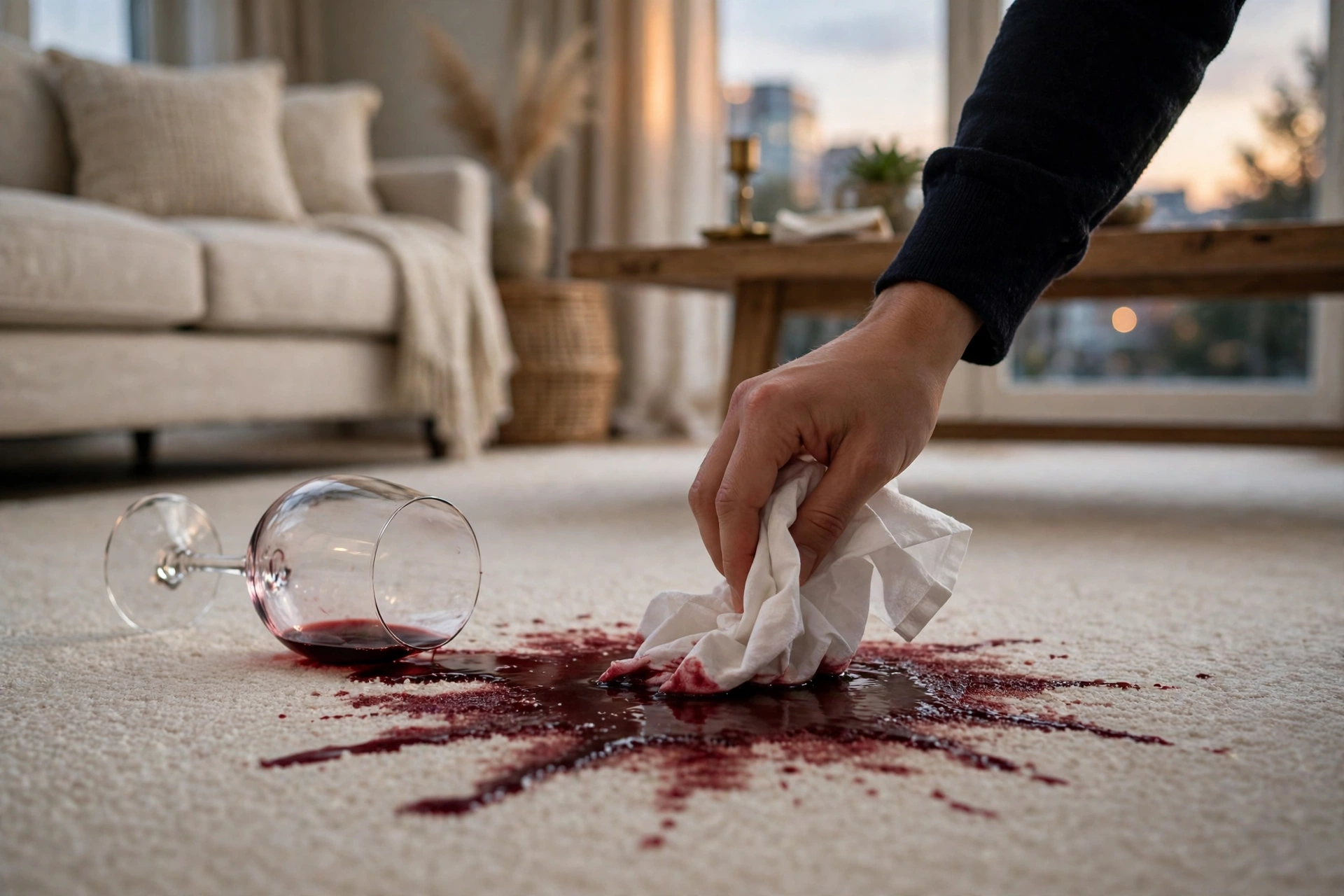
How to Remove Red Wine Stains from Carpet: Fresh, Old, and Dried
The Short Answer
To remove a red wine stain from carpet, blot it immediately with a clean white cloth, then cover the stain with salt or baking soda to absorb the remaining wine. Let the absorbent dry (30–60 minutes), vacuum it up, then clean what remains with a solution of 1 tablespoon clear dish soap in 2 cups cold water, working outside-in. Blot with plain water to rinse, then dry completely.
How Do You Remove Fresh Red Wine Stains from Carpet?
Fresh red wine is the easiest wine stain to remove, because the wine has not yet dried into the fibers. The key move is absorption before cleaning — pulling the wine up out of the carpet beats trying to wash it out afterward.
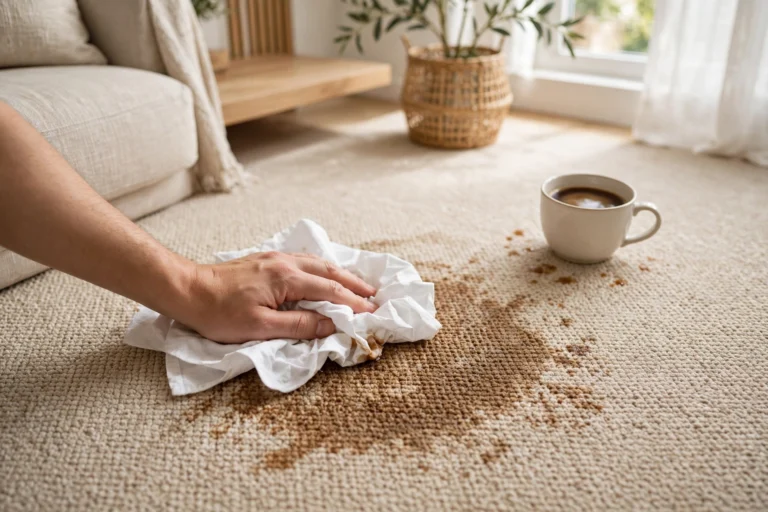
- Blot immediately with a clean white cloth, pressing firmly and refolding to a clean section. Do not rub, and do not use a red or colored cloth — dye can transfer to wet carpet.
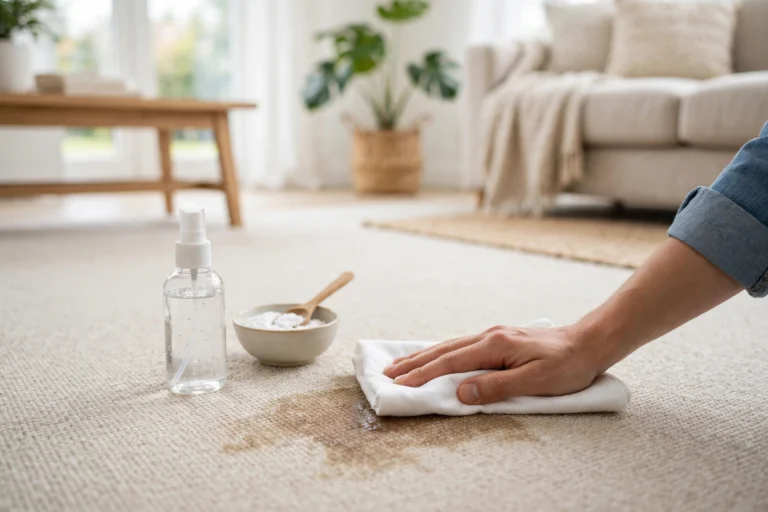
- Cover the stain with salt or baking soda. Pour a generous layer over the entire stain. The absorbent draws wine up out of the fibers as it dries. Leave it for 30–60 minutes, or until it is fully dry and crusty.
- Vacuum up the absorbent slowly, in two directions.
- Clean the remaining mark with the dish soap solution (1 tablespoon clear dish soap in 2 cups cold water), applied with a cloth, working outside-in.
- Rinse-blot with a cloth dampened in plain cold water to remove all soap residue.
- Dry completely (6–12 hours with airflow). Do not walk on the spot until it is dry.
Salt and baking soda work equally well as absorbents. Baking soda has the extra benefit of absorbing odor, so it is the better choice if the wine smell lingers.
How Do You Remove Old Red Wine Stains from Carpet?
Old red wine stains have dried into the fibers and oxidized, which deepens the color. The method is the same, but the absorbent step is skipped (there is no liquid left to absorb) and the dwell time is longer. Vacuum the area first, then apply the dish soap solution and let it sit for 15 minutes so it can loosen the dried wine. Blot firmly, rinse-blot with plain water, and repeat the full cycle two or three times.
If a pink or purple shadow remains after three rounds, dab 3% hydrogen peroxide onto a white cloth (never pour it directly on the carpet) and press it on the stain for 10–15 minutes, then blot and rinse. Hydrogen peroxide is for light-colored carpets only — test it on a hidden corner first and wait 24 hours, and never use it on dark carpets or wool. Old wine stains that have already been steam-cleaned may be permanently set, because heat bonds the wine’s tannins to the fibers.
How Do You Remove Dried Red Wine Stains from Carpet?
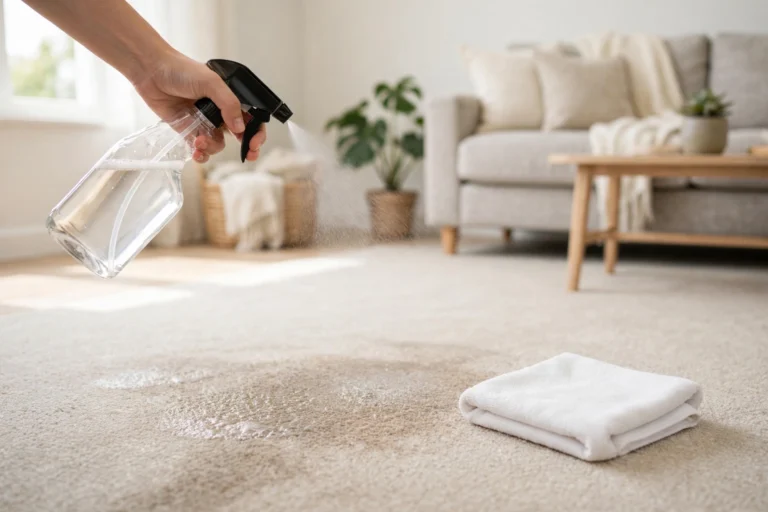
Dried red wine needs moisture reintroduced slowly. Dampen the stain lightly with plain cold water and let it sit for 5 minutes to soften the dried wine, then apply the dish soap solution, let it dwell for 10–15 minutes, blot firmly, and rinse-blot. Repeat as needed — dried stains normally need two or three rounds. For a dried stain on a light carpet that survives two rounds, use the hydrogen peroxide method above (tested first, light carpets only). Do not use hot water at any step: heat sets wine tannins permanently.
How Do You Remove Red Wine Stains from Wool Carpet?
Wool needs the gentlest version of this method: cold water only, half the soap (1/2 tablespoon clear dish soap in 2 cups cold water), and very gentle blotting — never scrubbing. Do not use hydrogen peroxide, vinegar, or OxiClean on wool unless the rug’s care label explicitly allows it, and dry the area flat, away from direct heat. For a valuable wool rug, professional cleaning is worth the cost — a red wine stain on wool is one of the hardest stains to fix at home, and a wrong chemical can damage the rug permanently.
What Mistakes Make Red Wine Stains Worse?
- Using hot water. Heat sets wine tannins into fibers permanently.
- Rubbing instead of blotting. Rubbing spreads the wine and pushes it deeper.
- Using a colored cloth. Dye from a red or printed towel transfers to wet carpet and adds a second stain.
- Pouring white wine on red wine. This old tip dilutes the stain but does not remove it, and it adds more liquid to the carpet — blotting and absorption work better.
- Skipping the rinse. Leftover soap attracts dirt, and the stain appears to return within days.
- Using bleach on colored carpet. Bleach removes the carpet’s color along with the stain, leaving a light patch.
Frequently Asked Questions
Does salt really work on red wine stains?
Yes, for fresh stains. Salt (and baking soda) absorbs liquid wine out of the carpet fibers as it dries, which removes a large part of the stain before any cleaning starts. It does not work on dried stains, because there is no liquid left to absorb — for dried wine, the dish soap method with a longer dwell time is the right approach.
Can red wine stains be removed after they dry?
Usually, yes, with patience. Dried wine needs the dish soap solution with a 10–15 minute dwell time and two or three full rounds. A faint shadow may remain on very light carpets, in which case hydrogen peroxide (tested first, light carpets only) is the next step. Wine that has been steam-cleaned or heat-treated is the exception — heat-set tannins may be permanent.
Should you use white wine to clean red wine?
No. White wine dilutes red wine but does not remove it, and it adds more liquid to the carpet, which pushes the stain deeper. Blotting immediately, absorbing with salt or baking soda, and cleaning with the dish soap solution removes more wine with less liquid — and less liquid means a faster dry and less risk of the stain returning.
Sources and further reading: Carpet and Rug Institute — general carpet care guidance.