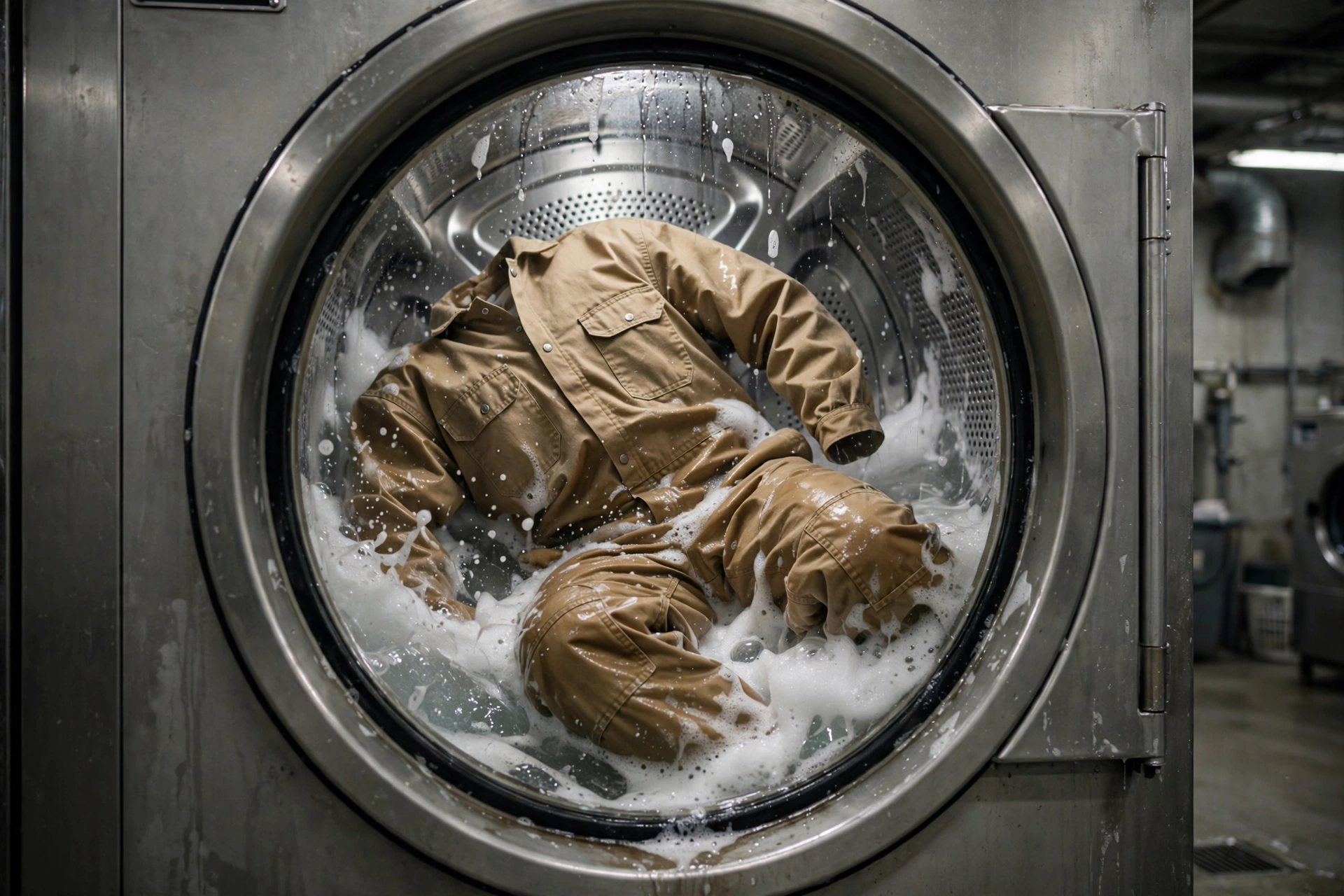
Does FR Clothing Wash Out? Inherent vs Treated FR Explained
“It’s been washed a hundred times — is it still FR?” It’s the most common question in FR workwear, and the answer depends entirely on one thing: whether your garment is inherent or treated FR. Get this wrong and you either retire good gear early or — worse — trust protection that’s already gone.
Inherent vs Treated FR: The Core Difference
All FR clothing falls into two families, and they behave very differently in the laundry. (See the full materials breakdown in what FR clothing is made of.)
| Inherent FR | Treated FR | |
|---|---|---|
| How protection works | Flame resistance is built into the fiber itself | Flame-retardant chemical treatment applied to cotton or cotton blends |
| Can washing remove it? | No — you can’t wash out what’s part of the fiber | Not with correct washing — but harsh laundering destroys the treatment |
| What degrades it | Physical wear, UV, chemical damage | Bleach, fabric softener, hard water residue, excessive heat |
| Typical examples | Aramid fibers, modacrylic blends | Treated cotton, treated cotton-nylon blends |
The short version: inherent FR cannot wash out. Treated FR won’t wash out either — if you wash it right. Protection disappears only when the garment is laundered wrong or physically destroyed.
Does Inherent FR Wash Out?
No. The flame resistance of an inherent FR fiber is a property of the material itself — like the color of a carrot. No amount of washing, detergent, or hot water changes what the fiber is. An aramid coverall washed 200 times is still made of aramid.
What washing can do to inherent FR is indirect damage:
- Abrasion from overloaded washers or harsh cycles thins the fabric, and thinner fabric protects less.
- Chemical attack from bleach or industrial solvents can degrade even aramid fibers over time.
- Contamination — oil-soaked FR, even inherent, is compromised until properly cleaned, because the contaminant itself burns.
So the garment doesn’t “lose” its FR — it wears out. That’s a retirement question, not a wash-out question. (See when to replace FR clothing.)
Does Treated FR Wash Out?
Treated FR is where the worry comes from — and mostly, it’s misplaced. The flame-retardant treatment on quality treated cotton is engineered to last the life of the garment through repeated laundering. It doesn’t rinse away like a coating; it’s chemically bonded to the fibers.
But “the life of the garment” assumes you follow the rules. The treatment is destroyed by:
- Chlorine bleach — the number-one killer of FR treatments. One bleach load can do irreversible damage.
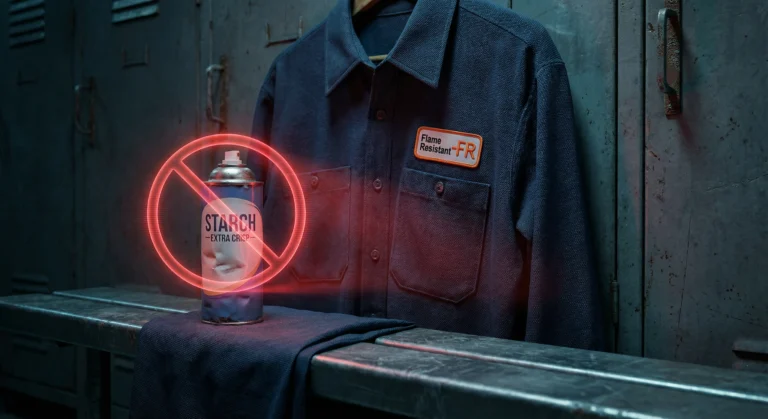
- Fabric softener — coats fibers with flammable residue and masks the treatment.
- Hard water plus wrong detergent — mineral buildup insulates fibers and interferes with the treatment.
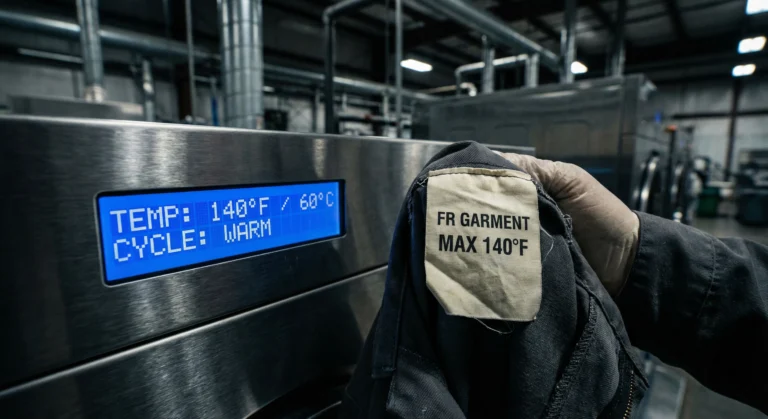
- Excessive heat — commercial dryers run far hotter than the treatment tolerates.
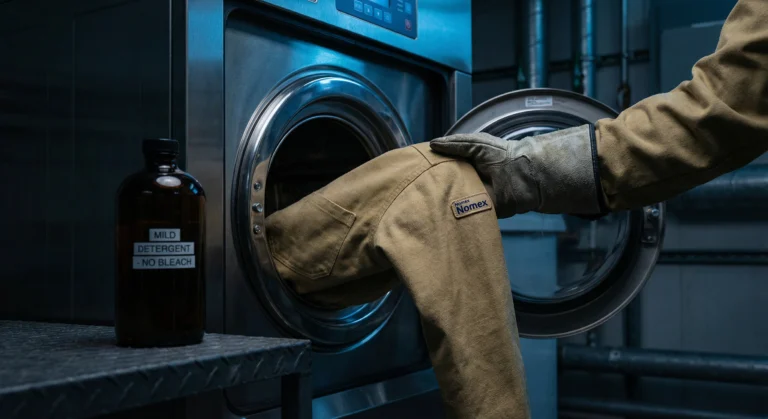
Wash treated FR per the care guide — mild detergent, no bleach, no softener, moderate temperatures — and the protection lasts as long as the fabric does.
How Washing Affects Each Type
The rules are the same for both families, and they’re simple:
- Mild detergent only. No bleach, no softener, no starch, no “oxy” boosters.
- Wash FR separately. Regular laundry introduces lint, softener residue, and bleach carryover.
- Don’t overheat. Warm water, moderate dryer heat — or line dry.
- Clean contamination fast. Oil, grease, and flammable soils must come out fully; a contaminated garment isn’t protected regardless of type.
- Follow the garment label. The strictest label wins — always.
Signs the Protection Is Gone
Stop asking “how many washes?” and start looking for these:
- Thinning or holes — worn-through fabric can’t protect, inherent or treated.
- Stiffness or coating changes on treated garments after chemical exposure.
- Bleach or chemical damage — discoloration, weakened fibers, odd smells after washing.
- Contamination that won’t wash out — ground-in oils or solvents mean retirement.
- Failed inspection — your site’s FR inspection program is the final word.
Fading alone is not a sign of lost protection. FR garments fade like any workwear; color loss doesn’t equal FR loss.
Can you restore FR protection after washing it out?
No, not for treated FR. Once bleach or harsh chemicals destroy the flame-retardant treatment, no wash additive or re-treatment at home restores it. Inherent FR never washes out in the first place, so there is nothing to restore. If treated FR protection is gone, the garment must be retired and replaced, not revived.
Does hot water wash out FR treatment?
Hot water alone does not wash out a properly bonded FR treatment, but excessive heat degrades it over time. That is why care labels specify warm water and moderate dryer heat rather than hot cycles. Combined with bleach, softener, or hard water residue, high heat accelerates treatment breakdown, so keeping temperatures moderate protects the garment’s full service life.
FAQs
Will my FR clothing still work after 100 washes?
If it’s inherent FR, yes — assuming no physical damage or chemical abuse. If it’s treated FR washed correctly, with no bleach and no softener, yes as well. Wash count alone doesn’t kill FR protection; bad laundering does, so judge the garment by its condition, not by how many times it has been washed.
Can one bleach wash ruin treated FR?
It can seriously degrade the treatment. A single exposure to chlorine bleach may not destroy it completely, but it causes irreversible damage — which is why bleach is a hard never, not a ‘just this once.’ Once the treatment is damaged, the garment cannot be restored, so it must be inspected and usually retired.
How do I know if my treated FR still protects?
You can’t tell by looking. Follow the care rules strictly, inspect for damage and contamination, and retire garments on condition — not on a wash counter. If bleach or unknown chemicals touched it, assume the worst and take it out of service, because hidden treatment damage leaves no visible warning.
Does fading mean the FR is gone?
No. Color fading is cosmetic. The FR property lives in the fiber (inherent) or the bonded treatment (treated) — neither one is the dye. Judge retirement by fabric condition, not color.
Related: What Is FR Clothing Made Of? · FR Clothing Care Guide · When to Replace FR Clothing · OSHA: Personal Protective Equipment — Overview