
How to Wash FR Clothing in Hard Water (Reduce Residue + Keep Protection)
Hard water Fr Clothing can turn “normal” laundry into a constant battle: stiff fabric, dingy colors, detergent film, and odors that don’t fully rinse out. With FR / arc-rated workwear, you also have to be careful about what additives you use, because many FR brands prohibit common laundry “boosters” like bleach, peroxide products, softeners, and starch.
This hard water FR clothing guide gives a conservative, label-friendly routine for washing FR clothing in hard water—focused on better cleaning through rinsing and process, not risky chemistry.
Safety note: Always follow the garment care label and your workplace safety program.
Quick links:
-
/fr-clothing-care/ /fabric-softener-on-fr-clothing/-
/oxygen-bleach-on-fr-clothing/ -
/diesel-smell-fr-clothing/ -
/ppe-decontamination-retirement-guide/
1) What counts as “hard water” (and why it affects laundry)
The U.S. Geological Survey explains that water hardness is mainly caused by dissolved calcium and magnesium. In hard water, soap can react with calcium to form “soap scum,” and you often need more soap/detergent to get things clean—including laundry.
What you may notice at home:
- detergent doesn’t lather much
- stiff or “crunchy” fabric
- white streaks or film (residue)
- odors that seem “stuck” even after washing
2) The FR hard-water problem: residue vs. “too much detergent”
Hard water pushes you to use more detergent—but using too much detergent can also leave residue if it doesn’t rinse out.
A practical workaround is:
- increase cleaning power with extra rinse and better wash practices first
- only increase detergent in small steps
- keep your routine within FR care rules (no softener, no bleach/peroxide, etc.)
Some NFPA 2112 user guidance (example: the 5.11 NFPA 2112 User Information Guide) specifically suggests using more mild detergent if wash water is very hard, and also recommends a double rinse.
3) Safe wash routine for FR clothing in hard water (step-by-step)
Step A — Sort like a “contamination control” person
- Wash FR items separately (especially if you work around oils/grease).
- Turn garments inside out (helps to remove sweat odor from FR clothing /soil and reduces surface abrasion).
This “wash separately + inside out” approach is commonly recommended in NFPA 2112 user guidance and by FR brands. 2
Step B — Choose temperature based on the strictest rule
Follow your garment label first.
As a real-world example, Carhartt’s FR care instructions specify:
- unlined FR: machine wash warm not to exceed 160°F / 70°C
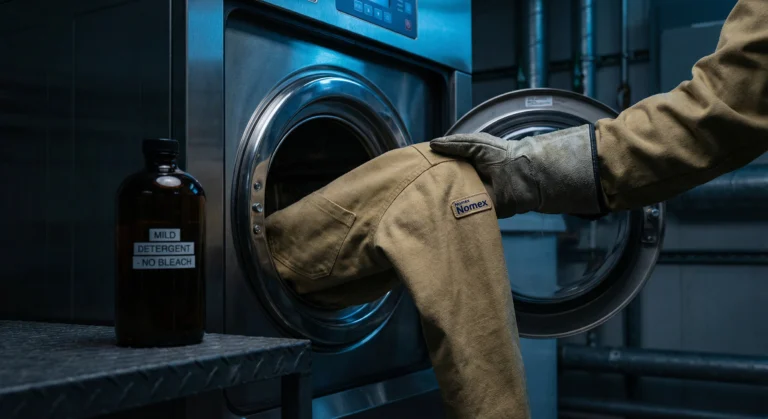
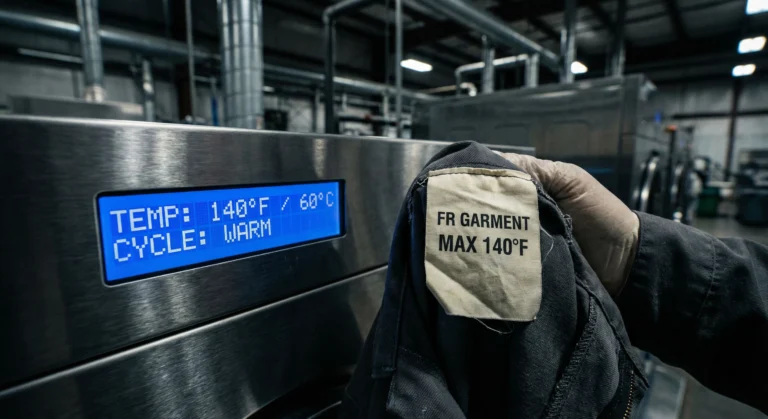
- lined FR: machine wash warm not to exceed 140°F / 60°C …and they prohibit chlorine bleach, hydrogen peroxide bleach, softeners, and starch. 3
If you own mixed FR garments, using warm 140°F / 60°C max is a conservative “one setting fits most” baseline (label permitting).
Step C — Detergent: start normal, then adjust slightly
- Start with a normal dose of a standard detergent.
- If you suspect very hard water, adjust gradually (small increases), not “double” right away.
- Prefer “clean” laundering over “additive hacks.”
Ariat Crew’s FR care guidance warns against laundry additives and also says products containing hydrogen peroxide should not be used; it further states chlorine bleach and oxygen bleach (hydrogen peroxide) must never be used.
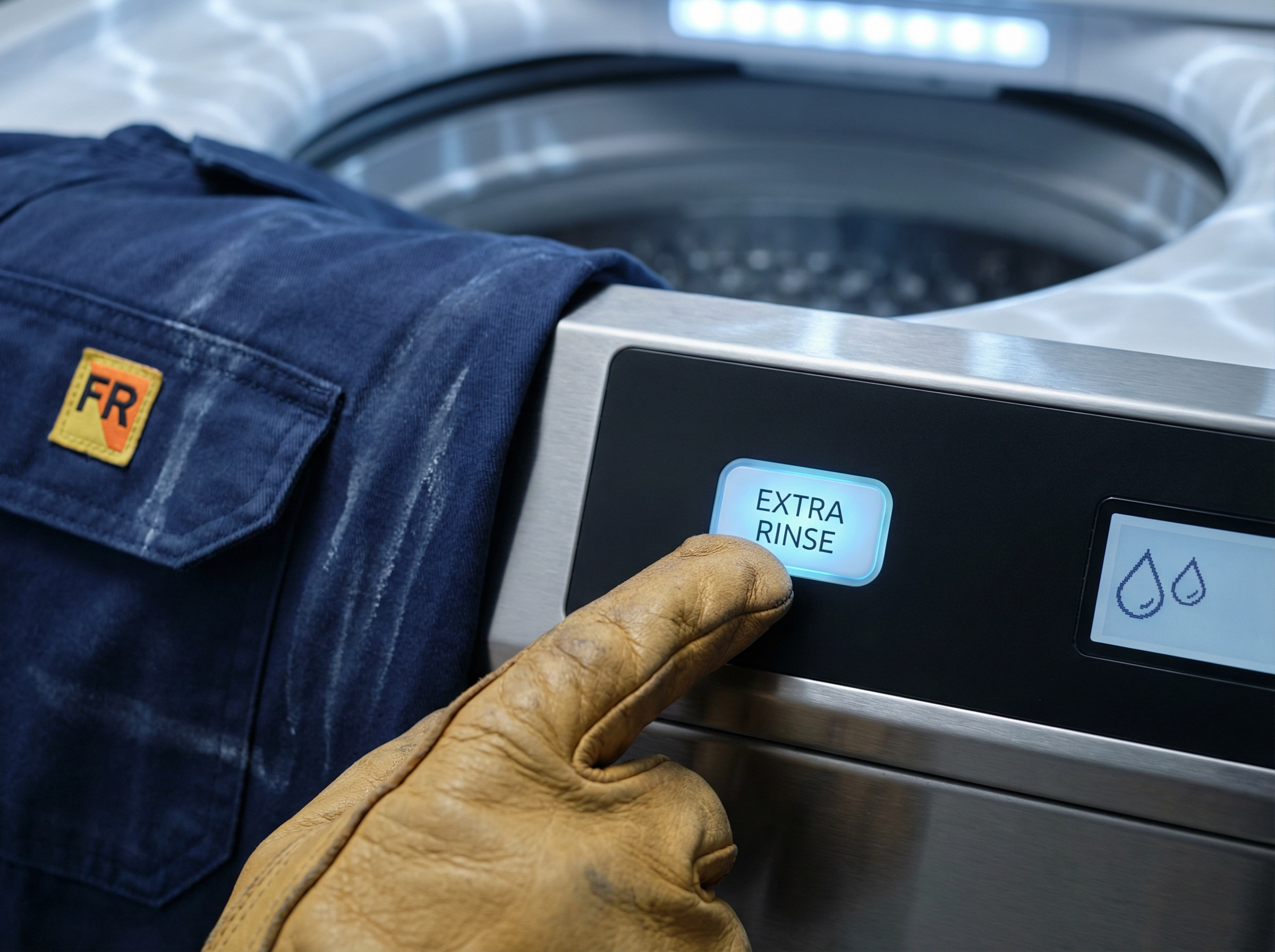
Step D — Add an extra rinse (non-negotiable in hard water)
Hard water = residue risk. Extra rinse helps remove:
- minerals + detergent film
- trapped odor compounds
The 5.11 NFPA 2112 user guide explicitly recommends double rinse in its in-house washing instructions. 2
Step E — Dry conservatively
- Use low heat (or air dry).
- Remove promptly to reduce over-drying.
Over-drying concerns show up in multiple FR care sources (e.g., NWCG for Nomex and Ariat care guidance). 5
4) What NOT to use on FR clothing (especially in hard water)
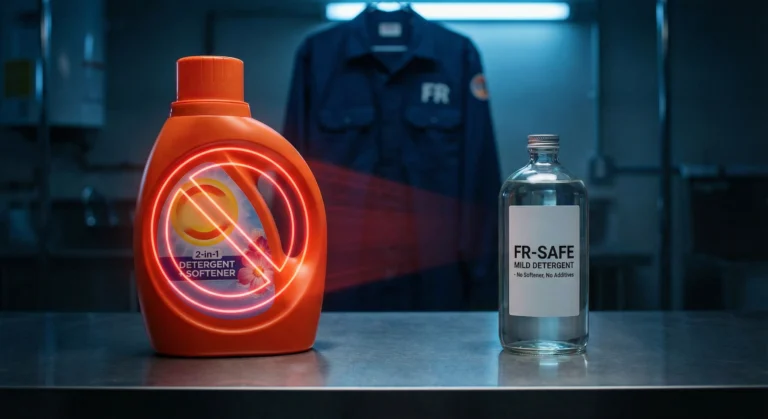
Hard water makes people reach for boosters—but many are not FR-safe.
Avoid (unless your care label explicitly allows it)
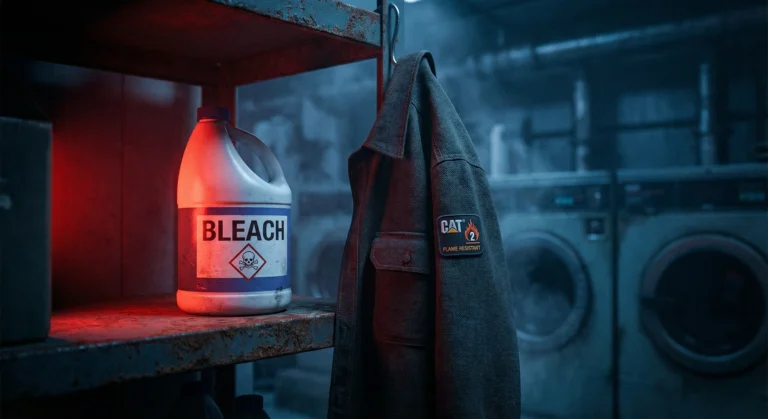
- chlorine bleach
- oxygen bleach / hydrogen peroxide products
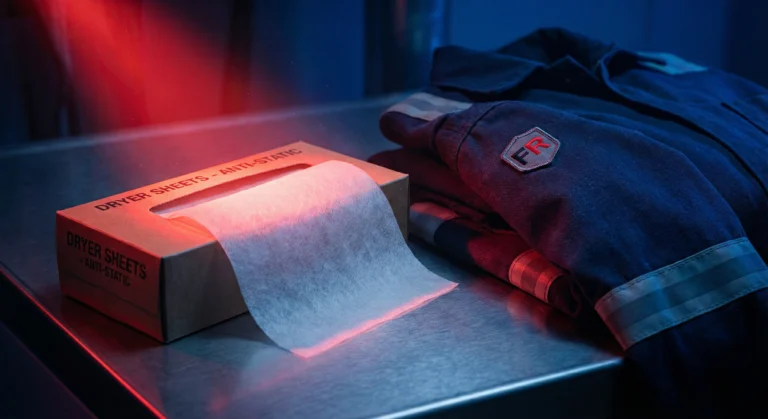
- fabric softener / dryer sheets
- starch
Carhartt explicitly prohibits chlorine bleach, hydrogen peroxide bleach, softeners, and starch for their FR items.
Ariat Crew also prohibits bleach and oxygen bleach/hydrogen peroxide, and tells users to avoid softener and starch.
NFPA 2112 user guidance (example: 5.11 guide) also warns against chlorine bleach and fabric softeners.
5) When “hard water + FR” becomes a safety issue
If odors are coming from fuel/solvent exposure, don’t treat it like normal laundry.
NFPA 2112 user guidance states garments contaminated by hazardous or caustic materials must be removed from service and retired unless a qualified authority demonstrates safe decontamination.
FAQ
Does hard water “ruin” FR clothing?
Hard water mainly affects cleaning performance and residue. The bigger risk to FR performance is often contamination (oils/flammables) and improper care additives.
Should I install a water softener?
If you’re consistently fighting stiffness/residue and you wash a lot of workwear, a softener can improve overall laundering results—but follow workplace and garment guidance.
3 Comments