How Long Does FR Clothing Last? FR Lifespan Guide
How long does FR clothing last? In daily industrial use, most FR garments last 1 to 2 years, or roughly 50 to 150 washes depending on fabric and care, and they should be retired on condition, not on a fixed date.
“How many washes?” is the wrong question — but it’s the one everyone asks. FR clothing doesn’t expire on a counter. It lasts until condition, contamination, or damage says otherwise. Here’s how to think about lifespan the way safety programs do.
Typical Lifespan Ranges
These are industry rules of thumb for garments in regular industrial use, washed correctly.
| Garment type | Typical wash life | Typical time life |
|---|---|---|
| Inherent FR coveralls (daily use) | 100–150+ washes | 1–2 years |
| Treated FR cotton (daily use) | 50–100 washes | 1–1.5 years |
| FR shirts/pants (rotated) | 75–125 washes | 1.5–2 years |
| Occasional-use FR (visitors, contractors) | Far fewer washes | 3–5 years if stored right |
These are averages, not guarantees. A garment retired at 40 washes and one lasting 200 are both normal — it depends on everything below. Some employers set fixed retirement schedules (for example, 12 months for daily wear); if yours does, the schedule wins.
What Shortens FR Life
Wash count is only one factor. These kill garments faster:
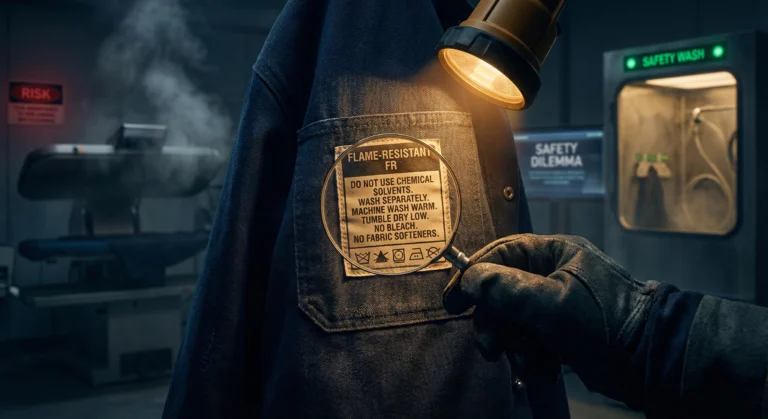
- Harsh laundering — bleach, softener, excessive heat. The fastest way to destroy treated FR.
- Physical abuse — abrasion, snags, sharp edges, kneeling on concrete. Thin spots are weak spots.
- UV exposure — sunlight degrades fibers over time; gear left on truck dashboards ages fast.
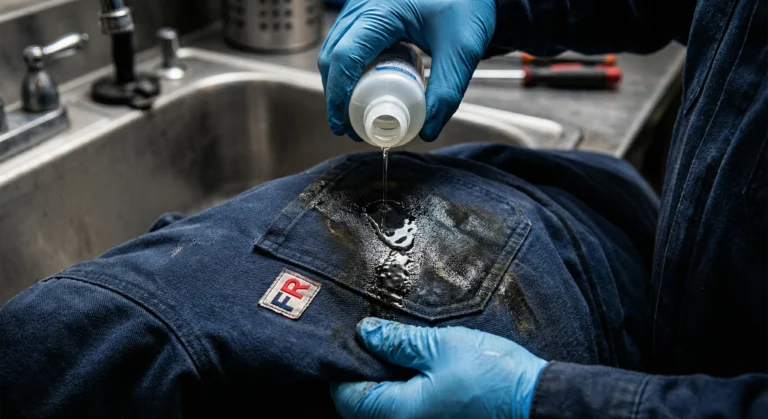
- Chemical exposure — solvents, acids, and petroleum products attack fibers and treatments.
- Contamination — ground-in oils or flammable soils that won’t fully wash out.
- Poor storage — damp, crumpled, chemical-adjacent storage shortens life between wears.
Two identical coveralls can have wildly different lifespans depending on the job and the laundry.
Inherent vs Treated Lifespan
Inherent FR generally lasts longer because there’s no treatment to degrade — the garment retires when the fabric physically wears out. Aramid garments in particular are abrasion-tough.
Treated FR lasts as long as the treatment survives correct laundering. Washed right, treated cotton serves its full fabric life. Washed wrong once or twice with bleach, and the treatment — and the garment — are done early.
The economics: inherent costs more upfront but often wins on cost-per-wear. Treated costs less but demands laundry discipline. (Compare the materials in NFPA 2112 explained and our materials guide.)
A simple cost check helps: divide the garment price by its expected washes in your program, not by the manufacturer’s maximum. A $120 coverall lasting 120 washes costs $1 per wash; a $60 treated garment retired at 40 washes costs $1.50, before counting replacement downtime. Use your own wash logs, not a catalogue claim, for that math.
How to Track FR Lifespan in Practice
Do not rely on memory. When a garment enters service, mark its in-service date on the care label or in a simple log, and record each wash if your program tracks wash counts. Rotation helps more than any single wash trick: three sets in rotation cut daily wear, reduce heat exposure, and make inspection gaps obvious. If a garment is shared, log the user too, because shared gear hides damage history.
- Mark the in-service date and the garment’s care requirements on first issue.
- Inspect on a fixed schedule — monthly for daily-use gear, before each use for occasional-use gear.
- Retire at the first failed inspection, even if the garment is well inside its expected wash life.
Does washing FR clothing shorten its life?
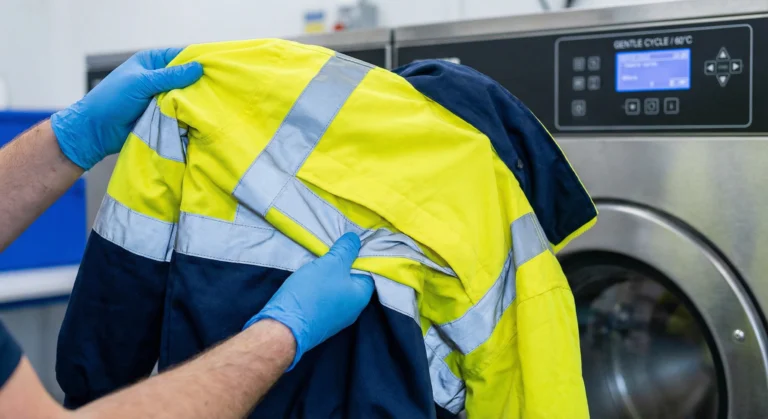
Yes, washing gradually wears FR clothing, but correct washing extends its useful life compared with harsh laundering. Wash in cool or warm water with a mild detergent, skip bleach and fabric softener, and dry on low heat. That routine protects treated finishes and fibers far better than infrequent, aggressive washing.
Inspection: Signs It’s Done
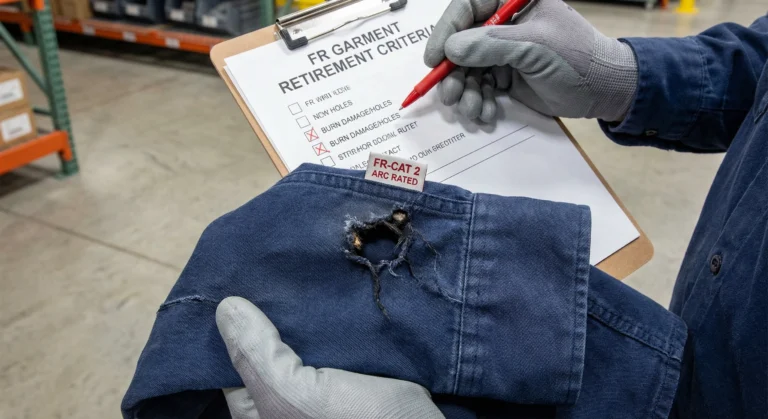
Retire FR on condition. Inspect regularly and pull garments showing:
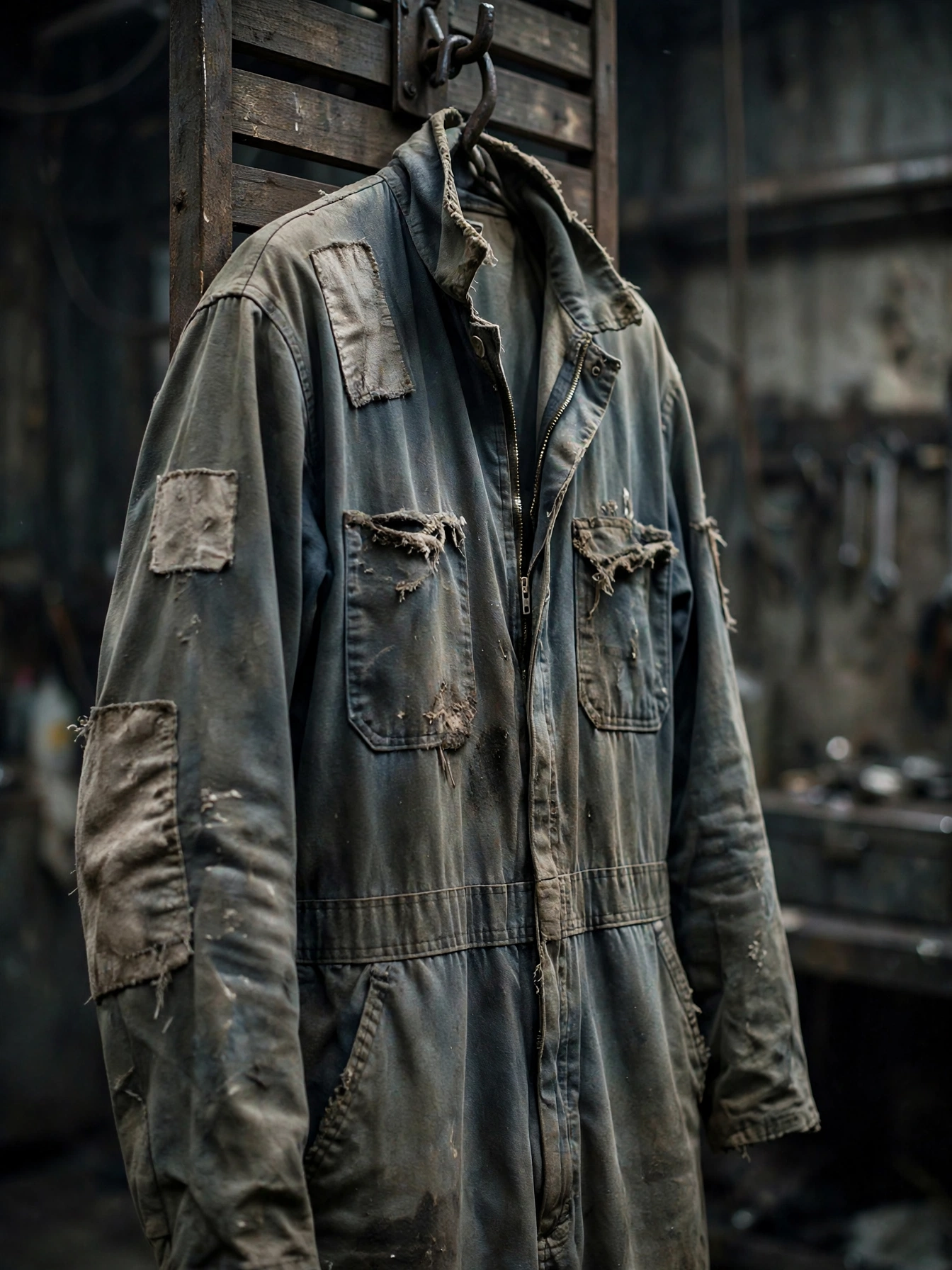
- Thin spots or holes — hold it to the light; worn areas glow through.
- Tears, open seams, or broken closures — compromised coverage is compromised protection.
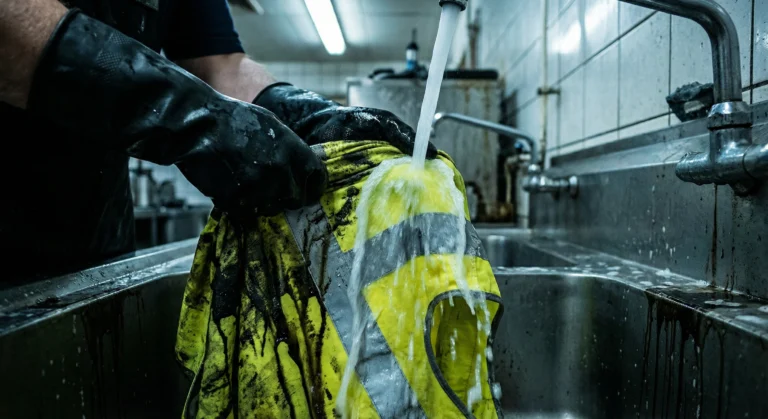
- Stains that won’t wash out — especially oils, grease, or solvents.
- Bleach or chemical damage — discoloration, brittle fibers, unusual odors.
- Loss of reflective trim (hi-vis FR) — visibility is part of the protection.
- Stiffness, cracking, or coating changes on treated garments.
When in doubt, retire it. FR is the wrong place to squeeze extra weeks.
When to Retire: The Decision
The full retirement checklist lives in our when-to-replace guide — but the principle is simple: condition beats calendar. A 6-month-old garment with a chemical stain is done; a 2-year-old rotated shirt in great shape may not be.
Build retirement into your program: scheduled inspections, clear pull criteria, and no penalty for flagging damaged gear. The cheapest FR garment is the one that gets retired before it fails someone.
And keep it clean in the meantime — proper washing is the biggest lifespan lever you control. (Care guide.)
Who decides when FR is retired? Your employer’s PPE program sets the criteria, and you execute the inspections. If your site has a fixed schedule, follow it; otherwise, use condition-based retirement and document the decision so the next wearer is not guessing.
For the employer’s side of that duty, see OSHA’s Personal Protective Equipment overview, which covers hazard assessment, PPE selection, and keeping PPE in a sanitary and reliable condition.
FAQs
Is there a fixed number of washes for FR clothing?
No universal number. Treated FR is typically rated through dozens of washes when laundered correctly; inherent FR lasts until the fabric wears out. Retire on condition, not count.
Does FR clothing expire sitting in a locker?
Not quickly, but storage matters. Kept clean, dry, and out of sunlight, occasional-use FR lasts years. Damp or chemical-adjacent storage shortens that fast.
Can damaged FR be repaired?
Small repairs (seams, buttons) with FR-compliant materials are usually fine; patches on large damaged or thinned areas generally aren’t — the repaired zone won’t match the garment’s protection. Check your program’s policy.
Related: When to Replace FR Clothing · FR Clothing Care Guide · NFPA 2112 Explained