
Can You Dry Clean Hi Vis Clothing? (Sometimes Yes—Sometimes No)
Usually no. Wondering whether you can dry clean hi vis clothing? For most garments, the answer is no: dry cleaning solvents and finishing heat can soften the adhesives and coatings on reflective tape, causing peeling, cracking, or dulled reflectivity — and they can strip some flame-resistant treatments too. Some trim products are labeled dry-clean safe, but unless your care label and the tape maker’s guidance both allow it, home washing is the safer choice.
The short answer depends on three things:
- your garment care label
- the specific reflective trim product on the garment
- your jobsite policy
Why dry cleaning usually damages reflective tape
Dry cleaning exposes garments to solvents, agitation, and heated finishing — three things reflective tape hates. Solvents can dissolve the adhesive that bonds the tape and attack the microscopic glass beads or prismatic film that make it reflective. Heat from pressing and finishing can then blister or crack the weakened tape.
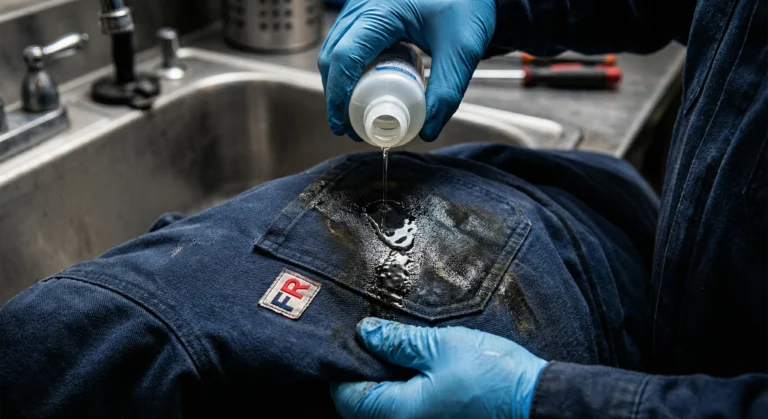
Dry cleaning uses chemical solvents instead of water. Solvents are excellent at dissolving grease — but the adhesives and coatings that hold reflective tape in place share similar chemistry, so they can soften and loosen too. Aggressive spotting chemicals used on stains add more risk, and the machine’s mechanical action plus hot pressing can finish the damage.
This is the same damage cycle that causes reflective tape to peel or crack: once the adhesive bond is weakened, the tape lifts at the edges, cracks along fold lines, or goes dull — and dull tape means the garment no longer reflects headlights the way it should.
Can dry cleaning ruin reflective tape?
Yes, it can. Dry cleaning solvents can loosen the adhesive under reflective tape, and the heat used in pressing and finishing can blister, crack, or dull it. Even a single aggressive cycle can shorten the tape’s life, and damaged tape reduces how visible the garment keeps you at night.
The exception: when dry cleaning is okay
Dry cleaning is only safe when your garment’s care label explicitly permits it and the trim maker allows dry cleaning for that product. Some reflective trims carry a “dry-clean, normal cycle” instruction, and some FR hi-vis garments are labeled dry cleanable. Both must agree; the label has the final word.
Use this label-first check every time:
- Read the garment care label first. If it says “do not dry clean,” stop — no cleaner overrides the label.
- Check the trim guidance if you can identify the reflective tape product; look for its published care instructions.
- Consider your jobsite policy: many safety programs require following the label exactly, since visibility is a compliance issue.
The same label-first logic applies to dry cleaning FR clothing, where solvents can also affect protective treatments.
Dry cleaning vs. home washing for hi-vis clothing
Here is how the two options compare for a typical hi-vis garment with reflective tape:
| Question | Dry cleaning | Home washing |
|---|---|---|
| Effect on reflective tape | Solvents plus heat can loosen, crack, or dull it | Gentle cycle, cool water, and air drying protect it |
| Effect on FR treatments | Solvents can strip some chemical FR treatments | Label-approved washing preserves them |
| Stain removal | Strong on oil and grease, but aggressive spotting may damage trim | Targeted pre-treatment is safer for the tape |
| Convenience | Drop off and pick up; no effort | More effort, but you control the process |
| Best for | Only when the label explicitly allows it | Almost always the safer default |
What to tell the dry cleaner
If the label allows dry cleaning and you decide to go ahead, don’t just drop the garment off silently. Give the cleaner this information:
- Tell them it is hi-vis safety clothing with reflective tape — not ordinary workwear.
- Ask which solvent they use and how they control residue, since solvent residue can remain in the fabric.
- Ask for gentle handling: no aggressive spotting chemicals on or near the reflective tape.
- Request low-heat or no-heat finishing, and no hot pressing directly on the tape.
Safer alternatives to dry cleaning
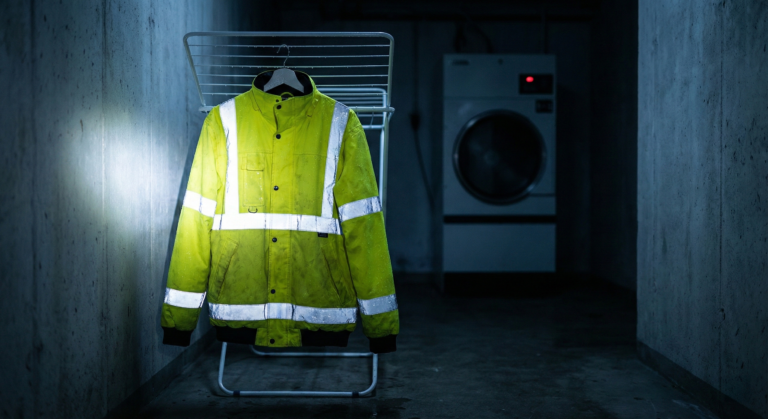
For most hi-vis garments, home washing exactly per the care label is the safer default. Our guide to washing hi-vis clothing without ruining reflective tape covers the full routine: cool water, mild detergent, a gentle cycle, and the garment turned inside out. Pair it with the best way to dry hi-vis clothing — air drying or low heat — since heat is the other great tape killer.
If your garment is both flame-resistant and hi-vis, read our guide to washing FR hi-vis workwear too, and start with the broader hi-vis reflective care guide for the fundamentals. This matters because, as OSHA’s PPE guidance explains, protective equipment only protects workers when it is properly maintained.
What should I do if my hi-vis care label says “do not dry clean”?
Obey the label and do not dry clean the garment, no matter what a cleaner promises. Use the washing instructions on the label instead — usually a gentle machine wash in cool water with mild detergent. If the garment is too soiled to clean safely, retire it rather than risk destroying its protective features.
After dry cleaning: inspect the tape before you wear it
After any dry cleaning cycle, inspect the garment in good light before it goes back into service. Look along every strip of tape for these warning signs:
- Edges lifting or peeling away from the fabric
- Cracks, blisters, or bubbling on the tape surface
- Dull, grayish patches that no longer shine in light
- Tape that feels stiff, brittle, or different from before
If you find any of these, the garment’s nighttime visibility is compromised — see our guide on when to replace hi-vis clothing to decide whether it can stay in service.
Frequently asked questions
Can you dry clean hi-vis clothing with reflective tape?
Usually not. Dry cleaning solvents can weaken the adhesive under reflective tape, and the heat from pressing and finishing can blister, crack, or dull it. Dry clean only if both the garment’s care label and the trim manufacturer’s instructions explicitly allow it — otherwise, home washing per the label is the safer choice for your hi-vis clothing.
What happens to reflective tape during dry cleaning?
The solvents used in dry cleaning can dissolve the adhesives that bond reflective tape to the fabric and attack the glass beads or prismatic film that create reflectivity. Finishing heat and pressing then stress the weakened tape, often causing peeling, cracking, or a dull finish that reduces how well the garment shows up in headlights.
Is machine washing safer than dry cleaning for hi-vis clothing?
Yes, in most cases. A gentle machine wash in cool water with mild detergent — ideally with the garment turned inside out — avoids the harsh solvents and high heat of dry cleaning. Follow the care label exactly, skip bleach and fabric softener, and air dry or tumble dry low to protect the reflective tape.