How to Get Smell Out of Your Car (By Smell Source, Baking Soda Method)
You cleaned the car, hung a fresh air freshener, and by morning the smell is back. That is the normal outcome — the smell was never in the air. Learning how to get smell out of car the right way starts with finding where the smell lives, then matching the fix to the source.
Quick Answer
Find the smell’s source first — seats, carpet, vents or trunk — then fix it by smell type. For most smells, sprinkle baking soda on dry fabric, leave it overnight (8–12 hours), then vacuum. Smoke needs a vinegar-water wipe first; milk and pet smells need an enzyme cleaner; mildew needs the moisture dried out.
Why Does Your Car Still Smell After You Clean It?
Because you cleaned the air, not the source. Odour lives in the material that absorbed it — the foam inside a seat, the padding under the carpet, the trunk lining, the evaporator coils behind the dashboard. An air freshener adds a stronger scent on top, and your nose adapts within minutes, so the car smells fine to you and terrible to the next person who opens the door. Smells also return because of moisture: a seat cleaned wet and never fully dried grows mildew in the foam, and mildew smells worse than what you were cleaning off.
How Do You Find Where the Smell Is Coming From?
Work zone by zone with your nose close to the surface, after the car has been closed up for a few hours — heat concentrates the smell. Check under the seats and between cushions, lift the floor mats and smell the carpet underneath, then the trunk. Run the fan on fresh-air mode: if the smell gets stronger, the vents or the cabin air filter are part of the problem. The strongest point tells you what to clean first — a sharp smell at one cushion means a spill soaked into that seat’s foam; a general musty smell usually means damp carpet or a blocked AC drain.
What Is the Baking Soda Method?
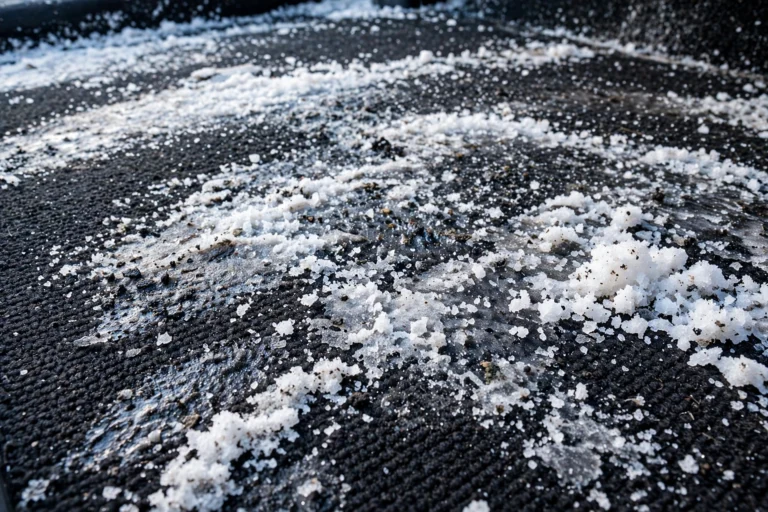
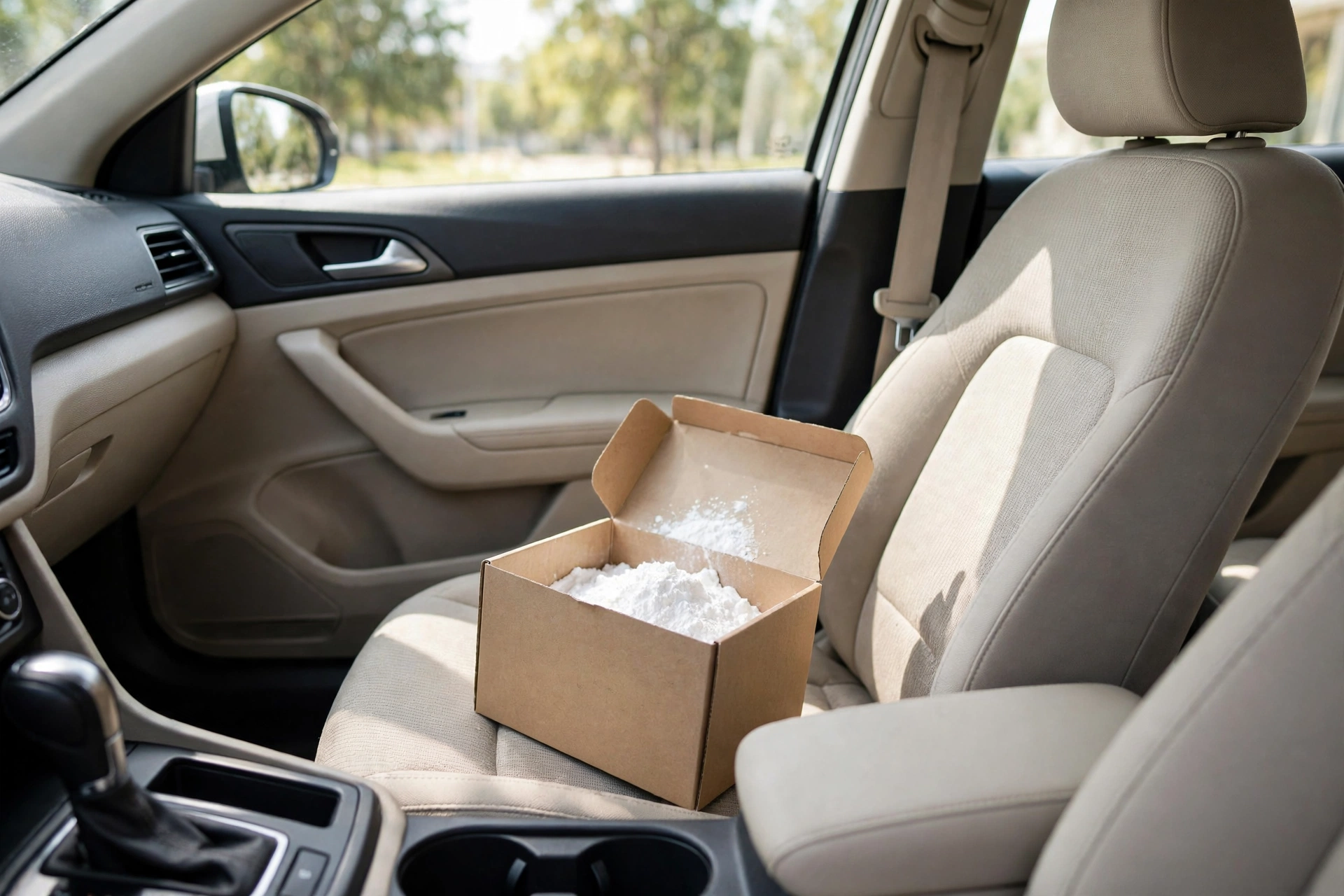
Baking soda is the hero method because it neutralises odour molecules instead of covering them. Vacuum first with the upholstery attachment, working the crevice tool along seams and under the seats. Sprinkle a thick, even layer of plain baking soda — not baking powder — over the smelly area and brush it gently into the fibres. Leave it 8–12 hours overnight, with the car dry and the windows closed. Do not wet it — wet baking soda clumps, and damp fabric grows mildew. Then vacuum slowly, in two directions, until no white powder remains. If the smell is fainter but still there, repeat once. Two rounds fix most food, sweat and stale smells.
Which Fix Works for Each Smell?
Each smell is a different substance, so match the fix to the source.
| Smell source | What is causing it | Fix | Time |
|---|---|---|---|
| Cigarette smoke | Oily tar film on glass, fabric, vents | Vinegar-water wipe (50/50) + baking soda overnight; replace cabin filter | 1–2 days |
| Spilled milk | Bacteria in milk protein soaked into foam | Enzyme cleaner, saturate, dwell 15–30 min, blot | 1 day |
| Pet urine or vomit | Uric acid and proteins in fabric/padding | Enzyme cleaner first, then baking soda overnight | 1–3 days |
| Mildew / musty | Damp carpet/padding, blocked AC drain | Dry the moisture source; fan on high, no AC, 10 min after driving | 2–3 days |
| Old food / stale | Rotting crumbs and spills under seats | Vacuum out, baking soda overnight, wipe hard surfaces | 1 day |
How Do You Remove Smoke Smell from a Car?
Smoke is the hardest smell here because it is an oily tar film coating every surface, including the inside of the windshield and the vents. Replace the cabin air filter first, then wipe hard surfaces (dashboard, door panels, steering wheel) with a 50/50 mix of white vinegar and water — the Iowa State University Extension recommends this mix for car interiors, including smoke odour. Follow with baking soda overnight on seats and carpets. If the smell survives, run an ozone generator in the empty car for 30 minutes to 2 hours, then ventilate 30–60 minutes before getting back in. Never sit in the car while ozone runs — it is a lung irritant, and high levels can degrade rubber seals.
How Do You Get Spilled Milk Smell Out of a Car?
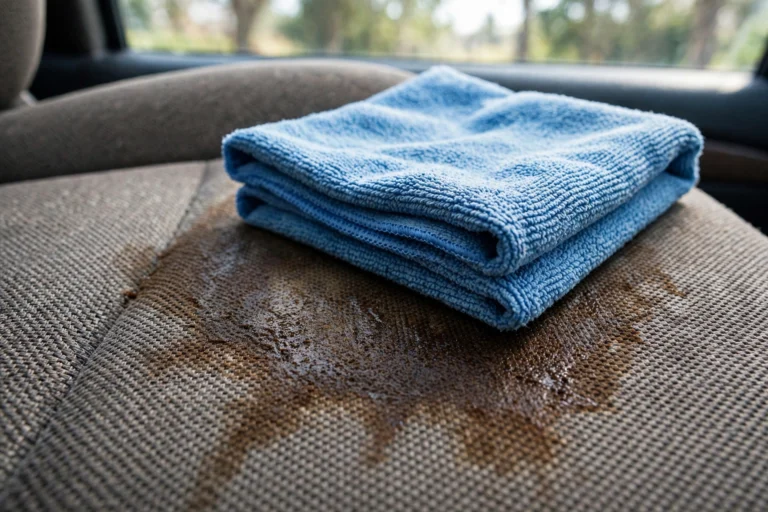
Spilled milk hides: it seeps into the seat foam, and the sour smell only appears days later, once bacteria have fed on the milk protein. Wiping the surface does nothing — the smell is underneath. Saturate the spot with an enzyme cleaner (the pet-stain kind — Nature’s Miracle or Biokleen Bac-Out are the usual examples) and let it dwell 15–30 minutes so the enzymes break the protein down. Blot, do not rub, and let the seat dry completely with the doors open. Then finish with one round of baking soda overnight. If the milk reached the carpet padding, lift the carpet edge and treat the padding too.
How Do You Get Smell Out of Car Seats After Pets?
Pet smell is two problems at once: the accident itself, and the hair and dander ground into the fabric around it. Vacuum first with an upholstery brush — a rubber squeegee or a damp rubber glove pulls embedded hair out of fabric far better than a vacuum alone. Then treat the spot with an enzyme cleaner, exactly as for spilled milk: saturate, dwell 15–30 minutes, blot, dry fully. Do not use a vinegar mix on a pet accident before the enzyme cleaner — vinegar can set some proteins. Finish with baking soda overnight. For background pet smell with no single spot, an open container of activated charcoal in a footwell for a few days absorbs what baking soda misses.
How Do You Fix a Mildew Smell in a Car?
Mildew means water is getting in or not getting out. Check three causes first: a blocked AC drain (water pools under the passenger-side carpet), a leaking door or trunk seal, and wet floor mats left in after rain. Fix the leak or clear the drain before cleaning anything — otherwise the smell returns with the next damp day. Dry the car completely: remove the mats, lift the carpet edges, and run the fan on high with outside air (not recirculate) for 10 minutes after driving. Treat carpet with baking soda only once it is dry to the touch — baking soda on wet carpet clumps and feeds mildew. Padding soaked through may need to come out and dry in the sun.
What Should You Never Do When Removing Car Smells?
- Hang an air freshener and call it done. Air fresheners mask odour; they do not remove the source. The smell returns the moment the freshener fades.
- Soak a fabric seat. Drenching a seat pushes water into the foam, where it cannot dry. Wet foam grows mildew, and mildew smells worse than the original problem.
- Use bleach on upholstery. Bleach discolours fabric, weakens fibres, and leaves its own chemical smell behind.
- Run an ozone generator with anyone in the car. Ozone is a lung irritant. The car must be empty during treatment and fully ventilated for 30–60 minutes afterwards.
- Spray cleaner directly into the vents. Liquid pooled in the vents breeds mould. Spray a dedicated HVAC deodoriser into the air intake at the base of the windshield with the fan running.
How Do You Keep Your Car Smelling Fresh?
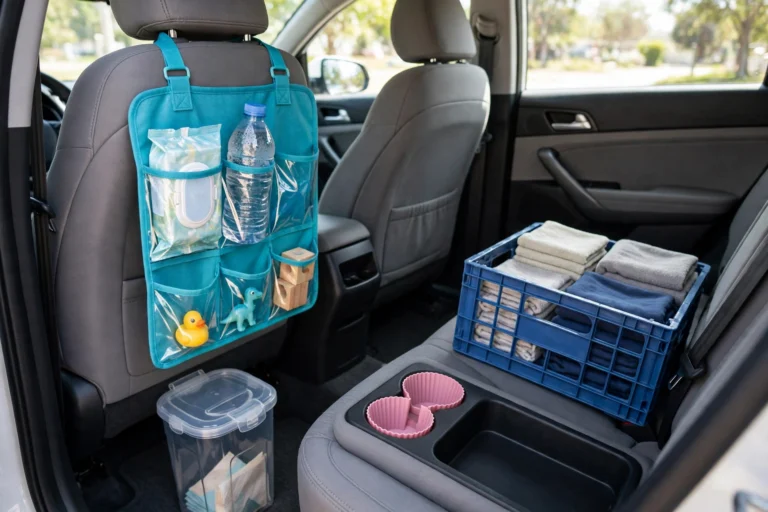
Toss food wrappers the same day, vacuum seats and carpets once a week, and blot any spill in the first five minutes — it never reaches the foam. Replace the cabin air filter every 12 months or 12,000 miles, and run the fan on high with no AC for a few minutes after driving in wet weather. A container of baking soda or activated charcoal under a seat absorbs everyday smells between deep cleans.
Frequently Asked Questions
Why does my car smell bad even after I clean it?
Because the source is still there. Smell lives in the material that absorbed it — seat foam, carpet padding, the trunk lining or the ventilation system — not in the air. Find the strongest point with your nose, treat that spot with the matching fix, and check the cabin air filter.
Does baking soda really remove car smells?
Yes, for most smells. Baking soda neutralises odour molecules rather than masking them. Sprinkle it generously on dry fabric, let it sit 8–12 hours overnight, then vacuum thoroughly. Smoke, milk and pet accidents need an enzyme cleaner or a vinegar wipe first.
How do I get cigarette smoke smell out of my car?
Replace the cabin air filter, wipe hard surfaces with a 50/50 white vinegar and water mix (the Iowa State University Extension mix for car interiors), then run the baking soda method overnight on seats and carpets. If the smell survives, an ozone generator in the empty car is the last resort — ventilate 30–60 minutes before getting back in.
Why does my car smell like mildew?
Mildew means something is wet: a blocked AC drain, a leaking seal, or floor mats left damp. Find and fix the moisture source first, dry the carpet and padding completely, and run the fan on high with outside air for 10 minutes after driving. Cleaning a mildew smell without drying the source only pauses it.
Sources: Iowa State University Extension (50/50 white vinegar and water mix for car interiors, including smoke odour — confirmed from their AnswerLine page “Removing Odors in the Car”). Consumer Reports (find-the-source method; baking soda on dry carpet).
Related: 10 Genius Dollar Tree Car Hacks to Organize Your Car Under $10 | How to Clean Carpet Stains | How to Remove Pet Urine Smell: From Carpet, Floors, and Furniture | How to Remove Grease Stains from Clothes | How to Remove Coffee Stains from Clothes | How to Remove Any Stain: A Step-by-Step Guide by Surface & Stain Type