
How to Remove Thanksgiving Stains from Clothes: Cranberry, Gravy & Turkey Grease
Thanksgiving dinner leaves three stains, and each one is a different kind of stain — so learning how to remove Thanksgiving stains from clothes means learning three different fixes. Cranberry sauce is a tannin dye that sets with heat. Gravy is two stains at once — grease plus protein and starch. Turkey grease is pure fat that water alone cannot move. Treat any of them the wrong way and the mark sets for good. The quick version is below; each stain gets its full method after that.
Quick Answer
- Cranberry sauce: scrape off the excess, rinse the stain from the back with cold water, work in a little liquid laundry detergent for 10–15 minutes, then wash in the warmest water the care label allows. Never use heat until the colour is gone.
- Gravy: scrape, rinse cold from the back, soak 30 minutes in an enzyme pre-soak, then wash warm with an enzyme detergent. Gravy is grease plus protein — treat both halves or the stain comes back.
- Turkey grease: blot, cover with baking soda or cornstarch for 15–30 minutes, work in a drop of liquid dish soap for 10 minutes, then wash in the hottest water the label allows and air-dry. Check before the dryer — heat sets grease permanently.
What You Need (Holiday Stain Kit)
- Clean white cloths or paper towels
- Liquid laundry detergent and an enzyme (biological) detergent
- Liquid dish soap (clear, uncoloured)
- Baking soda or cornstarch
- Oxygen bleach / sodium percarbonate
- White vinegar (for white fabrics)
- A soft brush or old toothbrush
How Do You Remove Cranberry Sauce Stains from Clothes?
Cranberry sauce is a tannin dye — cold water first, never hot.
Cranberry sauce stains clothes because cranberries are rich in tannins — the same plant dyes that make red wine stain. The colour bonds to fabric fast, and heat locks it in. Cold water is your friend here: it flushes the colour out before it sets. The University of Georgia Cooperative Extension groups cranberry with other fruit, jam and jelly marks and recommends exactly this: prompt cool-water rinsing first, then a compatible treatment. Act in the first few minutes and most cranberry stains come out completely.
Step by step:
- Scrape off the excess. Lift the sauce with a spoon or the dull edge of a butter knife. Work from the outside of the stain toward the middle so you don’t spread it.
- Rinse from the back with cold water. Turn the garment inside out and hold the stained area under cold running water. Water flowing from the back pushes the stain out instead of deeper in.
- Work in liquid detergent. Apply a few drops of liquid laundry detergent to the stain and gently work it in with your fingers or a soft brush. Let it sit for 10–15 minutes.
- Rinse and check. Rinse with cold water. If colour remains, repeat the detergent step. For a stubborn mark, soak in cool water with an oxygen bleach that is safe for the fabric, following the product label.
- Wash and air-dry. Wash as usual in the warmest water the care label permits. Check the stain before drying — if any shadow remains, repeat. Air-dry until you are sure it’s gone.
Dried cranberry stains: A stain that has dried — or been through the dryer — is harder but not always hopeless. Soak the fabric in cool water with detergent for 30 minutes up to several hours, then rinse and try an oxygen bleach soak as the label directs. Repeat treatments rather than using one strong dose. Stop if the fabric colour starts to fade.
Cranberry sauce on a tablecloth: Remove the solids with a spoon, blot the liquid, then rinse the back of the stain with cold water. Rub in a drop of liquid detergent, wait 10–15 minutes, and soak in cool water with an oxygen-based stain remover if the stain persists. Launder as the label says. If the cloth is delicate, embroidered or dry-clean-only, blot and take it to a professional the same day.
How Do You Remove Gravy Stains from Clothes?
Gravy is two stains in one — grease plus protein — treat both halves or it comes back.
Gravy is harder than it looks because it is two stains at once. Pan drippings bring fat; flour or cornstarch brings starch; meat juices bring protein, and browned bits bring colour. Dish soap alone handles the grease but not the protein — and detergent alone handles the protein but not the grease. That is why gravy stains seem to come back after washing: one half was never treated. The University of Illinois Extension’s gravy guidance treats it the same way — a pre-wash treatment first, then a wash, then an oxygen bleach soak for what remains — and Iowa State University Extension’s holiday stain guide calls for liquid dish soap worked into the stain and left for 10 minutes. Treat both halves, in the right order.
Step by step:
- Scrape off the excess. Lift the gravy with a spoon or a dull knife. Don’t press it into the fabric, and don’t rub — rubbing drives gravy deeper into the weave.
- Rinse cold from the back. Hold the stain under cool running water from the back of the fabric so the gravy is pushed out, not deeper in. Don’t use hot water yet — hot water cooks the protein in.
- Soak in an enzyme pre-soak. Soak in cold water with a laundry pre-soak or enzyme product for at least 30 minutes. For old stains, soak for hours or overnight. Enzymes break down the protein and starch that plain soap can’t touch.
- Rub in enzyme detergent and wash warm. Work a little enzyme (biological) detergent into the stain, then wash in warm water — no hotter than the care label allows. Detergents with enzymes go after the protein half while the surfactants handle the grease.
- Check wet, before any heat. Hold the fabric up to good light while it is still damp. If a tan or brown shadow remains, soak or wash in oxygen bleach (or chlorine bleach if the fabric can take it), then wash again. A dryer bakes the stain in — never dry until the mark is fully gone.
Gravy on a tablecloth: Gravy on a tablecloth follows the same sequence, but the cloth is usually linen — check the label first. Scrape, rinse cold from the back, enzyme soak, wash at the warmest temperature the label allows. A faint tan shadow after washing is a colour stain, not a grease stain: more soap won’t fix it, but an oxygen bleach soak usually will.
How Do You Remove Turkey Grease Stains from Clothes?
Turkey grease is pure fat — water alone won’t move it; absorb first, then soap.
Turkey grease is pure fat, and fat doesn’t dissolve in water — that’s why a normal wash leaves a darker see-through patch where the drip landed. The fix is the same method as any cooking grease: absorb the oil first, then let soap do what water can’t. Grease is the exception to the cold-water rule — hot water helps dissolve it, once the oil has been absorbed and treated.
Step by step:
- Blot, never rub. Press a clean white cloth or paper towel straight down on the stain to lift off as much grease as you can. Work from the outside edge toward the centre. Rubbing pushes oil deeper into the fibres.
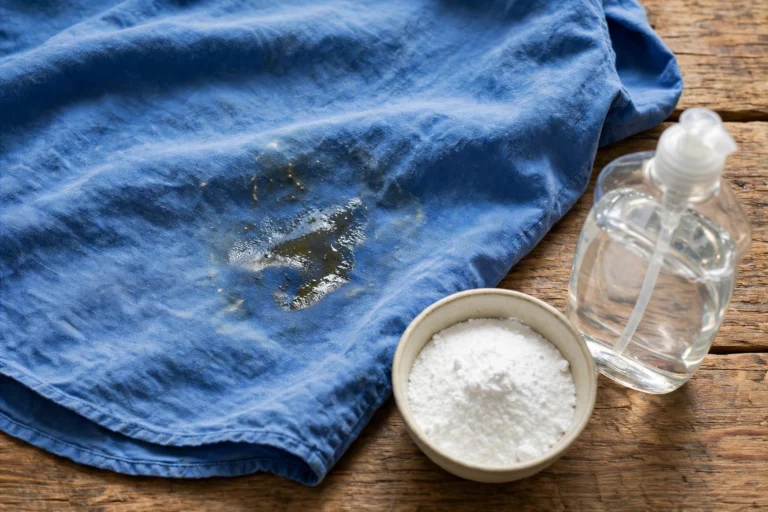
- Absorb the oil with powder. Cover the stain generously with baking soda or cornstarch. Leave it for 15–30 minutes — the powder soaks up the oil sitting on the surface. Brush it off and repeat once if the powder comes away yellow or clumped.
- Work in dish soap. Apply a drop of liquid dish soap directly to the stain and work it in gently with your fingertips or a soft brush. Dish soap is made to cut fat. Let it sit for 10 minutes.
- Wash hot, then check before drying. Wash the garment at the warmest temperature the care label allows. When the cycle ends, check the stain while the fabric is still damp, in good light. Grease stains tend to disappear when wet, so look closely: if you can still see a darker patch, repeat steps 3–4. Do not put it in the dryer — dryer heat bonds leftover oil into the fibres and makes the stain permanent. Air-dry until you are sure it’s gone.
Set-in turkey grease: A grease stain that has already been washed — or dried — needs an extra round. Dampen the mark, work in dish soap, then soak for 30 minutes in warm water with a scoop of oxygen bleach. Wash hot, air-dry, and check. Expect two or three rounds for a dryer-set stain.
Thanksgiving Stains at a Glance
| Stain | What it is | First step | Magic ingredient |
|---|---|---|---|
| Cranberry sauce | Tannin dye + sugar | Cold rinse from the back | Oxygen bleach |
| Gravy | Grease + protein + starch | Cold rinse, then enzyme soak | Enzyme detergent |
| Turkey grease | Pure fat | Blot + baking soda absorb | Dish soap |
Match the Method to the Fabric
- Cotton, linen, polyester: the full methods above work. Wash at the warmest temperature the label allows.
- Denim and jeans: same methods; the powder step matters most here because denim holds oil in the weave.
- Silk, wool, rayon, embellished or vintage pieces: blot and use cornstarch only, then take it to a dry cleaner. These fabrics can’t handle hot water or heavy soaking at home.
- Dry-clean-only: don’t wet it at all. Blot up what you can and take it in the same day, telling the cleaner what spilled.
What Not to Do
- Don’t rub any Thanksgiving stain — rubbing spreads it and drives it deeper.
- Don’t use hot water first on cranberry or gravy — heat sets tannin and cooks protein in. (Grease is the exception: hot wash comes after the powder and soap steps.)
- Don’t put anything in the dryer until the stain is fully gone — heat makes every one of these stains permanent.
- Don’t mix cleaning products — use one product at a time and rinse well between steps.
- Don’t use chlorine bleach on a grease stain — it won’t remove the oil and can damage the fabric.
- Don’t iron over any stain — heat bonds it to the fibres.
FAQs
Can cranberry sauce stains come out of clothes?
Usually yes, if treated quickly. Scrape, rinse from the back with cold water, work in liquid detergent, then wash warm. The risk goes up sharply if the stain dries or gets heat from a dryer — a dried cranberry stain may leave a faint pink shadow even after treatment.
Why is gravy so hard to remove?
Because gravy is two stains at once: grease from pan drippings plus protein and starch from flour and meat juices. Dish soap handles the grease but not the protein; plain detergent handles the protein but not the grease. You need both — an enzyme soak for the protein half and dish soap or detergent for the grease half — or the stain comes back after washing.
What’s the fastest way to get turkey grease out of clothes?
Blot, cover with baking soda for 15–30 minutes, brush off, work in a drop of dish soap, wait 10 minutes, wash hot, air-dry. On a fresh stain that’s usually enough in one round. The key is the powder step — skip it and the soap has to fight all the oil at once.
Can I put Thanksgiving-stained clothes in the dryer?
No — not until the stain is completely gone. Check the fabric while it is still damp, in good light, before it goes near the dryer. Heat sets cranberry tannin, cooks gravy protein, and bonds grease into the fibres. If any mark remains, repeat the treatment and wash again first.
Methods in this guide follow published university extension stain-removal guidance (University of Georgia Cooperative Extension for fruit stains, University of Illinois Extension for gravy, Iowa State University Extension for holiday stains).
Related: How to Remove Grease Stains from Clothes | How to Remove Coffee Stains from Clothes | How to Remove Red Wine Stains from Carpet | How to Remove Permanent Marker from Fabric | How to Remove Any Stain