
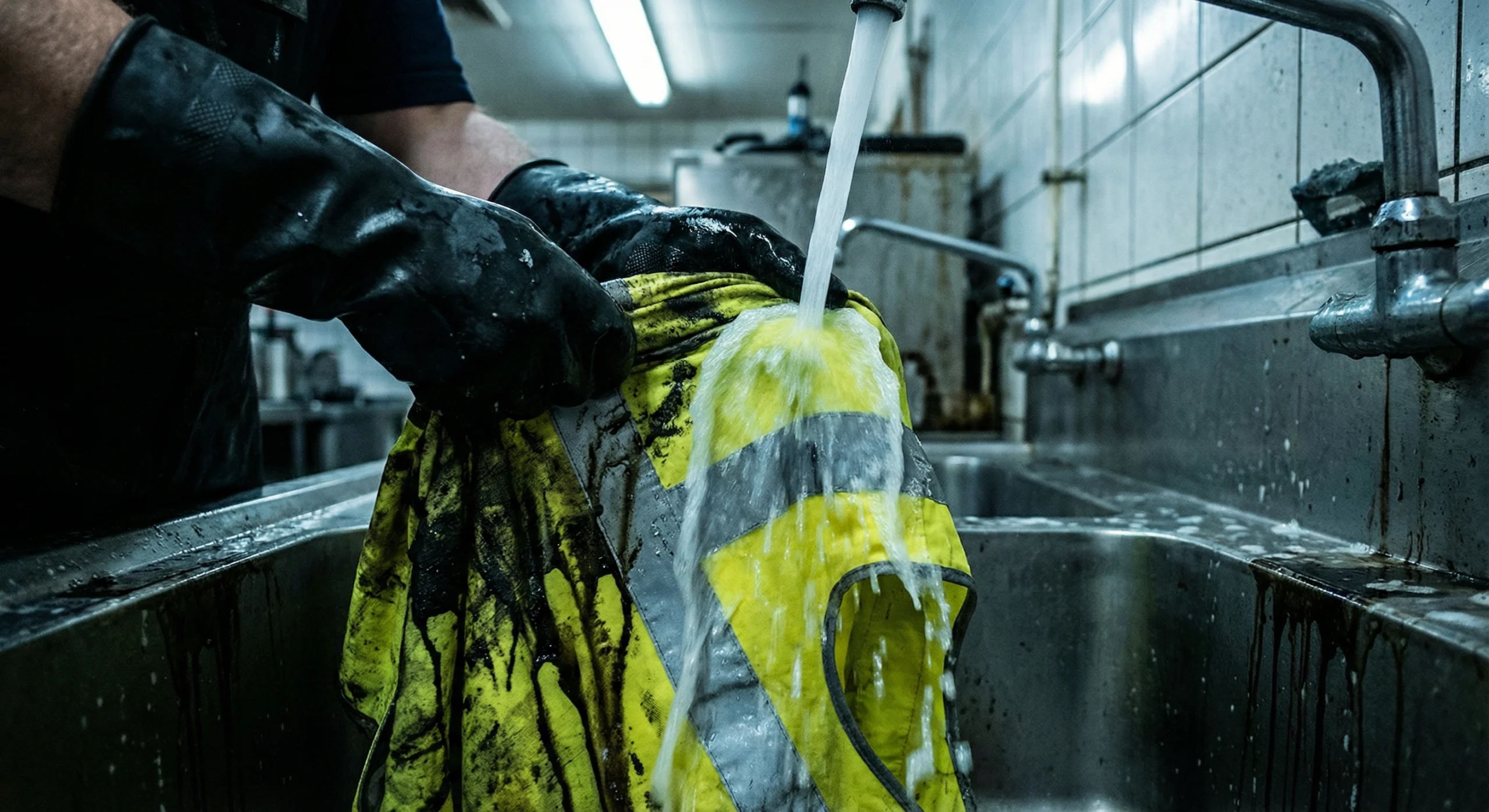
How to Wash Hi‑Vis Workwear in Oil & Grease Jobs (Without Killing Reflectivity)
If you work around oil mist, diesel grime, asphalt, or heavy industrial soils, your hi-vis workwear will eventually collect an oily film that dulls daytime brightness and reduces nighttime reflectivity. The good news: this guide shows how to wash oil and grease out of hi vis workwear safely, protecting the reflective tape and any flame-resistant (FR) treatment on the fabric.
The safest approach is to increase cleaning effectiveness through process and rinsing, not harsh chemistry. That means pre-treating stains with mild detergent, washing the garment inside out in warm water, and adding an extra rinse cycle, instead of reaching for aggressive degreasers that can crack reflective trim or strip FR finishes.
Safety note: Always follow the garment care label and your workplace safety program.
Quick links:
- How to wash FR and hi-vis workwear together (protect flame resistance and reflective tape)
- How often to wash hi-vis clothing (a practical schedule for safety and longevity)
- Best detergent for FR clothing (what to use and what to avoid)
- How to pre-treat stains on FR clothing (a safe method that won’t break care rules)
How do you wash oil and grease out of hi-vis workwear?
Scrape off excess oil, then pre-treat the stain with a mild liquid detergent for 10–15 minutes. Wash the garment inside out in warm (not hot) water with a mild detergent, add an extra rinse, and check the stain before drying. Always defer to the care label for temperature limits.
If your garment combines FR fabric with reflective trim, also follow our FR + hi-vis washing guide so neither protective layer is damaged.
1) Why oily grime is a visibility problem (not just “dirt”)
Reflective tape only works when light can bounce cleanly off its surface. A thin film of oil or grease coats the reflective beads and blocks retroreflection, so headlights no longer “pop” the trim at night. Trim manufacturers warn that exposure to contaminants can decrease retroreflectivity even when the tape still looks intact in daylight, which is why an oily hi-vis vest can fail at night while looking fine in the shop.
This is why oily hi-vis deserves a wash sooner rather than later. How often you wash hi-vis clothing should be driven by soil level: in oil and grease jobs, a weekly wash is often the right baseline. OSHA’s PPE guidance likewise reminds employers that protective equipment must be maintained in a clean and reliable condition.
2) Pre-treat oil and grease before the main wash
Pre-treatment does most of the heavy lifting. Oil is hydrophobic, so giving detergent time to surround and lift the soil before the wash cycle makes the machine wash far more effective, without needing hotter water or harsher products. Never skip this step for axle grease, hydraulic oil, or diesel residue.
- Scrape and blot. Remove excess grease with a dull edge or clean cloth. Blot — never rub — so you don’t spread the stain or grind it into the tape adhesive.
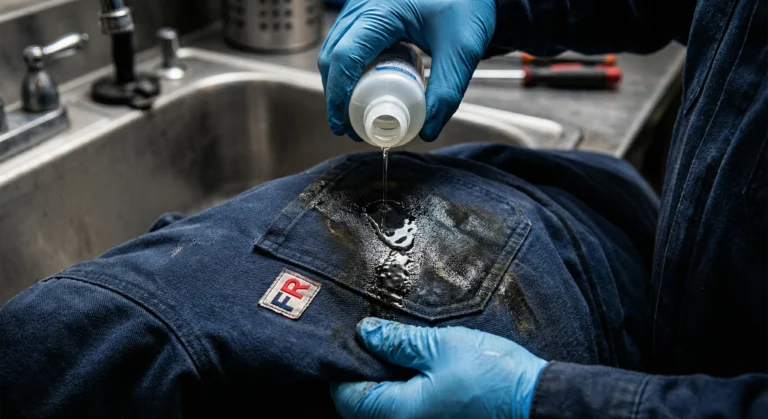
- Apply mild liquid detergent directly. Work a small amount of the same mild detergent you will wash with into the stain and let it sit 10–15 minutes. Don’t let it dry on the fabric.
- Soak heavy stains. For thick grease, soak the garment in cool water with a small dose of mild detergent for 30–60 minutes before washing.
- Wash and re-check. Launder normally, then check the stain before drying. Re-treat and re-wash rather than drying a garment that still shows oil.
For FR garments, the same detergent-first approach is the safest default — see how to pre-treat stains on FR clothing for the full label-safe method.
3) Choose the right detergent (and skip the harsh stuff)
Use a standard mild consumer detergent with no bleach, no softener, and no “oxy” boosters. Detergent residue itself can film over reflective tape, so measure carefully and always run an extra rinse cycle. Our guide to the best detergent for FR clothing lists formulas that also work well for hi-vis gear with reflective trim.
- Avoid chlorine bleach — it attacks fibers and can permanently destroy FR treatment.
- Avoid fabric softener and dryer sheets — they coat fibers and reflective surfaces with a waxy film.
- Avoid harsh degreasers and high-alkaline stain removers — some reflective-trim guidance specifically warns against high-alkaline stain removal products.
- Avoid solvent-based spot cleaners unless your employer and the care label explicitly approve them.
Can you use dish soap on oily hi-vis workwear?
Skip it. Dish soap is more aggressive than laundry detergent and can leave residues that dull reflective trim or interfere with FR treatments. For routine oil and grease, pre-treat with the same mild liquid laundry detergent you wash with — it is formulated to rinse clean, matches care-label rules, and needs no extra chemistry.
4) Water temperature: warm, not hot
Heat helps dissolve grease, but excessive heat is the fastest way to damage hi-vis gear. A warm wash gives you most of the grease-cutting benefit without the tape damage of a hot cycle. For FR + hi-vis combinations, remember the strictest rule wins across every component — see washing FR and hi-vis workwear together for the full compatibility breakdown.
Will hot water damage reflective tape?
Yes, excessive heat is one of the fastest ways to damage reflective tape. Reflective trim manufacturers generally define safe home laundering at moderate temperatures, commonly up to 60°C (140°F), and warn that high-heat drying shortens garment life. Default to a warm wash and a low or air dry unless your care label specifies otherwise.
5) Stain type → safe treatment
| Stain type | Safe treatment for hi-vis gear |
|---|---|
| Fresh motor oil / hydraulic oil | Blot, pre-treat with mild detergent 10–15 minutes, warm wash, extra rinse |
| Heavy axle / chassis grease | Scrape off excess, detergent pre-treat, soak 30–60 minutes in cool water with detergent, then wash |
| Diesel / fuel residue and odor | Pre-treat, wash separately, air dry only until odor is gone — dryer heat plus fuel residue is a fire risk |
| Asphalt / tar spots | Cool and harden, scrape gently, detergent pre-treat — avoid harsh solvents on reflective trim |
| Cooking / food grease | Blot, detergent pre-treat 10–15 minutes, normal warm wash with extra rinse |
6) The safe wash routine (step by step)
- Pre-check and separate. Wash hi-vis separately from heavily oily rags and cleanup cloths so grease doesn’t transfer to the tape.
- Close Velcro and zippers to reduce abrasion against reflective tape in the drum.
- Turn inside out. This shields the reflective face from rubbing during agitation.
- Wash warm with mild detergent. Use a normal dose of mild detergent at a moderate temperature the label allows — often up to 60°C (140°F).
- Add an extra rinse. This removes detergent film and loosened soil from the tape surface.
- Check the stain before drying. If oil remains, re-treat and re-wash. Heat sets oil stains permanently.
- Dry conservatively. Line dry in the shade or tumble dry low; high heat cracks reflective tape. For oil-soaked items, air dry until all fuel odor is gone.
Can oil stains come out of hi-vis clothing completely?
Often, yes, if you act quickly. Fresh oil responds well to prompt pre-treatment and a warm wash with an extra rinse. Old, heat-set stains are much harder to lift and may leave a shadow even after two washes. If a permanent oil film remains after two proper washes, consider retiring the garment, since reduced visibility is a safety problem.
7) After the wash: inspect, then dry with care
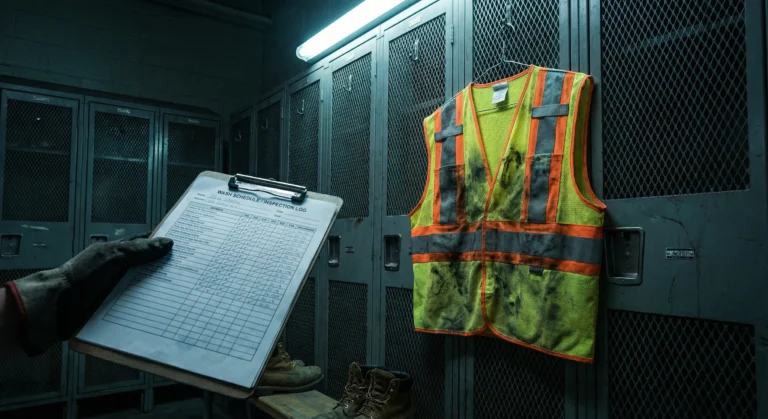
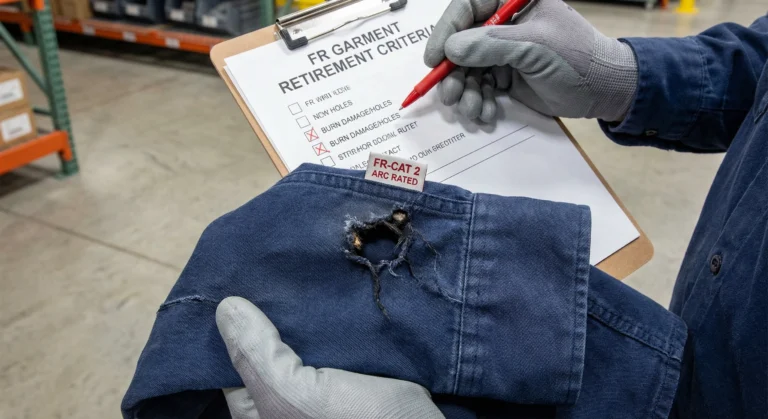
Spend 30 seconds inspecting before and after drying. Look for peeling edges, cracking, a dull or gray reflective look, and fabric fading. If reflectivity looks noticeably reduced at night, replacement is often the safest choice — see when to replace hi-vis clothing and our guide to reflective tape peeling or cracking.
Dryer fire warning: never put heavily oil-soaked clothing in a hot dryer. Heat plus residual oil or fuel creates a genuine fire risk — air dry oil-contaminated items until no fuel odor remains. For the full heat-safe routine, see the best way to dry hi-vis clothing.
Frequently Asked Questions
Can you wash oil and grease out of hi-vis clothing?
Yes. Scrape off excess oil, blot the stain, and pre-treat it with a mild liquid detergent for 10-15 minutes before washing. Then machine wash the garment inside out in warm water with a regular mild detergent and an extra rinse. Check the stain before drying, since heat sets oil stains permanently.
Will washing oil-stained hi-vis ruin the reflective tape?
Not if you wash carefully. Turn the garment inside out, use warm (not hot) water and a mild detergent without bleach or softener, and avoid harsh degreasers that can crack or delaminate reflective tape. Always check the care label first, and replace any garment whose reflectivity has noticeably faded, because visibility is a safety function.
Can you use dish soap on hi-vis workwear?
Dish soap is not ideal. It can be more aggressive than laundry detergent and leaves residues that may dull reflective trim or interfere with FR treatments. For routine grease stains, pre-treat with the same mild liquid laundry detergent you will wash with – it is formulated to rinse clean and matches your garment label rules.
Sources for references
- 3M Scotchlite Reflective Material – Fabric, Technical Data Sheet (home-laundering guidance for reflective trim)
- CPSC: Hidden Hazard — fire risk from oil-soiled cloths in dryers
- OSHA: Personal Protective Equipment – Overview (PPE must be maintained in a clean and reliable condition)


3 Comments