Arc Flash PPE Categories: CAT 1, CAT 2, CAT 3, CAT 4 Explained
“CAT 2 required” — if you’ve seen that on an arc flash label or a work order, you need to know exactly what it means before you dress for the job. NFPA 70E’s PPE categories are the shorthand the whole industry uses. Here’s each one, plainly explained.
What Are Arc Flash PPE Categories?
NFPA 70E groups arc flash PPE into four categories based on the incident energy (heat energy, measured in cal/cm²) the clothing must protect against. Instead of doing math on every job, workers and safety managers use the category as a quick match: label says CAT 2 → wear CAT 2 rated gear.
| Category | Min. arc rating | Typical tasks |
|---|---|---|
| CAT 1 | 4 cal/cm² | Reading meters, operating breakers with covers on, low-energy panel work |
| CAT 2 | 8 cal/cm² | Working on energized conductors, switchboards, motor control centers |
| CAT 3 | 25 cal/cm² | High-energy panels, some switchgear work |
| CAT 4 | 40 cal/cm² | High-voltage switchgear, substation-level work |
Your facility’s arc flash risk assessment determines which category each task requires — you don’t choose it yourself.
CAT 1 (4 cal/cm²): Basic Protection
The entry level. CAT 1 covers low-energy tasks like operating a circuit breaker with the enclosure closed or reading a meter.
Typical CAT 1 kit: arc-rated long-sleeve shirt and pants (minimum 4 cal/cm²), safety glasses, hearing protection, leather gloves. No arc flash suit needed — but the clothing must still be arc-rated, not just “FR.”
CAT 2 (8 cal/cm²): The Most Common
CAT 2 is the workhorse category — it covers the majority of routine electrical maintenance tasks: working inside energized panels, switchboards, and motor control centers.
Typical CAT 2 kit: arc-rated shirt and pants or coveralls (8 cal/cm²), plus arc-rated face shield with balaclava (or arc flash hood), safety glasses, hearing protection, leather gloves, and leather footwear.
If you buy one level of arc-rated clothing as an electrician, CAT 2 is usually it — but always follow your site’s assessment, not a rule of thumb.
CAT 1 vs CAT 2: What’s the Difference?
The jump from CAT 1 to CAT 2 is the most common question, and it matters because it doubles the protection: CAT 1 covers up to 4 cal/cm², while CAT 2 covers up to 8 cal/cm². The higher category also adds head, face, and neck protection that CAT 1 does not require.
- Energy: CAT 1 handles up to 4 cal/cm²; CAT 2 handles up to 8 — double the energy.
- Coverage: CAT 2 adds head/face/neck protection (balaclava or hood + face shield) that CAT 1 doesn’t require.
- When: CAT 1 = interacting with equipment from outside the enclosure; CAT 2 = working on or near exposed energized conductors.
Never substitute CAT 1 gear for a CAT 2 task. The category on the label is a minimum, not a suggestion.
CAT 3 (25 cal/cm²): High Energy
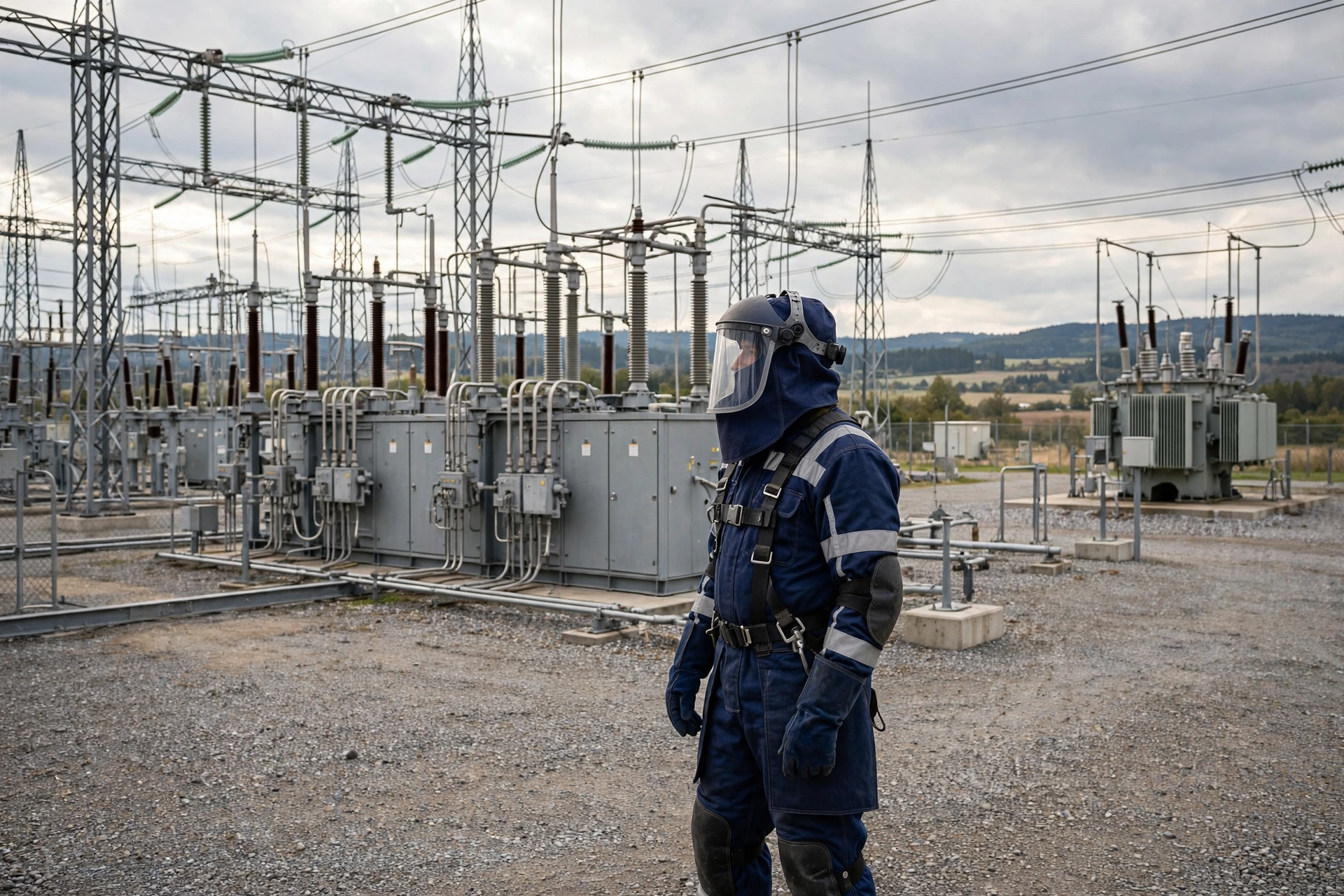
CAT 3 is for serious energy levels — certain switchgear and high-energy distribution equipment. At this level, you’re typically wearing an arc flash suit: arc-rated coveralls plus an arc flash suit hood, jacket, and bib overalls rated to 25 cal/cm².
Fewer workers need CAT 3 day-to-day, but those who do must be specifically trained and equipped — this isn’t “a heavier jacket,” it’s a full system.
CAT 4 (40 cal/cm²): Maximum
The highest standard category: 40 cal/cm², for the most hazardous tasks like high-voltage switchgear operation. Full arc flash suit with hood, and every layer rated to 40 cal/cm².
Above 40 cal/cm², NFPA 70E essentially says: de-energize. No standard PPE category covers it — the answer is not working energized at all.
How to Match Your Clothing to the Category
Three rules:
- Read the label first. The arc flash label tells you the required category or incident energy.
- Your gear’s arc rating must meet or exceed it. CAT 2 task = minimum 8 cal/cm² clothing. Wearing CAT 4 gear for a CAT 2 task is fine (overprotection is allowed); the reverse is not.
- The whole system counts. Arc rating applies to the clothing system — a CAT 2 shirt with non-rated underlayers or meltable accessories doesn’t make you CAT 2 compliant. No synthetics underneath, ever.
New to FR workwear entirely? Start with what FR clothing is.
Do Categories Replace the Arc Flash Study?
No. Categories are a simplification method NFPA 70E allows for common tasks. Your facility still needs a proper arc flash risk assessment — the study behind the labels. The category is how the study’s results get communicated to you on the job.
What happens if my clothing’s arc rating is below the label’s requirement?
If your clothing’s arc rating is below the label’s requirement, you are underprotected for that task and must not proceed. Either upgrade to clothing rated at or above the required incident energy, or de-energize the equipment before working on it. Never rely on layering unrated garments to make up the difference.
Do arc flash PPE categories apply to the whole clothing system?
Yes. The arc rating applies to the clothing system as a whole, not just the outer layer. A CAT 2 shirt worn with non-rated underlayers, or with an unrated jacket over it, does not give CAT 2 protection. Every layer that could be exposed must be arc-rated to the required level.
FAQs
What does CAT 2 FR clothing mean?
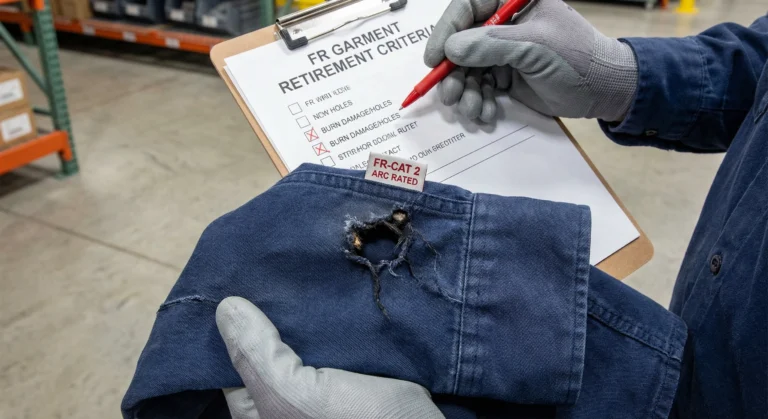
CAT 2 FR clothing means arc-rated clothing tested to protect against at least 8 cal/cm² of incident energy, the minimum for NFPA 70E PPE Category 2 tasks. A CAT 2 kit typically includes an arc-rated shirt and pants or coveralls, plus a face shield with a balaclava or hood for head and neck protection.
Can I wear CAT 2 clothing for a CAT 1 task?
Yes. You can always wear a higher category than required — CAT 2 clothing is fully acceptable for a CAT 1 task. The category on the label is a minimum, not an exact match. You can never go the other way, though: wearing CAT 1 gear for a CAT 2 task leaves you underprotected.
Is “arc-rated” the same as “FR”?
No. All arc-rated clothing is FR, but not all FR clothing is arc-rated. Arc-rated means the garment has been tested to a specific cal/cm² value for arc flash protection. For electrical work, you need that arc rating — a garment that is only labeled FR, with no arc rating, is not enough.
Who decides which CAT I need?
Your employer’s arc flash risk assessment — documented on the equipment label. If there’s no label, stop and ask; don’t guess.
Related: NFPA 70E Label Requirements · OSHA vs NFPA 70E · What Is FR Clothing?