Can You Wash FR Clothing with Regular Clothes?
Can you wash FR clothing with regular clothes? No — not as a routine. Wash FR separately to keep softener, lint, bleach, and dye transfer from quietly reducing its protection, although a single occasional mixed load is unlikely to ruin a garment on its own.
It’s tempting — one load instead of two, especially at home. But mixing FR workwear with the family laundry introduces risks most people never think about until the FR stops performing. Here’s the straight answer.
The Short Answer
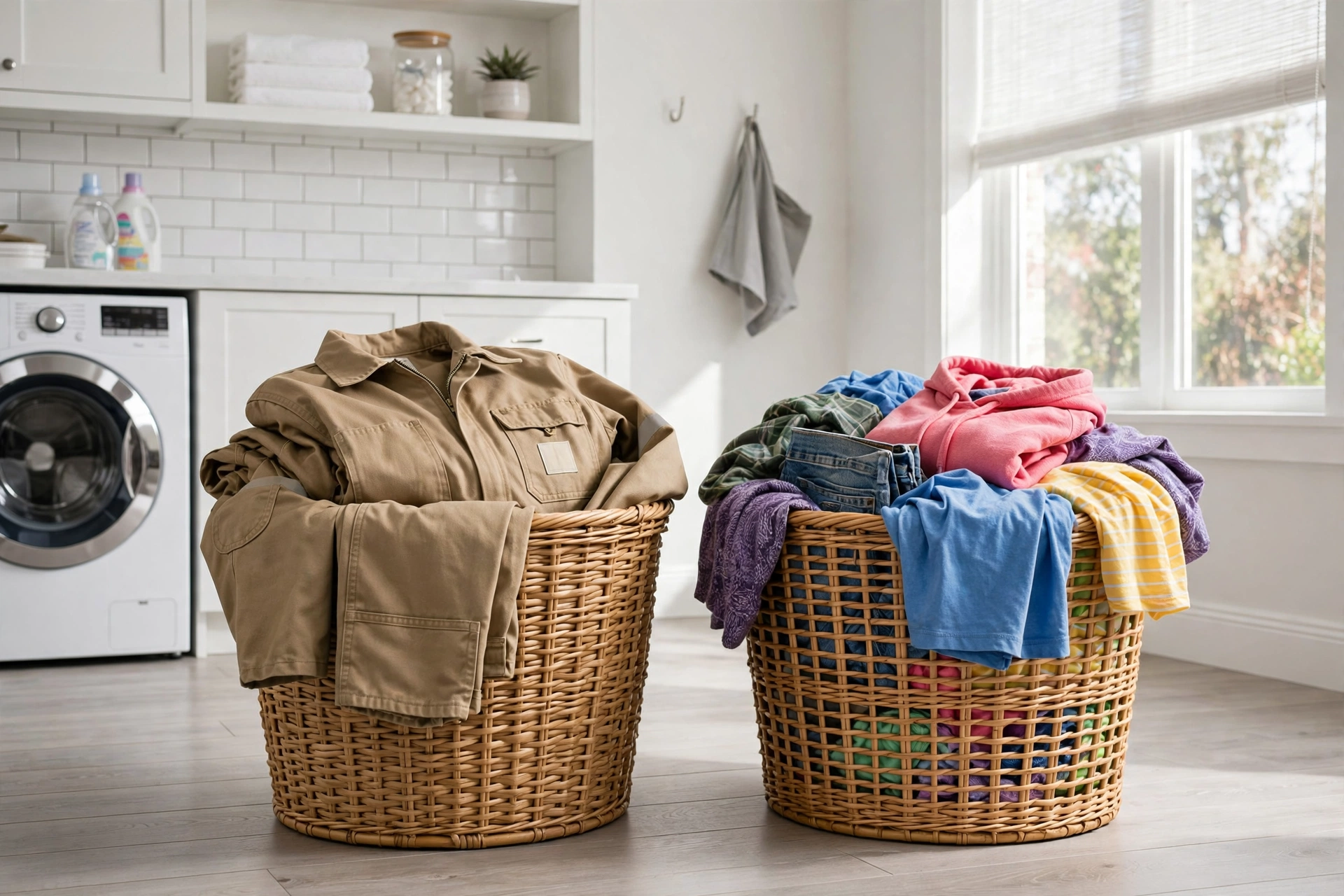
Best practice: wash FR separately. Always. It’s what every FR care program recommends, and it’s the only way to fully control what touches your protective garments.
The realistic answer: an occasional mixed load won’t instantly destroy FR — but every mixed load adds small risks that accumulate. If you care about the protection, separate the loads.
The Contamination Risks
Regular laundry carries four things that harm FR:
- Fabric softener residue. If anyone in the household uses softener or dryer sheets, residue transfers in a mixed load — coating FR fibers with flammable film. This is the biggest risk.
- Lint transfer. Cotton lint from t-shirts and towels embeds in FR fabric. Lint is fuel; in a thermal event, it ignites first.
- Bleach carryover. Trace bleach from whites loads attacks FR treatments — especially treated FR, where bleach damage is irreversible.
- Dye and soil transfer. Dark dyes, grease from work-adjacent clothes, and heavy soils migrate in mixed loads.
None of these announce themselves. The garment looks clean. The protection is quietly degraded.
When It’s Acceptable vs Never
| Acceptable (low risk) | Never do this |
|---|---|
| FR with FR — same care rules | FR with softener-treated laundry |
| FR with plain undyed cotton (no softener ever used) | FR with bleach-whitened loads |
| A one-off mixed load in a pinch | FR with heavily soiled or oily non-FR work clothes |
| FR with lint-heavy loads (towels, fleece) |
The pattern: the risk isn’t the “regular clothes” — it’s what those clothes carry. A load of plain cotton tees washed in mild detergent is a different universe from a load full of dryer sheets and bleach.
Best Practice: Separate Loads
Make it a habit, not a debate:
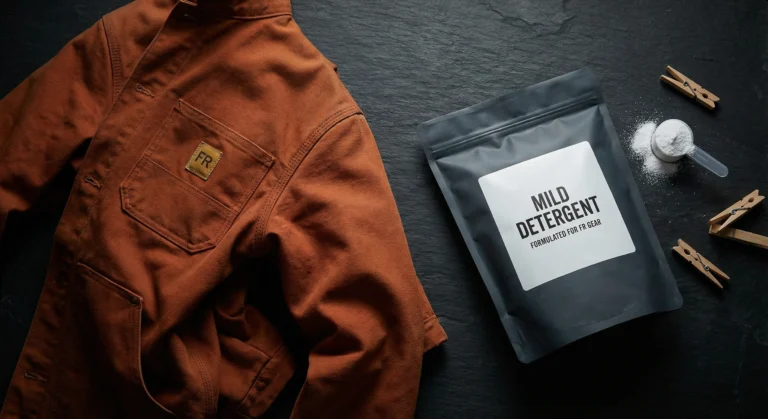
- Dedicate FR loads. FR garments wash together, with mild detergent — nothing else in the drum.
- Run FR first. If you share machines, wash FR before any softener or bleach loads to avoid residue in the drum.
- Wipe down shared machines. A quick drum wipe between a family load and an FR load removes residue.
- Skip the dryer sheets forever in any load that shares a machine with FR.
- Teach the household. The system fails when someone else tosses a dryer sheet into a shared load, so label the FR hamper and agree on a no-softener rule for shared machines.
Full routine: FR clothing care guide.
What About Family Laundry Logistics?
The practical objection is real — nobody wants to run a three-shirt load. Solutions:
- Accumulate. FR garments don’t need washing after every single wear unless soiled, so waiting until you have a full FR load is usually easy.
- Hamper discipline. A separate FR hamper makes separation automatic.
- Workplace laundering. Many employers with FR programs offer industrial laundering or a take-home policy — check what your program provides before defaulting to home washing.
Don’t Forget the Dryer
The washer isn’t the only shared surface. Dryer drums hold softener residue from dryer sheets long after the load is done, and that residue transfers to FR garments. If you share a dryer, skip dryer sheets entirely in that machine, or wipe the drum before FR loads. When in doubt, line-dry FR: it’s gentler on the fabric and eliminates the variable completely.
If your family uses dryer sheets, keep FR completely out of that laundry stream: separate hamper, separate loads, and ideally run FR first in a clean drum. Dryer sheet residue is one of the most common FR contaminants in home laundering.
What to Do After an Accidental Mixed Load
Don’t panic, and don’t throw the garment away — one mixed load rarely ends an FR garment’s life. Fix it with a clean wash and a careful check before the next wear:
- Rewash FR alone. Run the garment again by itself in cool or warm water with mild detergent, and skip softener and dryer sheets.
- Check for lint and residue. Shake the garment out, look for lint buildup, and feel for a slick or coated finish that suggests softener transfer.
- Do not strip it with bleach. Bleach can damage FR treatments further, so a second mild wash is safer than a harsh chemical fix.
- Inspect before the next wear. Check seams, closures, and thin spots, and follow your employer’s PPE program if anything looks or feels off.
Can you wash FR clothing with towels?
No — towels are one of the worst mixed-load partners for FR clothing. They shed lint that can embed in FR fabric and act as fuel in a thermal event, and they often carry softener residue. Wash towels separately, and if a towel load shared a drum with FR, wipe the drum and rewash the FR alone.
For the employer’s side of PPE duties, see OSHA’s Personal Protective Equipment overview.
FAQs
Will one mixed load ruin my FR clothing?
Almost certainly not — one load won’t destroy protection. But it can deposit softener residue or lint that accumulates over time. Treat it as an exception, not a habit.
Can I wash FR with jeans?
Jeans are heavy, abrasive, and often carry dye and softener residue — plus the hardware (rivets, zippers) beats up FR fabric. Wash FR separately.
Does washing FR separately really matter for inherent FR?
Yes, though the stakes differ. Inherent FR won’t lose its property to a mixed load, but lint loading and contamination still add fuel to the garment — and in a thermal event, fuel is fuel.
Related
FR Clothing Care Guide · Best Detergent for FR Clothing · What Is FR Clothing Made Of?