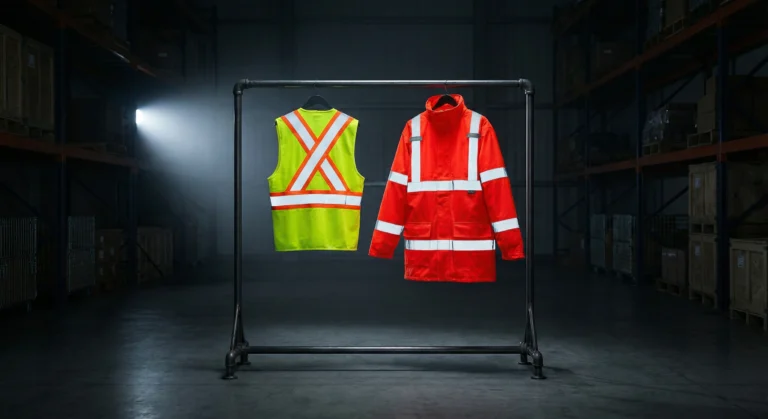
How Many Washes Does Hi-Vis Last? Hi-Vis Lifespan Explained
Your hi-vis vest was blazing orange on day one. Six months later it’s a sad peach color, and the silver stripes look tired. Hi-vis workwear doesn’t last forever in the wash — the bright color and the reflective tape both have a limited laundry life. Here’s what to expect and how to stretch it.
How many washes does hi-vis last? Most hi-vis garments are rated for about 25 washes, while heavier jackets may be rated for 25 to 50 washes. The rating is a tested minimum, not a hard expiry date, so gentle washing can extend life and harsh washing can shorten it. Judge by fading, tape condition, and inspection, not by the wash counter alone.
The Short Answer
Most hi-vis garments carry a rated number of wash cycles on the care label — 25 cycles is the most common rating. That number comes from standardized wash testing, and it’s a tested minimum, not a self-destruct timer.
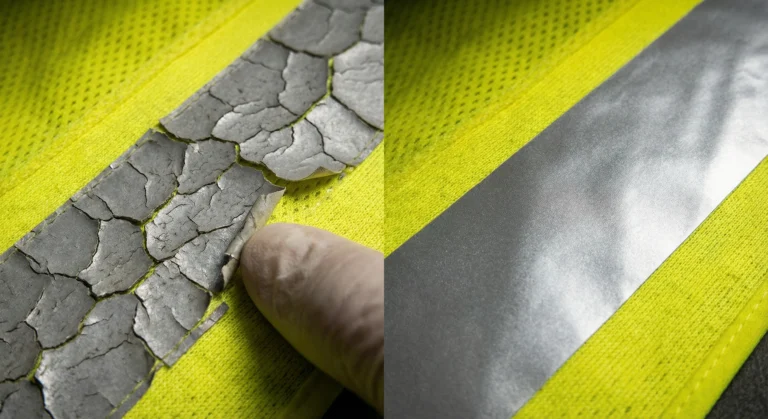
In practice, two things end a hi-vis garment’s life: the fluorescent background fabric fading, and the reflective tape cracking or peeling. Whichever happens first, the garment is done — a faded vest doesn’t meet the visibility requirement anymore, no matter what the wash counter says. (Background on the classes: ANSI/ISEA 107 classes explained.)
For the employer side, OSHA’s Personal Protective Equipment overview explains that protective equipment must be maintained in a sanitary and reliable condition, which includes retiring hi-vis that no longer performs, even if it has not reached a wash count.
Typical Wash Life by Garment
Label ratings vs. real-world experience.
| Garment | Common label rating | What actually happens |
|---|---|---|
| Hi-vis vest (basic polyester) | 25 washes | Tape edges lift first; daily-use vests often replaced yearly |
| Hi-vis t-shirt / polo | 25 washes | Thin fabric fades fastest; fluorescence goes before tape |
| Hi-vis jacket / softshell | 25–50 washes | Heavier fabric holds up better; tape remains the weak point |
| FR hi-vis (dual-rated) | Per label | Follow the stricter of the FR and hi-vis rules (hi-vis FR guide) |
These are starting points, not promises. Harsh washing can cut the real lifespan well short of the label rating — and gentle washing can stretch a garment past it. Condition always wins over the counter.
What Kills Hi-Vis Faster
Every wash costs a little visibility. These cost a lot:
- Hot water and high dryer heat — cooks fluorescent dyes and delaminates reflective tape from the fabric.
- Bleach and fabric softener — bleach destroys fluorescence; softener coats the reflective beads and dulls them.
- Overloaded washers — garments grind against each other and the drum, abrading tape edges.
- High-temperature industrial laundering — fine only if the garment is specifically rated for it; otherwise it ages hi-vis fast.
- Sun between washes — UV keeps fading the fluorescent fabric even when the garment is just hanging around.
Fluorescence vs Reflectivity: Which Fails First?
Usually the fluorescent background color fades first — the vest just looks dull in daylight. But the more dangerous failure is the reflective tape losing its snap: at night, the tape is what drivers actually see.
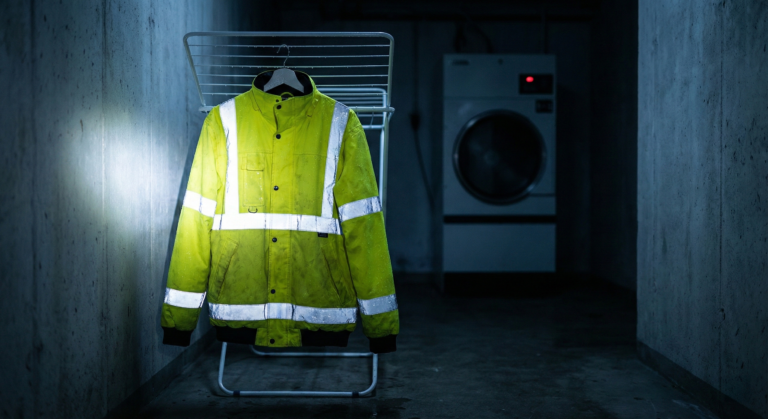
Test it yourself: take the garment into a dark room and hit the tape with a flashlight or phone light. Good tape throws the light straight back at you, bright and sharp. If it looks dim, gray, or patchy, the retroreflectivity is gone — retire the garment even if the color still looks okay. Nighttime visibility is non-negotiable.
Washing Rules to Maximize Wash Life
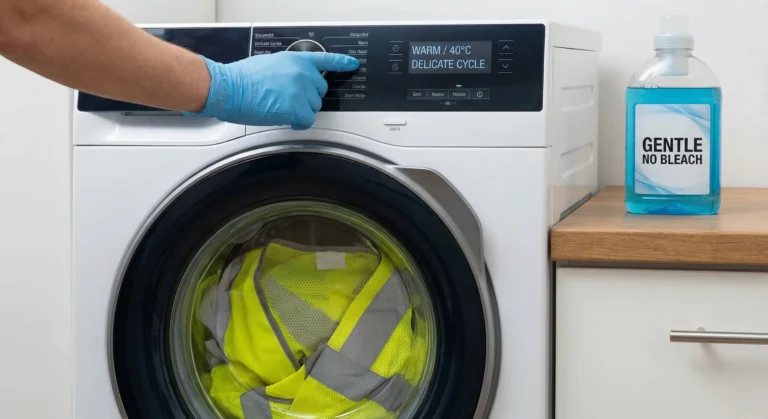
- Wash cold or warm, gentle cycle. Heat is the enemy of both dye and tape.
- Turn inside out. Keeps the drum and other garments off the reflective tape.
- Mild detergent only — no bleach, no softener. Ever.
- Wash hi-vis separately. Zippers, buttons, and rough fabrics from other clothes abrade tape.
- Close all zippers and fasten Velcro before the load — open fasteners snag tape.
- Hang dry or tumble low. Never high heat; never leave it baking in the dryer.
Signs Your Hi-Vis Is Done
Retire the garment when you see:
- Background color faded — hold it next to a new one; if the difference is obvious, it’s done.
- Reflective tape cracked, peeling, or dull in the flashlight test.
- Tape edges lifting — once edges go, peeling spreads fast.
- Fabric thin, torn, or excessively stained.
- It fails your site’s inspection — many workplaces check hi-vis on a schedule; a failed inspection is final.
Don’t try to “restore” faded hi-vis — fluorescence can’t be washed back, and re-dyeing a safety garment doesn’t restore its certified performance. Replacement is the only fix.
How to Track Washes and Inspections
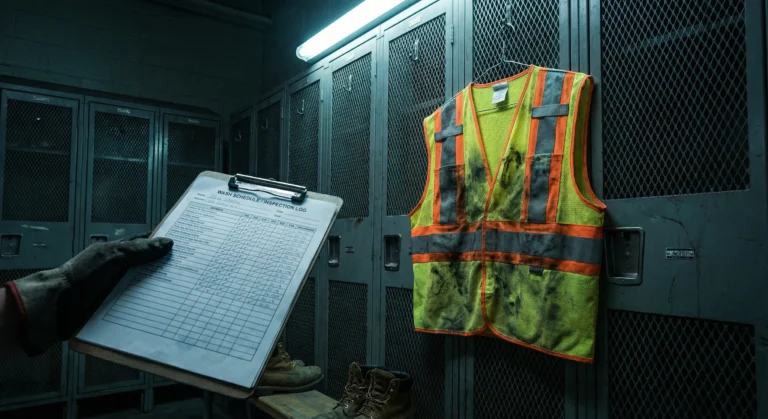
You do not need to count every load precisely, but a simple routine prevents a faded vest from staying in service too long. Mark the garment’s first-use date on its label or in a locker log, note roughly how often it is washed, and inspect it on a regular schedule — monthly for daily-use garments is a practical starting point.
- Compare the garment with a new one in daylight for fading, and check the tape in a dark room with a flashlight.
- Record inspection dates and any tape lifting, cracking, or staining, so the next check is not a guess.
- Rotate spare garments where possible, so no single vest carries every wash and every shift.
- Replace on condition, not on a calendar alone — a lightly used vest may pass well past 25 washes, while a harshly washed one may fail sooner.
Can you wash hi-vis in hot water?
No, hot water is one of the fastest ways to shorten hi-vis life. Heat fades fluorescent dyes and loosens the adhesive and structure behind reflective tape. Wash cold or warm on a gentle cycle, and dry on low heat or hang dry, unless the garment’s own label specifically allows a hotter industrial process.
How do I test reflective tape at home?
Dark room, flashlight or phone light aimed at the tape. Good tape reflects brightly straight back at the light source. Dim, gray, or patchy reflection means the retroreflective performance is gone.
FAQs
Does the 25-wash rating mean it dies at wash 26?
No. The rating is the number of cycles the garment was tested through while maintaining performance — a tested minimum. A gently washed garment can outlast it; a harshly washed one can fail before it. Judge by condition, not the counter.
Can I wash my hi-vis vest with regular clothes?
It’s better separate. Other garments’ zippers, buttons, and rough fabrics abrade the reflective tape, and lint from cotton loads dulls it. A dedicated hi-vis load lasts longer.
Why does the color fade but the tape still looks fine — is it still compliant?
No. Both components matter: the fluorescent background for daytime visibility and the tape for nighttime. If either one has degraded, the garment no longer performs as rated. Retire it.
Related: ANSI/ISEA 107 Classes Explained · Hi-Vis FR Clothing · When to Replace FR Clothing