
Hi-Vis FR Clothing: When You Need Visibility AND Flame Resistance
Some jobs demand two kinds of protection at once: be seen (hi-vis) and don’t burn (FR). Roadwork at night near fuel transport, emergency response at industrial fires, utility crews in arc-flash zones — these workers need garments that do both jobs. That’s hi-vis FR clothing.
What Is Hi-Vis FR Clothing?
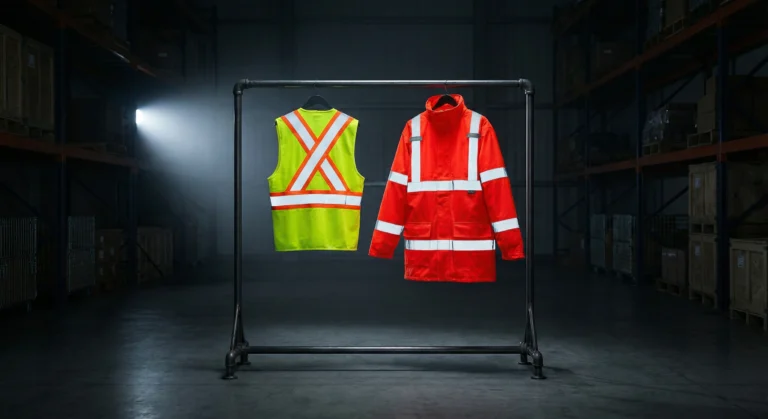
Hi-vis FR clothing is workwear that meets both requirements simultaneously: high visibility and flame resistance in a single garment. It combines fluorescent background material and retroreflective tape meeting ANSI/ISEA 107 with flame-resistant fabric meeting NFPA 2112 or an arc rating, so one garment protects against both traffic and thermal hazards.
- High-visibility — fluorescent background material + retroreflective tape, meeting ANSI/ISEA 107 (visibility standard)
- Flame-resistant — fabric that resists ignition and self-extinguishes, meeting NFPA 2112 (flash fire) and/or arc-rated per NFPA 70E
A regular hi-vis vest is usually polyester — highly visible, but it melts in heat. A regular FR coverall protects against fire but won’t make you visible to traffic at night. Hi-vis FR combines both protections in one garment.
When Do You Need Both?
You need both when your job site combines moving vehicles — especially at night — with thermal hazards such as flash fire or arc flash. Roadway workers near fuel transport, emergency responders at industrial incidents, utility line crews, oilfield road crews, and airport ground crews near fueling all face this dual risk daily.
- Roadway workers near fuel/chemical transport — traffic visibility + flash-fire risk
- Emergency responders at industrial incidents — seen in smoke/darkness + thermal protection
- Utility line crews — arc flash hazard + roadside visibility
- Oilfield road crews — night work + hydrocarbon fire risk
- Airport ground crews near fueling operations
If your job site has both moving vehicles (especially at night) and thermal hazards, you likely need hi-vis FR — not one or the other.
The Standards Involved (Three at Once)
A proper hi-vis FR garment is certified to multiple standards:
| Requirement | Standard | What it proves |
|---|---|---|
| Visibility | ANSI/ISEA 107 | Fluorescent + reflective performance, class/type rating |
| Flash fire | NFPA 2112 | FR performance for industrial flash fire |
| Arc flash | NFPA 70E (arc rating) | Tested cal/cm² rating for electrical work |
Check the garment’s labels — a legitimate hi-vis FR piece lists all applicable certifications. If it only claims ANSI/ISEA 107, it’s hi-vis but not FR. If it only claims NFPA 2112, it’s FR but not hi-vis.
Learn more: ANSI/ISEA 107 classes · NFPA 2112 explained · Arc flash categories
Can You Just Layer Hi-Vis Over FR?
A common workaround is wearing a regular hi-vis vest over FR coveralls, but does that actually work? For visibility, yes — the vest makes you seen regardless of what is underneath. For safety, it is complicated: a melting polyester vest over FR coveralls can drip, violate site rules, and create false compliance.
For visibility: yes. The vest makes you visible regardless of what’s underneath.
For safety: it’s complicated. A melting polyester vest over FR coveralls can:
- Melt and drip onto the FR layer (though quality FR underneath still protects)
- Violate site rules that require the outer layer to be FR
- Create a false sense of compliance during inspections
The rule: if your hazard assessment requires FR, your outermost garment in the hazard zone should be FR. A non-FR vest over FR coveralls is acceptable for visibility only where the outer layer isn’t exposed to the thermal hazard — and many sites prohibit it outright. When in doubt: wear hi-vis FR garments, not layered compromises.
Caring for Hi-Vis FR Clothing (Double Duty)
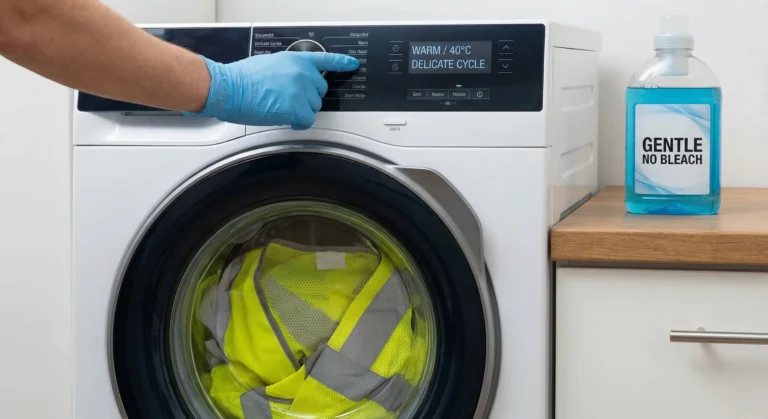
These garments have two things to protect: the FR treatment/fiber AND the reflective tape + fluorescent fabric. That means combining both care routines:
FR rules:
- Mild detergent only — no bleach, no softener, no starch
- Wash separately, inside out
- Warm water max (check label)
Hi-vis rules:
- Low temperatures (reflective tape hates heat — usually max 40°C/105°F)
- No bleach or optical brighteners (fade the fluorescent fabric)
- Tumble dry low or line dry
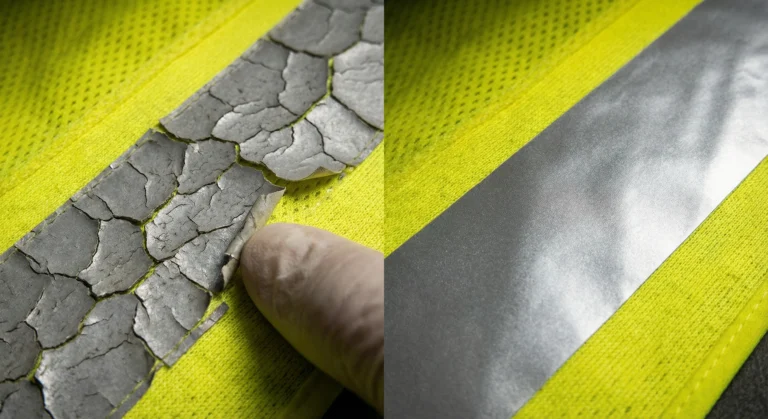
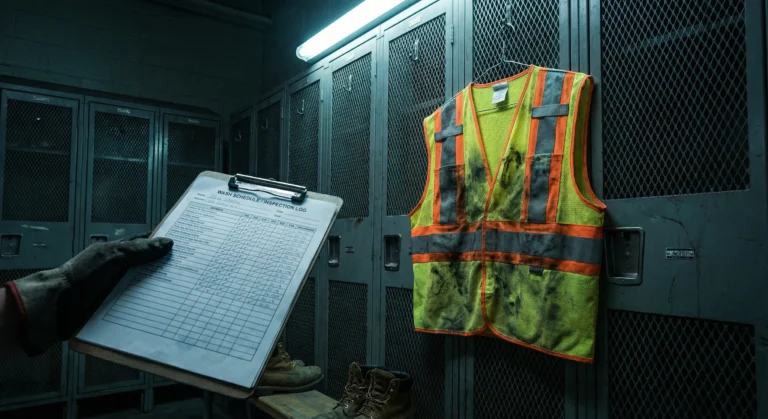
- Inspect reflective tape every wash — peeling/cracking = retire
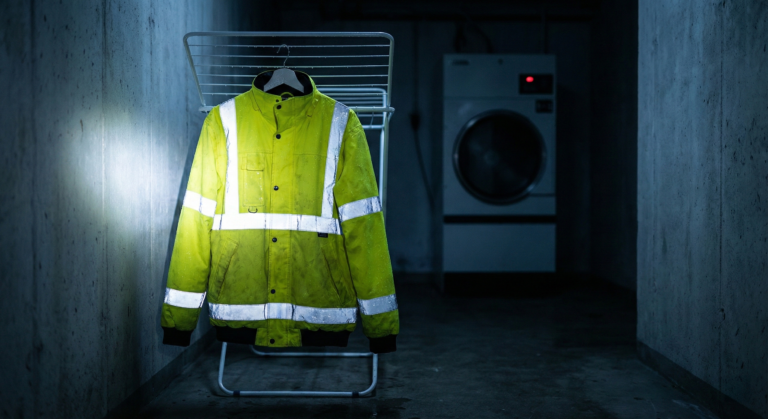
The combined routine: wash inside-out in cool/warm water with mild detergent, low-heat dry, inspect both the FR integrity and the reflective tape. Our full guides: FR clothing care and hi-vis washing.
What to Look for When Buying
- All three labels (ANSI/ISEA 107 class/type + NFPA 2112 and/or arc rating)
- Tape quality — segmented reflective tape lasts longer and breathes better
- FR type — inherent FR (Nomex blends) lasts longer; treated is cheaper (materials guide)
- Fit — FR + hi-vis only works if it’s actually worn; uncomfortable gear gets “forgotten”
Do hi-vis FR garments need both ANSI/ISEA 107 and NFPA 2112 labels?
Yes, for full dual protection. A legitimate hi-vis FR garment carries an ANSI/ISEA 107 class and type for visibility plus an NFPA 2112 listing for flash fire, and an arc rating if it is used for electrical work. Check all labels before buying — a garment missing one certification does not cover both hazards.
Can reflective tape be repaired on hi-vis FR clothing?
Generally, no — damaged reflective tape cannot be reliably repaired, and peeling or cracking tape means the garment no longer meets its visibility rating. Some manufacturers offer replacement tape kits, but most safety programs retire garments once the tape fails, because visibility is a pass-or-fail requirement, not a cosmetic detail.
FAQs
Is a regular hi-vis vest FR?
No. Standard hi-vis vests are made of polyester, which melts when exposed to flame or intense heat, so they offer no flame protection. Only garments specifically labeled as FR — meeting NFPA 2112 for flash fire, an arc rating for electrical work, or both — provide real flame resistance alongside visibility.
Can I wear a hi-vis vest over FR coveralls?
For visibility, yes — a hi-vis vest over FR coveralls makes you seen regardless of what is underneath. But check your site’s rules first: many sites require the outer layer to be FR in hazard zones, because a melting polyester vest over FR coveralls is a compromise, not a compliant solution.
How do I wash hi-vis FR clothing?
Wash hi-vis FR clothing inside-out in cool or warm water with a mild detergent — no bleach, softener, or starch — and tumble dry low or line dry. This routine protects both the FR properties and the reflective tape, which hates heat. Inspect the tape every wash, and retire the garment if it peels or cracks.
Does hi-vis FR cost more?
Yes — dual certification costs more to manufacture and certify. But it’s cheaper than two separate garments and far cheaper than an injury.
Related: What Is FR Clothing? · ANSI/ISEA 107 Classes · FR Clothing Care Guide