Cold Weather FR Clothing: Layering Guide
Winter doesn’t cancel arc flash and flash fire hazards, but it tempts workers to pile on whatever is warm, and that’s where FR programs fail. A polyester hoodie under FR coveralls melts into the burn in a thermal event. Here’s how to layer for cold without compromising protection.
What is cold weather FR clothing? It is a layering system in which every layer — base, mid, and outer — is flame-resistant or non-melting, so warmth never comes at the cost of arc or flash-fire protection. The rule is simple: if a layer can melt, it does not belong in the hazard area.
The Golden Rule: Every Layer Must Be FR-Safe
An FR system is only as safe as its weakest layer: one meltable layer voids the arc rating on your coveralls. (Full breakdown: polyester under FR clothing.)
Before winter, audit every layer: if any of them can melt, it doesn’t go on the job.
That duty sits with the employer as well as the worker: OSHA’s Personal Protective Equipment overview explains that employers must assess hazards, provide suitable protective equipment, and maintain it in a sanitary and reliable condition.
| Layer | Safe choices | Never wear |
|---|---|---|
| Base | 100% cotton, merino wool, FR-rated thermal | Polyester thermals, polypropylene, nylon tights |
| Mid | FR fleece, FR sweatshirt, FR flannel or quilted shirt | Regular fleece, standard hoodies, polyester sweaters |
| Outer | FR winter coat, insulated FR coveralls, arc-rated outerwear | Non-FR winter coats, nylon shells, puffy polyester jackets |
Base Layer: What Touches Your Skin
The base layer matters most because it sits against your skin, where melted fabric does the worst damage. Your compliant options:
- 100% cotton long underwear: doesn’t melt, chars instead; check the label for zero spandex.
- Merino wool base layers: naturally flame-resistant, doesn’t melt, and handles sweat far better than cotton.
- FR-rated base layers: thermal underwear made from inherent FR fibers. The premium option for maximum protection.
What never belongs here: polyester thermals, polypropylene long johns, nylon tights, or any “moisture-wicking” athletic layer. Almost all of them are meltable synthetics.
Mid Layer: The Insulation
The mid layer provides the warmth. It must be FR-rated too: this is where most violations hide, because a regular fleece looks harmless.
- FR fleece or FR sweatshirt: made from flame-resistant fibers, not standard polyester fleece. Regular fleece is essentially solidified fuel.
- FR flannel or FR quilted shirt: good mid-weight options for moderate cold.
- FR hoodies: fine if FR-rated; keep hoods clear of rotating equipment and hard hats.
The trap: grabbing a comfortable regular hoodie from home. If it isn’t labeled FR, assume it melts.
Outer Layer: The Shell
Your outer layer faces the weather, and in electrical work, it also needs the right arc rating:
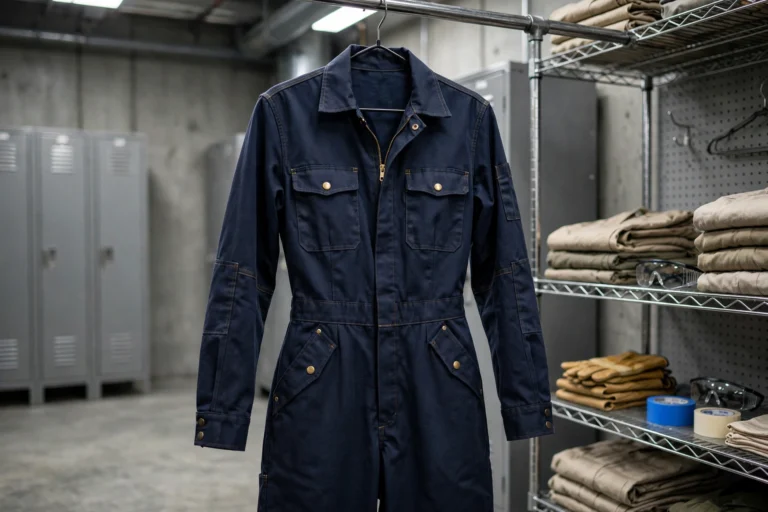
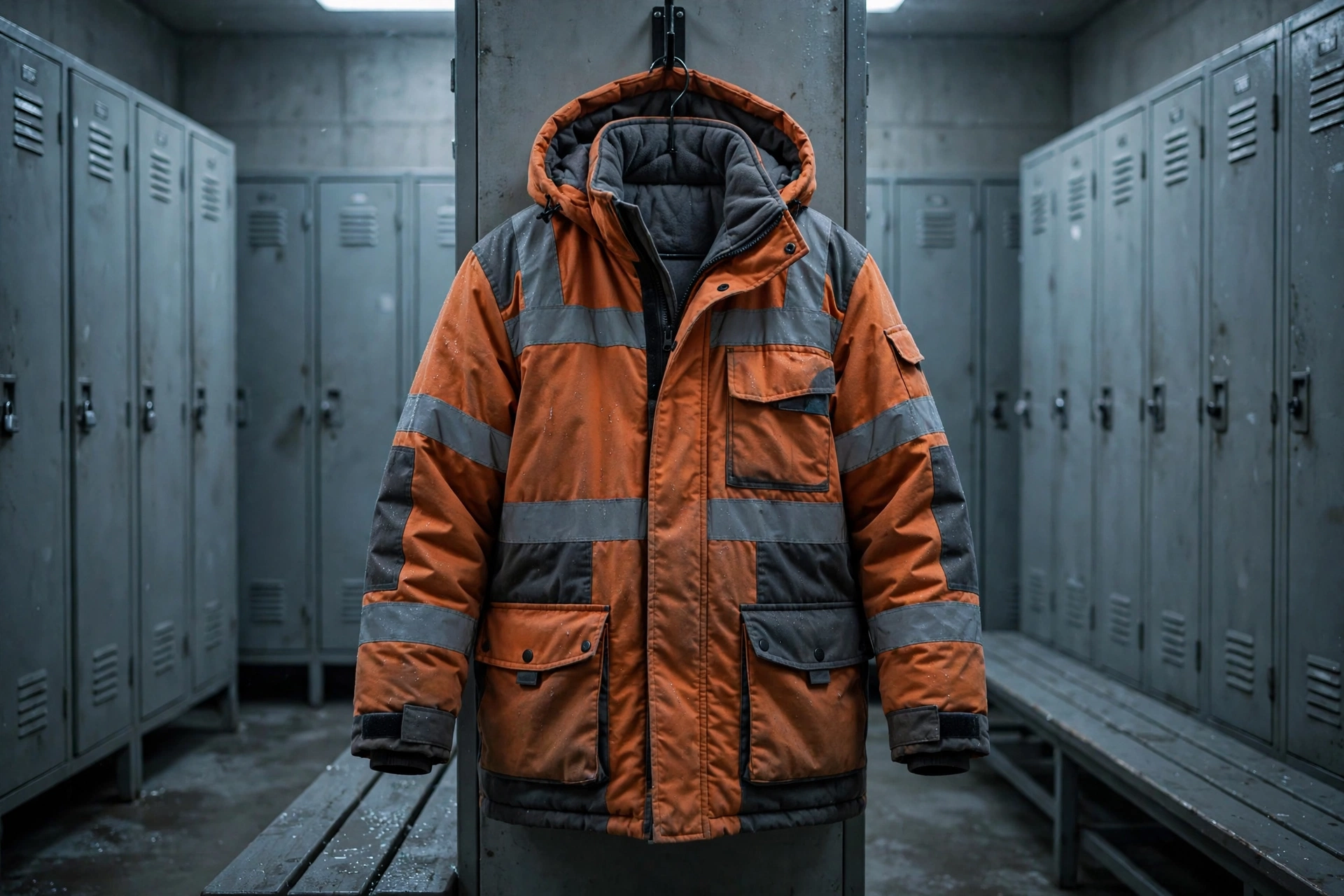
- FR winter coat or insulated FR coveralls: your main defense against both cold and flame.
- FR parka or bomber: for extreme cold; check that the insulation itself is FR-compatible (non-melting).
- Arc-rated outerwear for electrical work: a non-rated coat over FR coveralls is a flammable shell that defeats the system.
- Wind and water resistance: wind cuts through FR cotton fast, so a windproof FR shell is worth it.
Keeping Hi-Vis Visible Over Winter Layers
Winter layers bury hi-vis, and “my vest is under my coat” fails every inspection:
- Hi-vis goes on the outside. Your hi-vis vest or jacket is always the outermost layer.
- Size up the vest so it closes fully over a winter coat: one that won’t zip isn’t compliant.
- Consider an FR hi-vis winter jacket that does both jobs in one garment (hi-vis FR options).
- Keep reflective tape clear of backpack straps and tool belts.
Washing Bulky Winter FR
Winter FR is heavy, and heavy garments punish washing machines:
- Don’t overload. Bulky items need room to move: cramming a parka and coveralls together abrades both.
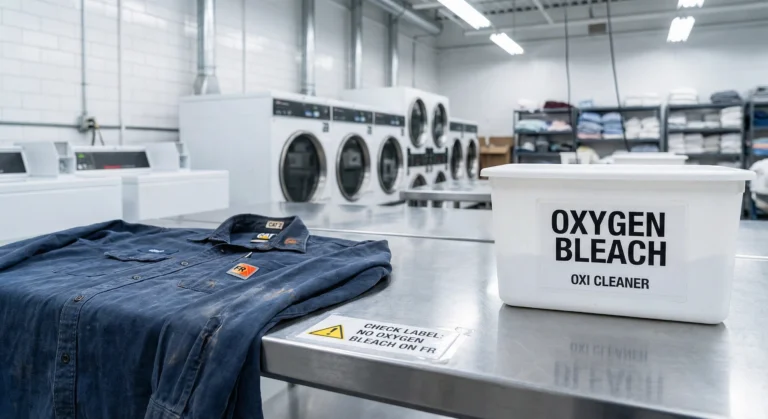
- Mild detergent, no bleach, no softener: same rules as always (FR clothing care guide).
- Empty every pocket: tissues and paper in pockets become lint plastered across FR fabric.
- Dry thoroughly. Thick insulation hides moisture; a damp garment in a locker grows mildew.
- Check the label: some insulated FR garments have specific temperature limits.
Cold-Weather Mistakes to Avoid
- Polyester thermals as a base layer: the single most common winter FR violation.
- Regular fleece mid-layer: melts just like polyester because it usually is polyester.
- Non-FR winter coat over FR coveralls: a flammable outer shell in the hazard zone.
- Hi-vis vest under the coat: invisible means non-compliant.
- Drying FR on a space heater: concentrated heat damages FR treatments and is a fire risk.
- Skipping the layer audit: check every layer at the start of the season, not after an incident.
How to Audit Your Winter Layers
Run this check at the start of the season and whenever a new garment joins the kit. It takes a few minutes and catches the violations that inspections catch later, at much higher cost.
- Read every label: base, mid, and outer layers must each be FR-rated or provably non-melting, with no spandex or synthetic blends hiding in the fiber content.
- Try the full system on together: check that the outer layer still closes, the hi-vis still fits over it, and hoods and cuffs do not interfere with hard hats or gloves.
- Inspect for damage: worn cuffs, cracked coatings, and faded arc ratings mean the garment no longer performs as labeled, whatever it cost.
- Remove anything unrated from the kit: a spare non-FR hoodie in the locker is a violation waiting for a cold morning.
Can I wear a heated jacket under FR clothing?
Only if the heated garment itself is FR-rated and its battery and wiring are approved for the work area. A standard heated jacket is usually polyester and introduces both a meltable layer and an electrical ignition source, so it does not belong under FR coveralls in a hazard area.
Can I use disposable hand warmers with FR clothing?
Yes: air-activated warmers don’t affect FR protection. Keep them in outer pockets, not against base layers, and never where they could scorch fabric.
FAQs
Can I wear a regular winter coat over my FR coveralls?
Are FR base layers worth the money?
How do I wash a bulky FR winter parka?
Related: Polyester Under FR Clothing · FR Clothing Care Guide · Hi-Vis FR Clothing