How to Remove Oil Stains from FR Clothing Without Ruining It
To remove oil stains from FR clothing, blot the oil at once, pre-treat with a small amount of liquid dish soap or mild detergent, soak in warm water, then wash on the garment label’s FR-safe routine. Never use bleach or harsh solvents, and never put a stained garment in a hot dryer.
Oil and FR clothing meet constantly — refineries, engine rooms, hydraulic work. The real problem is what most people reach for to remove it: aggressive solvents and bleach that strip flame-resistant protection along with the stain. You can get oil out and keep the FR intact — here’s how.
Act Fast: The First 30 Minutes Matter Most
Oil sets with time and heat. Your odds are best in the first half hour:
- Blot, don’t rub. Press a clean cloth or paper towel into the stain to lift surface oil. Rubbing grinds it deeper into the fibers.
- Scrape off excess. For heavy grease, lift off what you can with a dull edge (an old card works) before it spreads.
- Keep it away from heat. Don’t toss a stained garment in the dryer or near a heater — heat sets oil stains permanently. Don’t iron over the stain either.
- Pre-treat now (below), then wash as soon as practical — don’t let an oil-soaked garment sit for days.
If the garment is soaked with flammable liquid — not just stained — treat it as contaminated PPE: remove it, keep it from ignition sources, and follow your site’s decontamination procedure first.
Safe Degreasers vs Banned Solvents
Not everything that cuts grease is safe on FR fabric. The dividing line is whether the chemical attacks the FR treatment or the fibers.
| Safe on FR | Never use on FR |
|---|---|
| Liquid dish soap as a pre-treater (small amount, worked in gently) | Chlorine bleach — destroys FR treatments |
| Mild liquid laundry detergent applied directly to the stain | Gasoline, kerosene, or diesel as “solvents” — flammable residue risk |
| FR-safe commercial degreasers (used per label) | Acetone, paint thinner, and other harsh solvents |
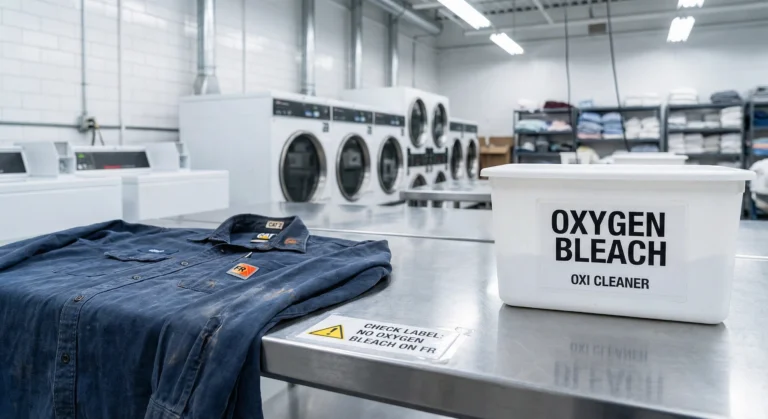
| Warm (not hot) water soak with detergent | Hydrogen peroxide / oxygen bleach on treated FR unless the garment label allows it |
| Baking soda paste for light, fresh spots | Fabric softener — coats fibers and reduces FR performance |
Check any commercial degreaser is marked safe for flame-resistant garments and follow its instructions exactly. For detergent choice, see the best detergent for FR clothing guide.
Step-by-Step Oil Stain Removal
- Blot and scrape excess oil (above).
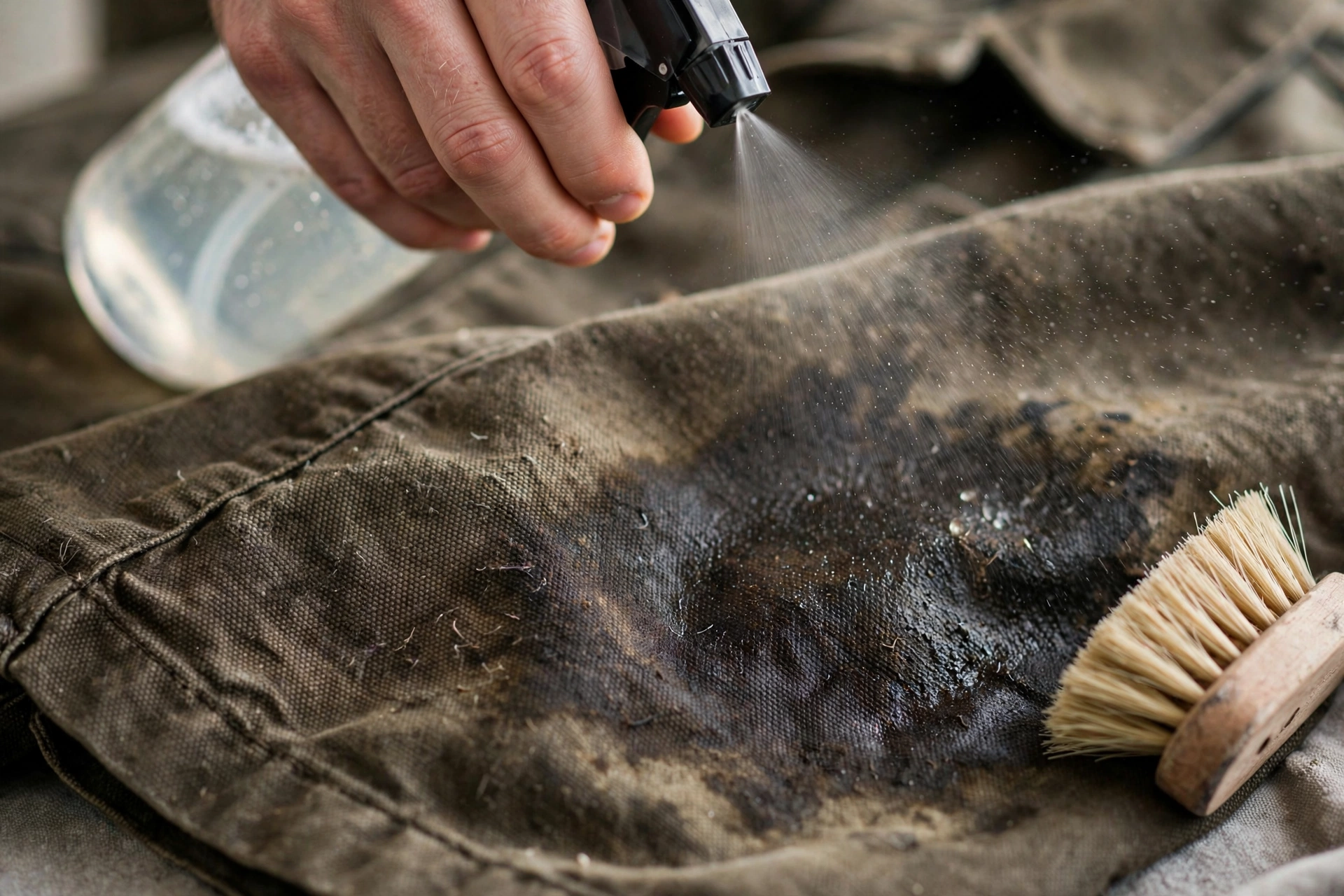
- Pre-treat: work a small amount of liquid dish soap or mild detergent into the stain with your fingers or a soft brush; let it sit 10–15 minutes without drying out.
- Soak: submerge in warm water with detergent for 30–60 minutes for stubborn spots.
- Wash: launder per the garment label — usually warm water, mild detergent, inside out, FR load only. Follow the full FR clothing care routine.
- Check before drying: inspect while damp — if any shadow remains, repeat pre-treatment and wash again; never dry a garment that still shows oil.
- Air-dry or tumble low once the stain is gone.
Stubborn stains may need two or three cycles — repeating a gentle process beats one aggressive attempt that risks the FR treatment.
Try the gentle cycle two or three times — some set stains release with repetition. If it doesn’t budge, or heat already set it, retire the garment rather than escalating to harsh chemicals.
Can you use WD-40 on FR clothing stains?
No — WD-40 is itself a petroleum solvent and leaves flammable residue on FR fabric, so it trades one oil stain for another hazard. It can also damage treated FR finishes. Stick to dish soap or mild detergent as a pre-treater, and if a stain resists gentle treatment, retire the garment rather than reaching for a solvent.
Why Harsh Chemicals Kill FR Protection
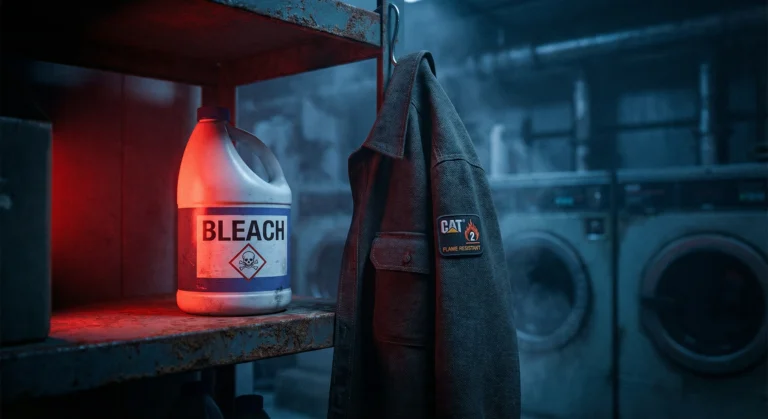
Chlorine bleach doesn’t just whiten — it chemically attacks the flame-retardant treatment on treated FR fabrics, permanently reducing protection. Harsh solvents can strip treatments, weaken fibers, and leave flammable residues — the exact opposite of what FR clothing is for.
The cruel part: the damage is invisible. A bleached FR shirt can look brand new while its protection is compromised — and no one can tell by looking.
Because oil-soaked PPE can become a fire hazard, employers must keep protective equipment in reliable condition — OSHA’s Personal Protective Equipment overview sets out that duty, and contaminated garments that cannot be cleaned should be removed from service.
When a Stained Garment Must Retire
Sometimes the right answer is to stop treating the stain and retire the garment:
- The stain won’t come out after repeated gentle attempts, and the residue is oil-based — embedded flammable soil is itself a hazard.
- You already used a banned chemical on it (bleach, harsh solvent). The FR treatment may be compromised even if the stain is gone.
- The stained area is large — widespread contamination is harder to verify as fully removed.
- The fabric feels different in the stained area — stiff, thin, or texture-changed means chemical or physical damage.
- It fails inspection for any reason. Run the full retirement checklist before putting any heavily stained garment back in service.
A stained garment you’re unsure about is a garment you shouldn’t trust. Replacement costs less than a burn injury.
Oil Stain Removal for Different FR Fabrics
Not all FR fabrics react to stain treatment the same way, so match your approach to the garment in front of you rather than using one method for everything.
- Inherent FR (aramid) garments usually tolerate repeated gentle cycles well, since the protection is built into the fiber — but heat-setting a stain is still permanent, so keep them away from dryers until the stain is gone.
- Treated FR cotton is the most vulnerable: bleach and harsh solvents attack its chemical treatment directly, so stay strictly to dish soap, mild detergent, and FR-safe degreasers.
- FR blends follow the garment label above all — the most delicate fiber in the blend sets the limit for water temperature and chemicals.
- Reflective trim needs a light touch: don’t scrub trim directly, pre-treat around it, and retire the garment if trim cracks or peels after cleaning.
FAQs
Can I use dish soap on FR clothing stains?
Yes, in small amounts as a pre-treater worked gently into the spot — it’s effective on fresh oil and rinses clean. Don’t use it as your full wash detergent (it over-suds and leaves residue); wash with a proper mild laundry detergent afterward.
Can I use bleach to get oil out of FR clothing?
No — never chlorine bleach on FR garments. It destroys flame-retardant treatments permanently. The stain might come out, but the protection goes with it.
Will an oil stain affect the arc rating?
The stain doesn’t change the tested arc rating, but oil is flammable — a stained garment introduces fuel the rating never accounted for. Clean it fully or retire it; don’t wear it stained near ignition sources.
Related: FR Clothing Care Guide · Best Detergent for FR Clothing · When to Replace FR Clothing