FR Clothing for Women: Fit, Sizing & What to Look For
For years, “FR clothing for women” meant ordering the smallest men’s size and hoping for the best — a safety problem, not just a comfort one. FR protection assumes full, correct coverage, which a garment designed for a different body rarely delivers. Here’s what proper fit means and how to get it.
What is FR clothing for women? It is flame-resistant workwear cut for women’s proportions, with the same arc ratings and NFPA 2112 compliance as men’s FR, but with shaped shoulders, torso, and hips so closures close fully and coverage stays in place during work.
Why Unisex FR Fits Badly
Standard unisex (in practice, men’s-patterned) FR creates predictable problems on women’s bodies:
- Excess fabric — bunches at the waist, bags at the hips, snags on equipment and under harnesses.
- Gaping necklines — a collar cut for broader shoulders sits open, leaving the chest and neck exposed.
- Sleeves too long — rolled cuffs expose wrists and forearms, where arc flash burns strike first.
- Wrong torso length — a too-long torso rides up when bending; a too-short one exposes the lower back.
- Shoulders too wide — the garment hangs instead of moving with you, restricting reach.
None of this is cosmetic. Every gap is exposed skin; every bunched fold is a snag hazard.
Why Fit Is a Safety Issue, Not Just Comfort
FR garments are tested and rated assuming they’re worn correctly — closed, covering, and in position. Poor fit breaks those assumptions:
- Coverage gaps mean burn exposure — protection you aren’t wearing doesn’t protect you.
- Loose fabric near rotating equipment is an entanglement hazard on top of the thermal one.
- Closures that won’t close — a zipper that strains or a collar that gapes defeats the garment’s design.
- Restricted movement leads to modifying garments (rolled sleeves, unzipping) — which quietly voids protection.
Comfortable gear gets worn correctly; uncomfortable gear gets “adjusted” — and every adjustment is a compromise.
What Proper Fit Looks Like
Use this checklist when trying on FR:
- Shoulders sit at your actual shoulder line, not drooping down your arms.
- Sleeves reach the wrist with arms extended forward — no rolling needed.
- Cuffs close snugly around the wrist without gaping.
- Neckline closes fully without pulling or gaping at the chest.
- Torso covers the waistband when bending, reaching, and squatting.
- Move freely — climb, reach, and crouch without binding or riding up.
- Layers fit underneath — try it on over the base layers you’ll actually wear in cold weather.
If a garment fails any of these, it’s the wrong size or pattern — not something to “make work.”
Women’s-Patterned vs. Smaller Men’s Size: At a Glance
| Fit point | Women’s-patterned FR | Smaller men’s size |
|---|---|---|
| Shoulders | Cut to the wearer’s shoulder line | Often too wide, garment droops |
| Torso | Shaped through waist and hips | Straight cut, bunches or rides up |
| Neckline | Closes fully without gaping | May sit open at the chest |
| Sleeves | Sized to reach the wrist | Often need rolling, exposing skin |
| Movement | Articulated where bending happens | Can bind at knees, elbows, and waist |
Features to Look For
Look for women’s-patterned FR — cut for women’s proportions, not scaled-down men’s sizing — with:
- Shaped patterning through the torso, shoulders, and hips rather than a straight box cut.
- Adjustable cuffs and waist — lets you dial in the fit over varying base layers.
- Articulated knees and elbows — so the garment doesn’t pull when you bend.
- Sensible pocket placement — reachable without opening the garment.
- PPE compatibility — harness pass-throughs, hard-hat-compatible hoods, room for gloves and eyewear.
These are design features to compare — not product recommendations.
Sizing Tips
- Measure first. Chest, waist, hips, inseam — then use the maker’s size chart; workwear sizing runs differently than regular clothing.
- Try it on over real base layers. A coverall that fits over a t-shirt may not fit over winter thermals.
- Move in it. Walk, bend, reach, squat. FR you can’t move in is FR you’ll modify.
- Check the return policy — fit varies between makers; exchanges should be painless.
- Re-check fit after weight changes. FR that fit last year may gap or bind now — protection follows the fit, not the purchase date.
Fit Changes, Layering, and Replacement
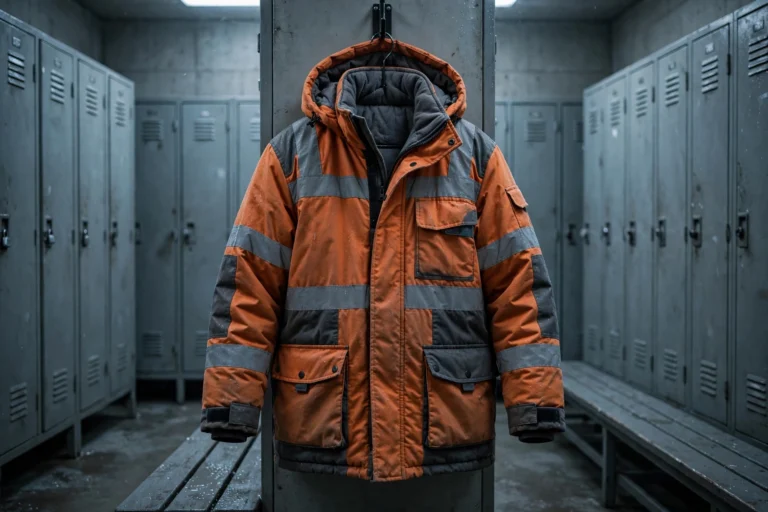
Bodies change, seasons change, and jobs change — and each change can change fit. Try FR on over the layers you will actually wear in cold weather, because a garment that fits over a t-shirt can bind over thermals, and a garment that fits over thermals can gap when worn alone. If your body shape changes, do not alter the garment yourself with non-FR fabric, tape, or stitching that could melt or compromise the rating; ask your employer or supplier about a different size, pattern, or FR option designed for that shape.
My FR doesn’t fit anymore after a weight change — when should I replace it?
When fit compromises coverage: gaping neck, cuffs that won’t close, riding-up torso, restricted movement. Run the full retirement checklist with fit as a criterion.
Care Is the Same
Women’s FR follows the same care rules as any FR garment:
- Mild detergent only. No bleach, no fabric softener, no starch.
- Wash FR separately from regular laundry.
- Moderate heat — warm water, medium dryer, or line dry.
- Inspect on the same schedule, checking both fabric condition and fit. (FR clothing care guide)
Fit-specific note: check for shrinkage after the first few washes — a garment that fit off the rack may need a size adjustment after laundering. For cold-weather layering, see the cold weather FR layering guide and avoid meltable base layers, as explained in polyester under FR clothing.
Employers must assess hazards and provide suitable protective equipment: see OSHA’s personal protective equipment page. That duty includes fit — PPE that does not fit the wearer cannot be relied on in the same way as PPE worn correctly.
FAQs
Can I just wear a smaller men’s size?
It sometimes works, but usually fails where it matters: shoulders too wide, torso the wrong length. Women’s-patterned FR is cut for actual proportions — better fit, better protection.
Does poor fit really affect protection, or is it just uncomfortable?
Genuinely. FR ratings assume full coverage with closures closed — gaping necklines and rolled cuffs create exposed skin, and that’s where burns happen.
Is women’s FR rated differently from men’s FR?
No — arc ratings and NFPA 2112 compliance work the same regardless of wearer. Fit doesn’t change the rating, but it changes whether the rated protection actually covers you.
Related: What Is FR Clothing? · FR Clothing Care Guide · When to Replace FR Clothing