

Bleach On FR Clothing: Why You Should Avoid Bleach On FR Clothing
Bleach on FR clothing is a hard “no” when it comes to chlorine bleach: it damages FR fibers and can destroy the flame resistance that keeps you protected. No stain is worth compromising a garment’s protective properties. Many FR care programs prohibit all bleach types, because even gentler options can damage finishes or produce unpredictable results on protective workwear.
Safety note: Always follow the garment care label and your workplace safety program. Do not use bleach/softeners/additives unless the label explicitly allows them.
Quick Links
- /fr-clothing-care/
- /oxygen-bleach-on-fr-clothing/
- /best-detergent-for-fr-clothing/
- /hard-water-fr-clothing/
- /ppe-decontamination-retirement-guide/
Bleach On FR Clothing: Chlorine Vs Oxygen Bleach
- Chlorine bleach (sodium hypochlorite) is widely prohibited in FR guidance — and it must never be used on FR clothing. It attacks fibers and can strip or destroy the flame-resistant treatment, leaving a garment that looks intact but no longer provides rated protection.
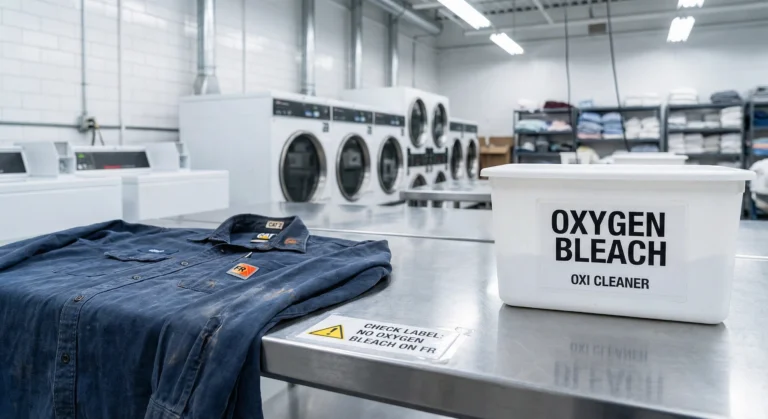
- Oxygen bleach products are typically peroxide-based (often associated with hydrogen peroxide chemistry) and are also frequently prohibited in FR care instructions. Oxygen bleach is gentler than chlorine, but some FR manufacturers still advise against it — check the garment’s care label first.
The damage isn’t always visible. Chlorine bleach can weaken fibers and leave them prone to tearing, yellowing, or thinning — signs that a garment’s protective life is over even if the FR label is still attached. If you’re unsure whether a garment has been exposed to bleach, check its care history against the label and retire it when in doubt.
1) What FR Brands And FR Guidance Commonly Say
Many manufacturer and program guides include “do not use bleach” as a baseline rule for FR/AR garments. Guidance from brands like Tyndale, Bulwark, and Benchmark FR consistently steers users away from bleach, and for good reason: chlorine bleach damages FR fibers and can destroy flame resistance, even when the garment looks fine afterward. Whether your garment’s protection is inherent to the fiber or applied as a treatment, bleach undermines both — treated fabrics lose their finish, while even inherently FR fibers degrade under chlorine attack. A bleached garment may fail to resist ignition or self-extinguish during an arc-flash or flash-fire event — the very situation it exists to protect against.
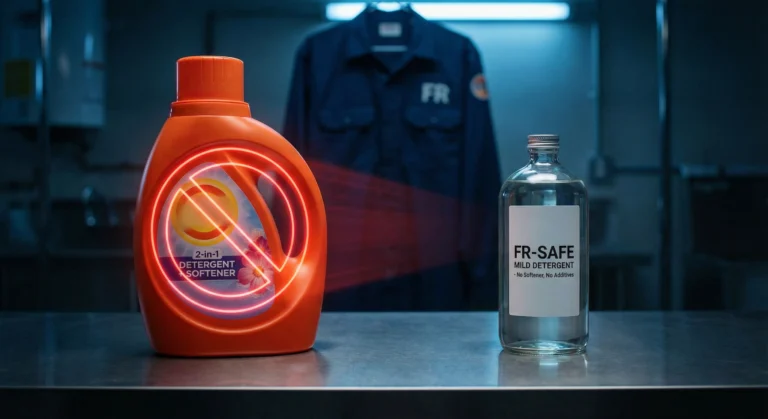
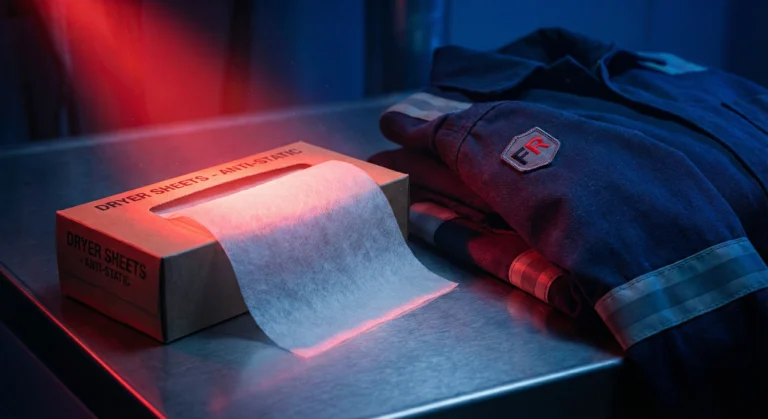
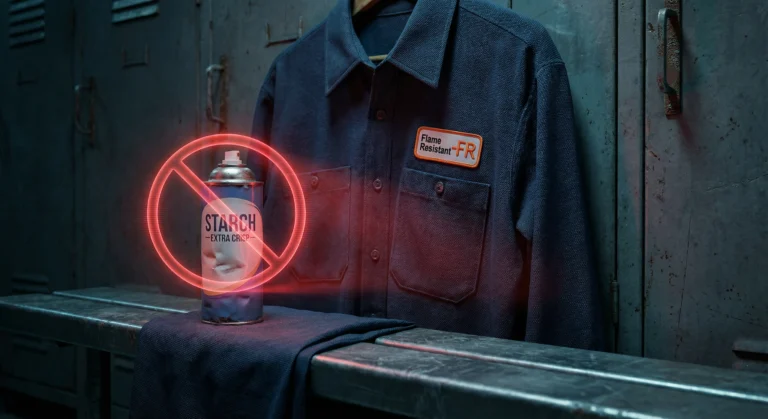
Bleach is not the only laundry additive FR programs ban. Fabric softener and dryer sheets are also commonly prohibited, because they can coat fibers and interfere with flame resistance. When in doubt, follow the garment’s care label and your workplace safety program, and keep additives out of the wash unless the label explicitly allows them.
2) Safer Alternatives If You Were Using Bleach For Whites Or Odor
If stains or odor are tempting you to reach for bleach, these safer steps handle most problems without putting flame resistance at risk. Start with a mild detergent made for FR fabrics — harsh detergents and extra additives are a common way people accidentally damage protective workwear. Pre-treat stains promptly with your regular detergent, and wash on the right wash temperature for FR clothing to lift everyday soil safely. For persistent odors, extra rinses and line-drying in fresh air usually outperform any chemical shortcut. Then:
- extra rinse (residue removal)
- wash separately (better soil removal, less cross-contamination)
- repeat a conservative wash rather than adding new chemistry
If contamination is fuel/chemical-related, treat it as a safety issue and escalate (industrial laundering or replacement).
3) When Bleach Questions Become A Safety Decision
If a garment has hazardous contamination, don’t try to “disinfect” or “neutralize” it with home chemicals. Follow your workplace program and remove from service when required. And if bleach — or another prohibited chemical — has already been used on a garment, assume its flame resistance may be compromised. Have the garment evaluated or retired rather than risking an incident: FR garments have a defined service life, and chemical damage isn’t always visible.
Can bleach damage FR clothing even if it looks fine afterward?
Yes. Chlorine bleach can weaken fibers and strip flame-resistant treatments without leaving obvious visible damage. A garment may look intact while no longer providing its rated protection, which is why damage is judged by exposure history and the care label, not appearance alone. When in doubt, retire the garment.
What should you do if FR clothing was accidentally bleached?
Treat it as a safety decision, not a laundry problem. Stop wearing it for hazardous work, follow your workplace safety program, and have the garment evaluated or retired. Do not try to restore protection by washing it again, because added washing cannot replace damaged fibers or a stripped flame-resistant treatment.
References
- Tyndale’s FR clothing care FAQ
- Bulwark’s FR laundry tips
- Benchmark FR’s care instructions
- OSHA: Personal Protective Equipment — Overview
FAQs
Can you use bleach on FR clothing?
No. Chlorine bleach damages FR fibers and can destroy flame resistance, so never use it on FR garments, no matter how stained they look. The damage is often invisible, leaving a garment that looks intact but no longer provides rated protection. Always follow the care label and your workplace safety program instead.
Is oxygen bleach safe for FR clothing?
Oxygen bleach is gentler than chlorine bleach, but it is not automatically safe for FR clothing. Some manufacturers still prohibit all bleach types, and results vary by fabric and finish. Always check the garment’s care label first, and if the label is silent or unclear, skip it and use a mild FR-safe detergent instead.
What should I use instead of bleach on FR clothing?
Use a mild detergent made for FR fabrics, and pre-treat stains promptly with that same detergent before washing. Wash on the temperature the care label allows, add an extra rinse to remove residue, and repeat a conservative wash if needed. For persistent odor, line-dry in fresh air rather than adding new chemicals.



2 Comments