
Are Dryer Sheets Safe for FR Clothing? (Usually No—Here’s Why)
Safe default: avoid dryer sheets on FR clothing.
Dryer sheets are designed to reduce static and soften fabric by leaving a thin coating on the textile — and that coating is exactly the problem for flame-resistant (FR) workwear. Most dryer sheets work by transferring a waxy, positively charged film onto fibers as they tumble in the heat. On everyday laundry that film feels like softness and stops cling. On FR garments, it can mask or reduce flame resistance, attract lint, and trap soils and odors in the fabric over time.
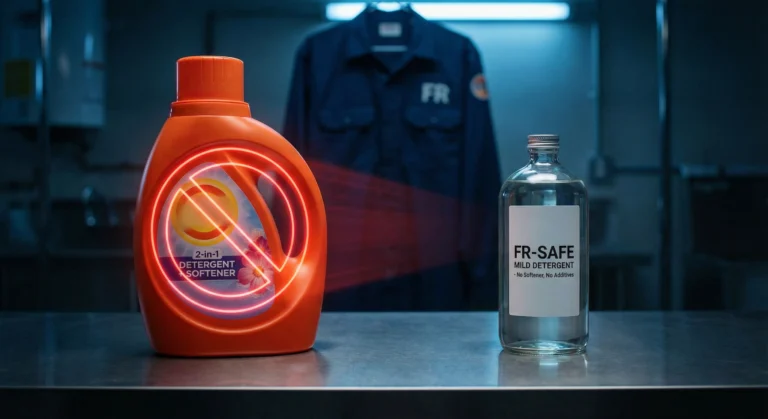
This is the same reason fabric softener is banned for FR clothing: both products leave residue that interferes with how the garment is engineered to perform. Many FR care instructions and workplace safety programs explicitly prohibit softeners and “build-up additives” — and dryer sheets fall squarely in that category. The safe default is simple: skip the dryer sheets for every FR garment, every load.
Safety note: Always follow the garment care label and your workplace safety program. Do not use bleach/softeners/additives unless the label explicitly allows them.
Quick links:
- FR hub: /fr-clothing-care/
- /fabric-softener-on-fr-clothing/
- /best-detergent-for-fr-clothing/
- /oxygen-bleach-on-fr-clothing/
- Safety: /ppe-decontamination-retirement-guide/
1) Why dryer sheets are a problem on FR workwear
To understand the risk, it helps to know what a dryer sheet actually does in the dryer. Heat melts the sheet’s coating — a blend of softening agents and fragrances — and tumbling spreads it across every garment in the load. The result is a micro-layer of residue on each fiber. FR fabrics, whether inherently flame-resistant like aramid blends or chemically treated cotton, are certified to perform a certain way in a flash fire or arc flash. Anything that coats the fibers can change that performance, and that is a gamble no safety program should take. That residue also attracts lint and airborne dust, which is the last thing you want on a garment meant to protect you in a thermal event.
Dryer sheets can:
- leave residues (coatings) on fabric surfaces that can mask flame resistance
- contribute to soil and odor retention over time as the waxy film traps contaminants
- conflict with manufacturer “do not use” lists — softeners are commonly prohibited, and dryer sheets are treated the same way
Also Read: How to remove sweat odor from Fr Clothing?
2) What FR manufacturers commonly say (pattern)
Across multiple FR brands and guidance pages, you’ll commonly see restrictions such as:
- no fabric softener
- no detergent with fabric softener included
- no starch
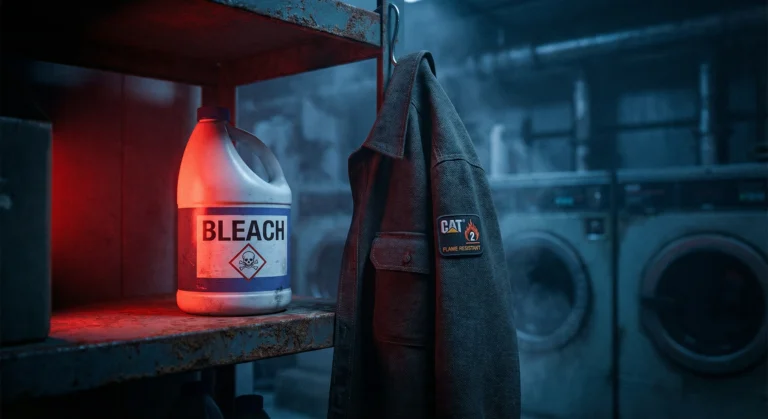
- no bleach/peroxide chemistry
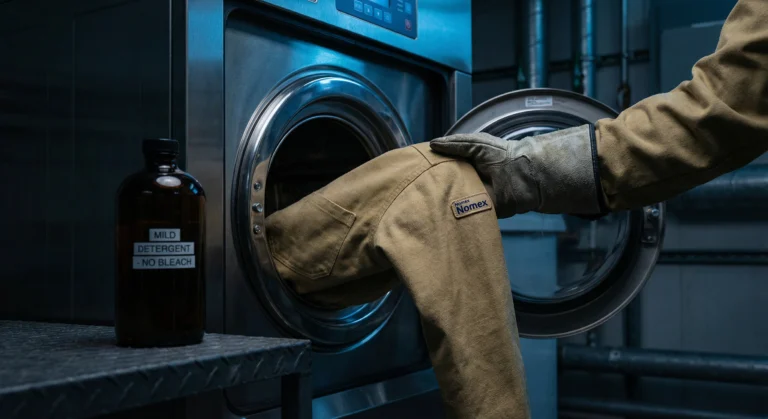
Because dryer sheets fall under “softener-style residue,” they are usually not recommended. If you want the full compliant routine for washing and drying protective garments, our FR clothing care hub walks through it step by step. When in doubt, the garment’s own care label always wins over any laundry shortcut.
3) What to do instead (safer alternatives)
You do not need dryer sheets to get good results from FR workwear. In fact, FR garments usually come out of the dryer feeling better without them, because no waxy film is left behind. If you’re trying to fix stiffness or static, these simple habits replace everything a dryer sheet was doing for you — without the coating.
- Use an extra rinse (detergent residue often causes stiffness)
- Don’t overload the washer (better rinsing)
- use wool dryer balls instead of a dryer sheet — they soften naturally and cut static without leaving any coating
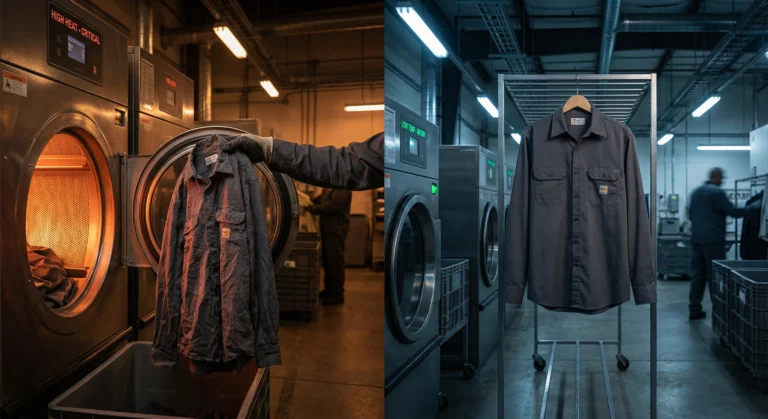
- Dry on low heat and remove promptly (over-drying increases stiffness/static) — most FR workwear dries best on low heat or hung up
- If your water is hard, focus on rinse performance first (extra rinse is often the simplest improvement)
4) If someone already used dryer sheets—what now?
A single accidental load with a dryer sheet is not the end of the world — the concern is cumulative residue and breaking the care rules, not instant failure. The conservative fix is simple: Rewashing removes most surface residue, but garments that still feel coated should stay out of service until they rinse clean.
- wash the garment again without dryer sheets/softener
- keep it label-compliant (mild detergent, proper temps, good rinse)
- stop adding sheets/softeners going forward
If the garments still feel coated or smell strongly of fragrance after one re-wash, run a second plain rinse cycle before putting them back into service.
FAQs
Can you use dryer sheets with FR clothing?
No. Dryer sheets leave a waxy coating on fabric that can mask flame resistance, attract lint, and trap soils and odors over time. That coating interferes with how FR garments are engineered to perform, so skip dryer sheets for every FR garment, every load, and follow the care label instead.
Do dryer sheets ruin flame-resistant treatment?
They can reduce its effectiveness. Dryer sheets coat treated FR fibers with a waxy film, the same reason fabric softener is banned for FR clothing. One accidental load is unlikely to destroy protection outright, but repeated use builds residue that can mask flame resistance, so rewash coated garments and stop using sheets.
What can I use instead of dryer sheets for FR clothing?
Use wool dryer balls, which soften fabric and cut static without leaving any coating on FR fibers. Also remove garments promptly, dry on low heat or hang them up, and add an extra rinse if stiffness persists. These habits replace everything a dryer sheet does, without the residue that threatens protection.
Can one dryer sheet ruin FR clothing permanently?
Usually not. A single dryer sheet leaves surface residue, but it rarely destroys flame resistance outright, because the concern is cumulative coating rather than instant failure. Rewash the garment without sheets or softeners, add a plain rinse if it still feels coated, and keep it out of hazardous work until it rinses clean.
Are unscented or ‘free and clear’ dryer sheets safe for FR clothing?
No, not reliably. Even unscented sheets still transfer a softening coating onto fibers, and that coating is the problem for FR garments, not the fragrance. Manufacturers prohibit softener-style residue regardless of scent, so skip all dryer sheet types and use wool dryer balls or prompt low-heat drying instead.