CAT 1 vs CAT 2 FR Clothing: Key Differences
CAT 1 and CAT 2 are the two most common arc flash PPE categories — and the two most confused. They look similar on a job site, but they protect against very different energy levels. Here’s exactly what separates them.
What is the difference between CAT 1 and CAT 2 FR clothing? CAT 1 garments are rated to at least 4 cal/cm², while CAT 2 garments are rated to at least 8 cal/cm² — roughly double the incident energy. Both are NFPA 70E arc flash PPE categories, but CAT 2 covers the broader range of routine electrical work.
This guide to cat 1 vs cat 2 fr clothing explains the ratings, what each category usually looks like in practice, how to read the label, and the mistakes that leave workers under-protected.
The Central Difference: Arc Rating
PPE categories are defined by arc rating — the thermal energy, in calories per square centimeter (cal/cm²), that the clothing system withstood in testing.
| CAT 1 | CAT 2 | |
|---|---|---|
| Minimum arc rating | 4 cal/cm² | 8 cal/cm² |
| Protection level | Lower incident energy | Roughly double the thermal energy of CAT 1 |
| Typical garments | FR shirt + FR pants, or FR coverall | FR shirt + FR pants, or FR coverall (heavier system) |
| Common extras | Usually just the clothing | Often adds arc-rated face protection |
| Where it’s used | Lower-energy tasks | The most common category for general electrical work |
The headline: CAT 2 handles about twice the incident energy of CAT 1. That’s the whole difference that matters — everything else follows from it. (For the full CAT 1 through CAT 4 picture, see arc flash PPE categories.)
What the Numbers Mean in Practice
An arc rating of 4 cal/cm² vs 8 cal/cm² isn’t abstract — it maps directly to the hazard assessment for the task. Electrical work gets an incident energy analysis (or falls under the standard’s task tables), and the result dictates the minimum category.
Think of it this way: CAT 1 covers the lighter end of arc flash work — tasks where the calculated energy is low. CAT 2 covers the broad middle where most routine electrical work lives. That’s why CAT 2 is the category you’ll see most often: it matches the most common hazard levels.
The number is a minimum. A CAT 2 garment rated at 12 cal/cm² still counts as CAT 2 — the category is the floor, not the ceiling.
Typical Garment Setups
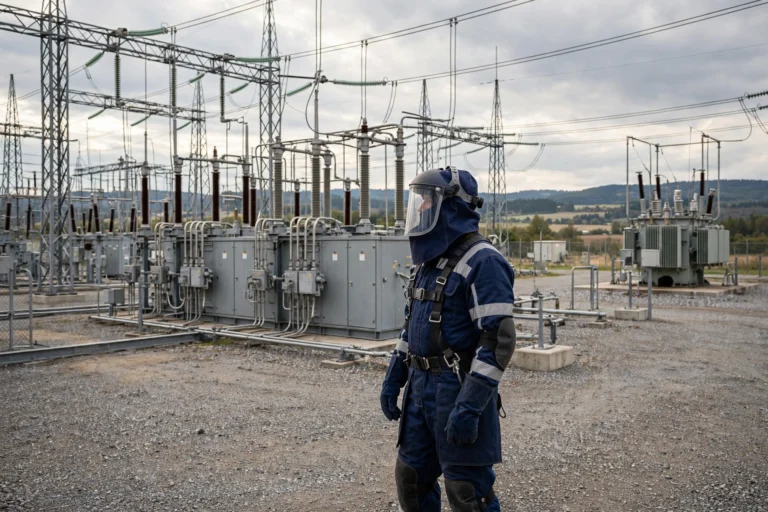
What each category usually looks like on a worker:
CAT 1:
- FR long-sleeve shirt and FR pants, or
- A single-layer FR coverall
- Non-melting underlayers (no synthetics against the skin)
CAT 2:
- FR shirt and FR pants (often a heavier system than CAT 1), or
- FR coverall
- Arc-rated face shield or balaclava commonly added
- Same non-melting underlayer rule — no polyester under FR
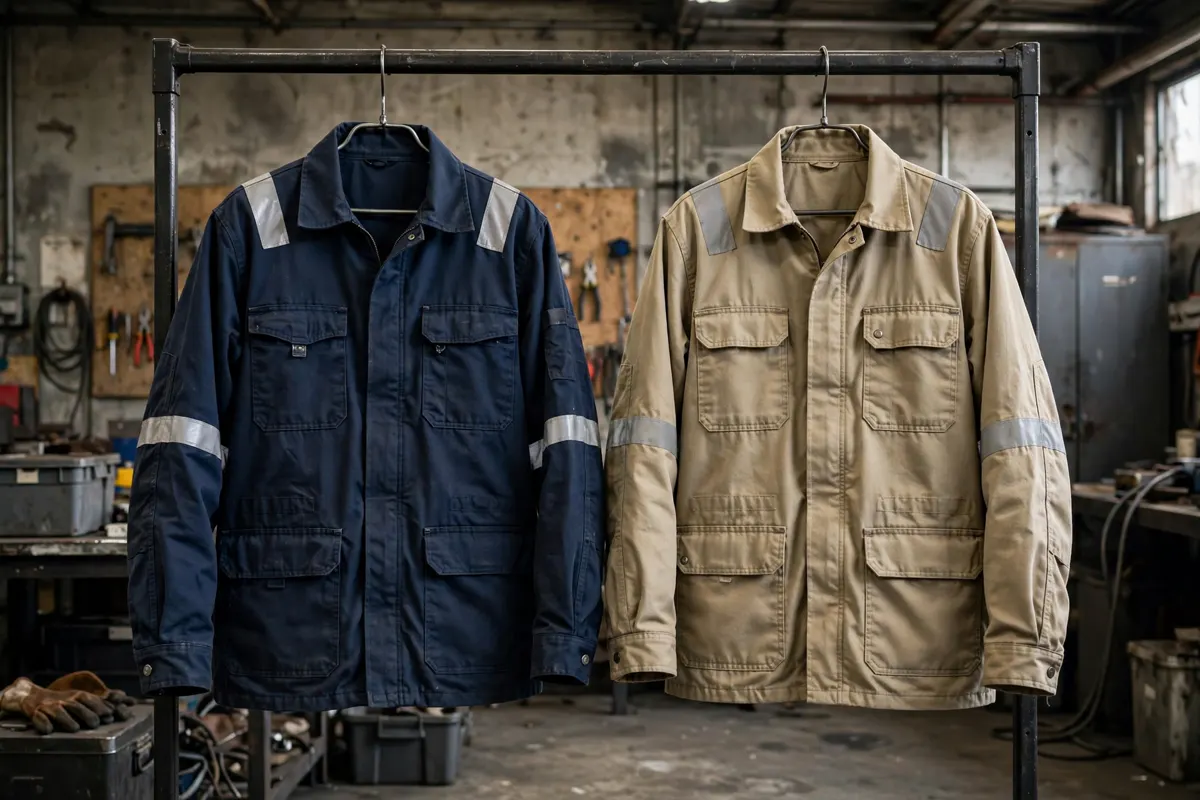
The garments can look nearly identical. The difference is in the tested rating of the fabric system — which is exactly why you read the label instead of judging by appearance.
When Each Is Required
You don’t choose the category — the hazard assessment does. The task’s incident energy determines the minimum category, and your site’s electrical safety program states it for each job or location.
Two rules that never change:
- Wearing a higher category than required is fine. CAT 2 where CAT 1 is required is compliant — more protection than the minimum is never a problem on its own.
- Wearing a lower category than required is never fine. CAT 1 where CAT 2 is required leaves you under-protected, even if the garment looks the same.
When in doubt, go up a category — never down.
Reading the Label: Category, Arc Rating, and Standard
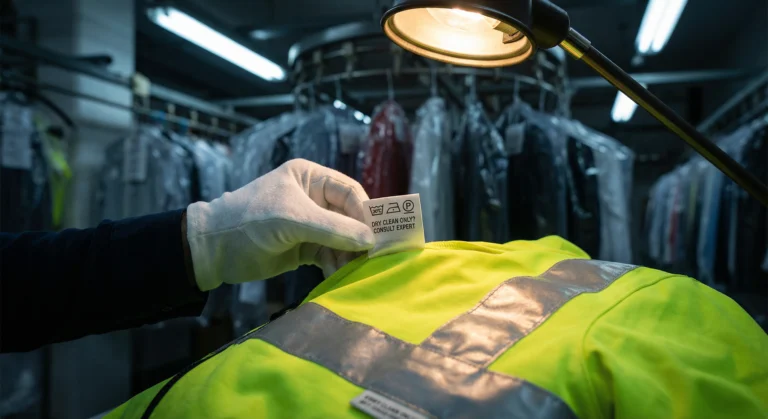
Before you trust a garment for a CAT 1 or CAT 2 task, check its label for three things: the arc rating in cal/cm², the PPE category it is intended to meet, and the care instructions. If any of those is missing or unreadable, do not guess — ask your supervisor or supplier, and take the garment out of service until you know.
The equipment label matters just as much as the garment label. Check the equipment’s arc flash label — it states the required PPE category for that location. Your site’s electrical safety program and hazard assessment are the authority when the two seem to disagree.
Employers have a duty to assess workplace hazards and provide suitable protective equipment. The U.S. Occupational Safety and Health Administration explains that duty on its personal protective equipment page, which is a useful reference when a site is setting up or reviewing its arc flash program.
Underlayers and the Whole System
Arc protection is a system, not a single garment. The outer FR layer, the underlayers, and any face, head, and hand protection all have to work together, and the system rating is what was tested — not a number you add up yourself from separate garments. That is why substituting an unrated layer, or wearing a meltable synthetic against the skin, can undermine an otherwise correct CAT 1 or CAT 2 setup.
Do CAT 1 and CAT 2 need different underlayers?
No — the underlayer rule is the same for every category: no meltable synthetics against the skin. The category changes the outer protection level, not the base-layer requirement.
Comfort, Heat Stress, and Care
CAT 2 systems are often heavier than CAT 1, so heat stress is a real trade-off in hot work. Plan for it honestly: schedule breaks, stay hydrated, and choose the lightest system that still meets the required category — never a lighter category to stay cool. A garment that is unbuttoned, rolled up, or left open because it is too hot is not protecting you as tested.
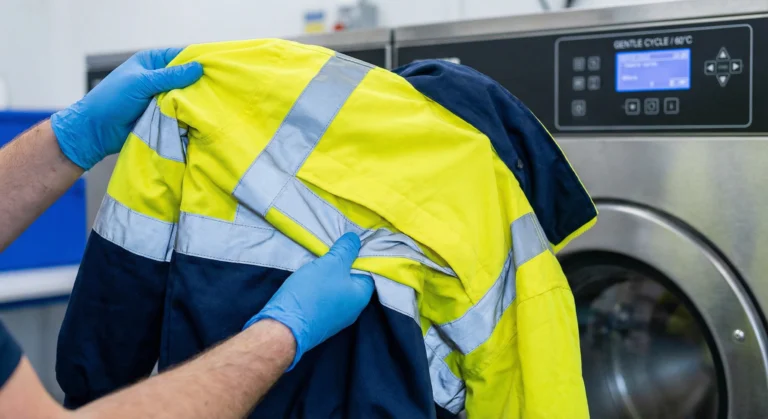
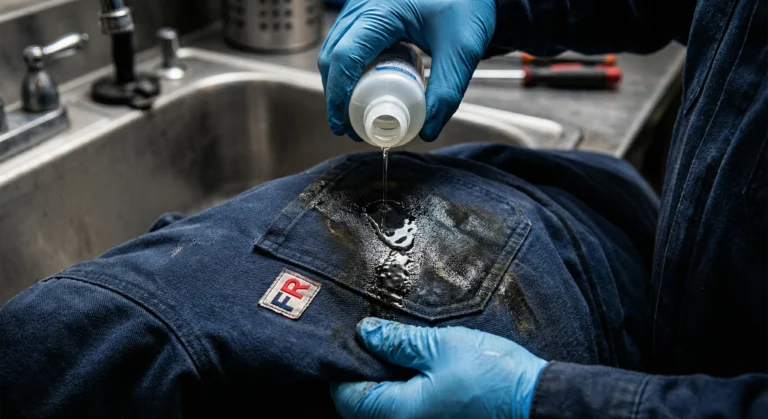
Care protects the rating, too. Wash FR garments exactly as the label directs, keep them free of flammable contamination such as oil and grease, and inspect them before each use. Holes, thinning fabric, broken closures, or heavy contamination are reasons to retire a garment, not to keep wearing it until the next issue. See when to replace FR clothing for a retirement checklist.
FAQs
Can I wear CAT 2 clothing for a CAT 1 task?
Yes. A higher category always satisfies a lower requirement. The reverse — CAT 1 for a CAT 2 task — is never acceptable, because the garment is rated below the hazard.
Is CAT 2 just thicker CAT 1?
Not necessarily. The category is about the tested arc rating of the fabric system, not thickness alone. A thinner, higher-performing fabric can out-rate a thicker one, so always check the arc rating on the label.
How do I know which category my task requires?
Check the equipment arc flash label, which states the required PPE category for that location. Your site electrical safety program and hazard assessment are the authority if anything is unclear.
Related: Arc Flash PPE Categories · NFPA 70E Arc Flash Label Requirements · What Is FR Clothing?