How to Store FR Clothing (NFPA 70E & 2113 Rules)
How to store FR clothing: keep it clean, dry, cool, and dark, hanging on a broad hanger in a ventilated locker away from chemicals and sunlight. Never store dirty or damp gear, and keep contaminated garments in a separate marked container so oils and solvents cannot migrate to clean garments.
Most FR clothing doesn’t fail on the job — it fails in the locker. Sunlight, dampness, chemical fumes, and greasy cast-offs stored alongside clean gear quietly eat away at protection between shifts. Both NFPA 70E and NFPA 2113 treat storage as part of keeping protective clothing protective. Here’s how to do it right.
The Four Storage Rules
Every FR garment you store should be:
- Clean. Never store dirty FR clothing — soils, especially oils and flammable contaminants, keep working on the fabric while it sits. Wash first, store second; the FR clothing care guide covers the routine.
- Dry. Even slightly damp gear invites mildew, which weakens fibers. Air-dry fully before it goes in the locker.
- Cool. Heat accelerates fiber aging. A climate-controlled locker room beats a car trunk in summer or a spot next to process heat every time.
- Dark. Ultraviolet light degrades fibers over time — aramids included. Lockers, closets, and garment bags beat open hooks in a sunlit room.
Clean, dry, cool, dark. If your storage meets all four, you’re ahead of most workplaces.
Why Contaminated Gear Must Be Stored Separately
This is the rule people break most: tossing a grease-soaked coverall into the same locker as clean gear. Don’t.
Contaminants migrate: oils and solvents wick garment to garment through contact, and flammable residues on a dirty garment can compromise a clean one. If you can smell solvents on stored gear, volatile contamination is present.
The practice is simple: dirty FR clothing goes in a separate, marked container or area — never mixed with clean garments. Many sites use a dedicated hamper or bag for soiled FR gear awaiting laundering. If your site doesn’t have one, that’s a gap worth raising with your safety manager, because OSHA’s PPE framework expects employers to maintain protective equipment in reliable condition, and storage is part of maintenance.
A solid divider is better than nothing, but separate storage is the real answer. Fumes and contact transfer don’t respect thin dividers well. Use a separate marked hamper or area for soiled gear awaiting wash.
Locker and Storage Room Best Practices
For the day-to-day locker:
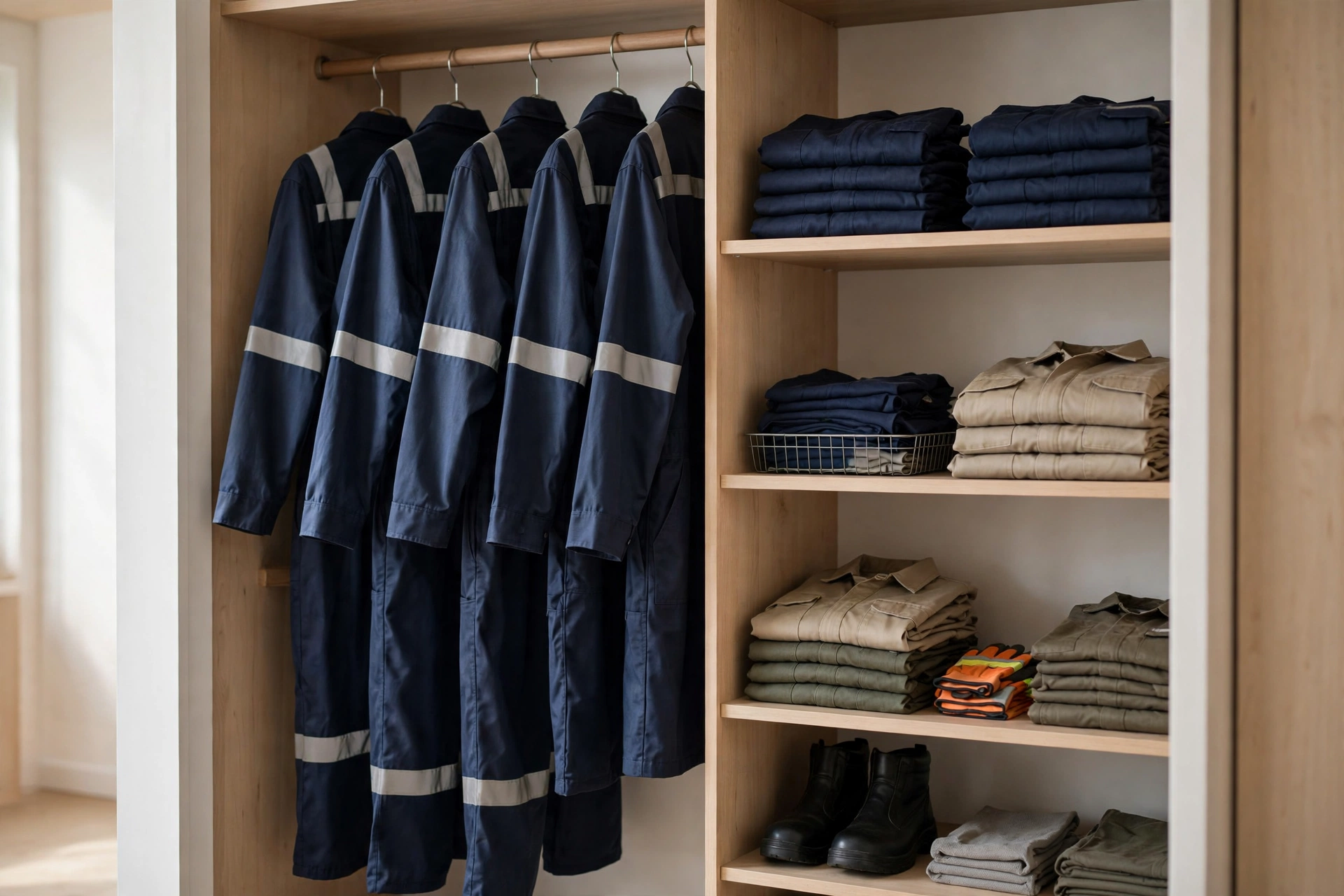
- Hang when you can. Hanging on a broad hanger prevents hard creases and lets air circulate. If you must fold, fold loosely — don’t compress garments flat under heavy gear.
- Don’t seal in plastic. Garment bags are fine for dust, but airtight plastic traps residual moisture. Use breathable covers if covers are needed.
- Keep it ventilated. Locker rooms should have airflow. Stagnant, humid air is mildew’s best friend.
- Separate by person — give each worker their own space; sharing lockers means sharing contaminants.
- Keep chemicals out. Don’t store solvents, fuels, degreasers, or aerosol cans in the same locker as FR clothing — fumes alone can contaminate fabrics.
For bulk or seasonal storage (spare sets, shutdown gear): wash everything first, ensure it’s bone dry, store in breathable garment bags in a cool, dark room, and inspect before returning it to service.
Can you store FR clothing in a garage?
Can you store FR clothing in a garage? Only if the garage is clean, dry, cool, and dark — most are not. Garages often hold fuels, solvents, and vehicles that bring fumes and contamination, and summer heat and winter dampness swing widely. A dedicated indoor locker or closet is a safer home for FR gear than a typical garage.
What NFPA 70E and NFPA 2113 Actually Require
Neither standard gives a locker-room blueprint, but both are clear on the principle: NFPA 2113 requires garments be stored to protect them from damage and contamination, following the manufacturer’s instructions. NFPA 70E’s PPE requirements carry the same expectation for arc-rated clothing: the employer’s electrical safety program must keep PPE in proper condition, which includes how it’s kept between uses.
In practice, “follow the manufacturer’s instructions” is the binding rule. Garment makers specify storage conditions on the label or in product literature — those instructions, plus the clean/dry/cool/dark fundamentals above, are your complete storage program.
For the employer’s side of the duty, OSHA’s Personal Protective Equipment overview explains that protective equipment must be maintained in a sanitary and reliable condition — and storage is part of that maintenance.
Storage Mistakes That Ruin FR Gear
| Mistake | What happens |
|---|---|
| Damp locker, no ventilation | Mildew weakens fibers; odor invites harsh chemical treatments |
| Direct sunlight / open hooks by windows | UV degrades fibers over months; colors fade as protection fades |
| Stored with solvents or fuels | Fumes and contact contaminate fabric; some residues are flammable |
| Dirty gear mixed with clean | Contaminants migrate garment to garment |
| Car trunk in summer | Sustained heat accelerates fiber aging |
| Compressed under heavy equipment | Crushes fibers and reflective trim; traps moisture |
Returning Stored FR Clothing to Service
Garments that have sat unused still need a return-to-service check, because storage damage is easy to miss. Before a stored garment goes back on the job, run through this inspection, and retire anything that fails it — see our guide on when to replace FR clothing for the full retirement signs.
- Check for mildew spots, musty odor, or stiffness that washing does not remove.
- Look for UV fading, thinning, or brittle fabric, especially on gear stored near windows.
- Inspect reflective trim for cracks or peeling, and confirm labels and arc-rating markings are still legible.
- Smell for chemical or solvent odor — if it persists after washing, the garment should not return to service.
FAQs
Can I store FR clothing in my car trunk?
Only for transport, not as routine storage. Summer trunk heat accelerates fiber aging, and trunks often hold fuel cans, solvents, or oily tools that contaminate garments. Get it into a proper locker the same day.
How long can FR clothing sit unused in storage?
Indefinitely, if stored clean, dry, cool, and dark — but inspect before returning it to service: check for mildew, UV fading, stiffness, or chemical odor. When in doubt, wash first, and retire anything that fails inspection.
Should I hang or fold FR clothing?
Hang when possible — it prevents hard creases, protects reflective trim from cracking at fold lines, and allows air circulation. If space forces folding, fold loosely and refold along different lines occasionally.
Related: FR Clothing Care Guide · OSHA vs NFPA 70E · When to Replace FR Clothing