
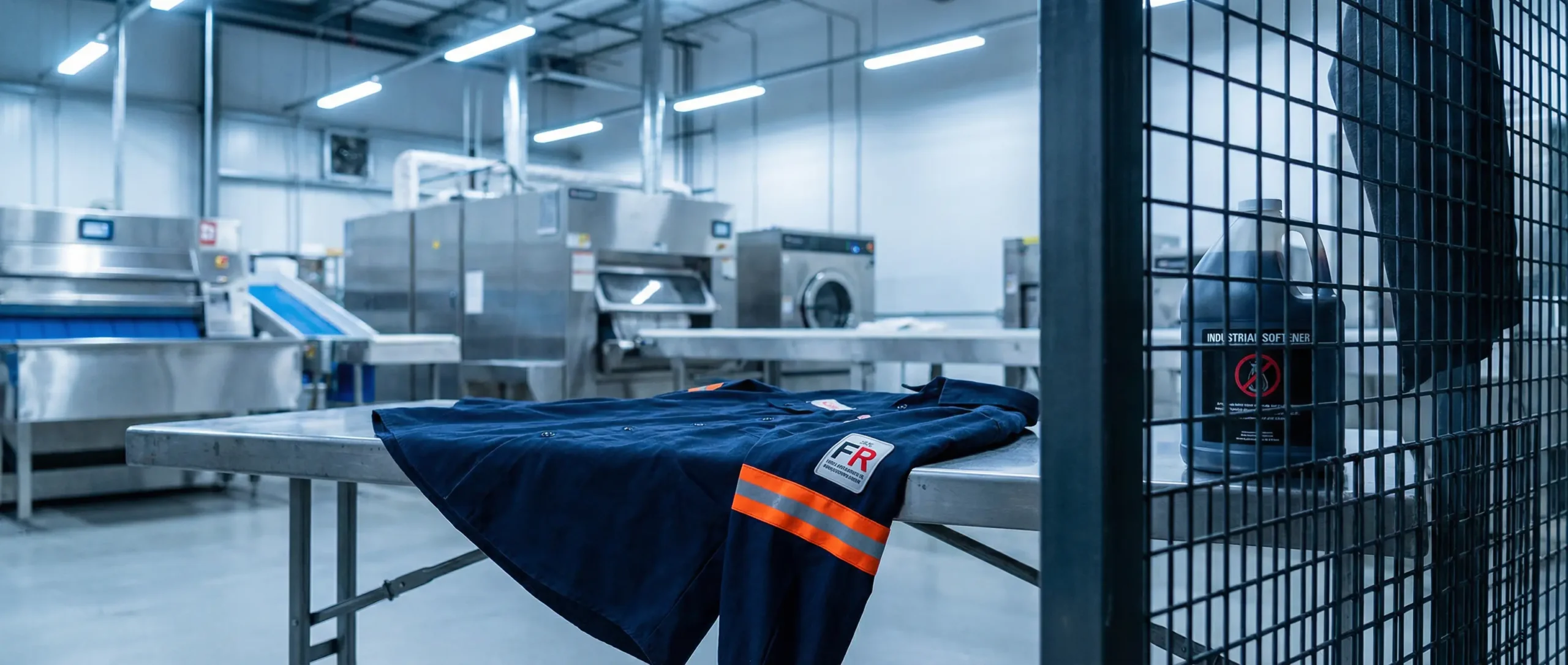
Can You Use Fabric Softener on FR Clothing? (Why Most Labels Say No)
Safe default: avoid it. Many FR care labels explicitly say do not use softeners, and some NFPA 2112 user guidance warns fabric softeners are oil-based and can contribute to fabric flammability.
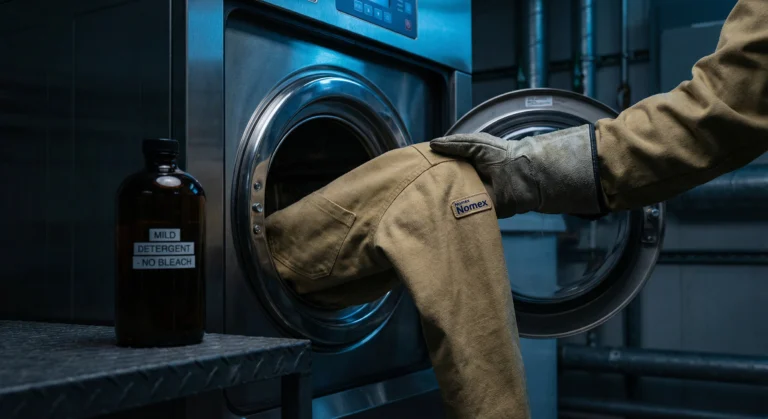
Safety note: Always follow the garment care label and your workplace safety program. Do not use bleach/softeners/additives unless the label explicitly allows them.
Quick Links:
Why fabric softener is risky on FR workwear
Fabric softeners work by leaving a conditioning film on fabric. On protective workwear, that film can:
- Leave unwanted residue
- Interfere with predictable performance
- Increase soil/odor retention over time
Also, FR garments often have very specific laundering requirements—and softener is one of the most commonly prohibited add-ons.
What to do if FR clothing feels stiff (safer alternatives)
Try these instead of softener:
- Double rinse (removes detergent residue that can cause stiffness)
- Don’t overload the washer (better agitation + better rinse)
- Low heat drying + remove promptly (over-drying makes fabric feel harsh)
- If you have hard water, consider improving rinse performance (extra rinse is usually the simplest)
Quick FAQ
Are dryer sheets okay?
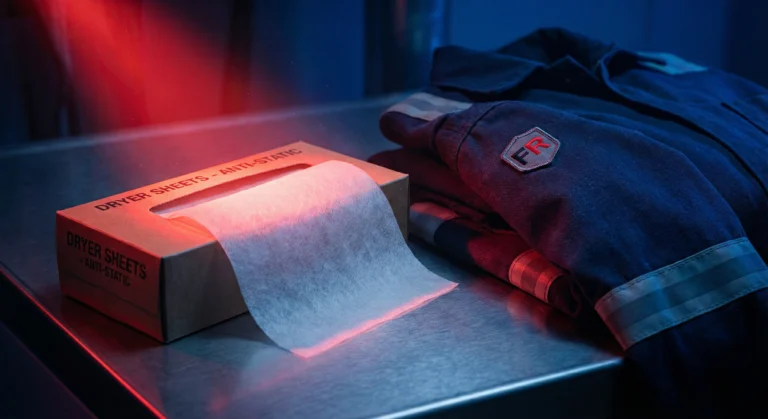
Often not—dryer sheets also deposit softening agents. Stick to the care label rules.
Can I use vinegar?
Avoid experiments unless your workplace program or garment maker approves additives. Protective gear is not the place for “laundry hacks.”
Useful Links:
Sources (for references):
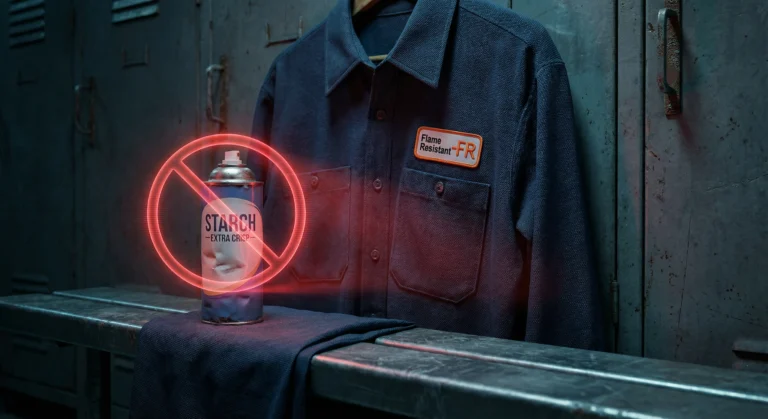
Carhartt FR care: “Do not use… softeners or starch” and also prohibits chlorine + hydrogen peroxide bleach.
7 Comments