
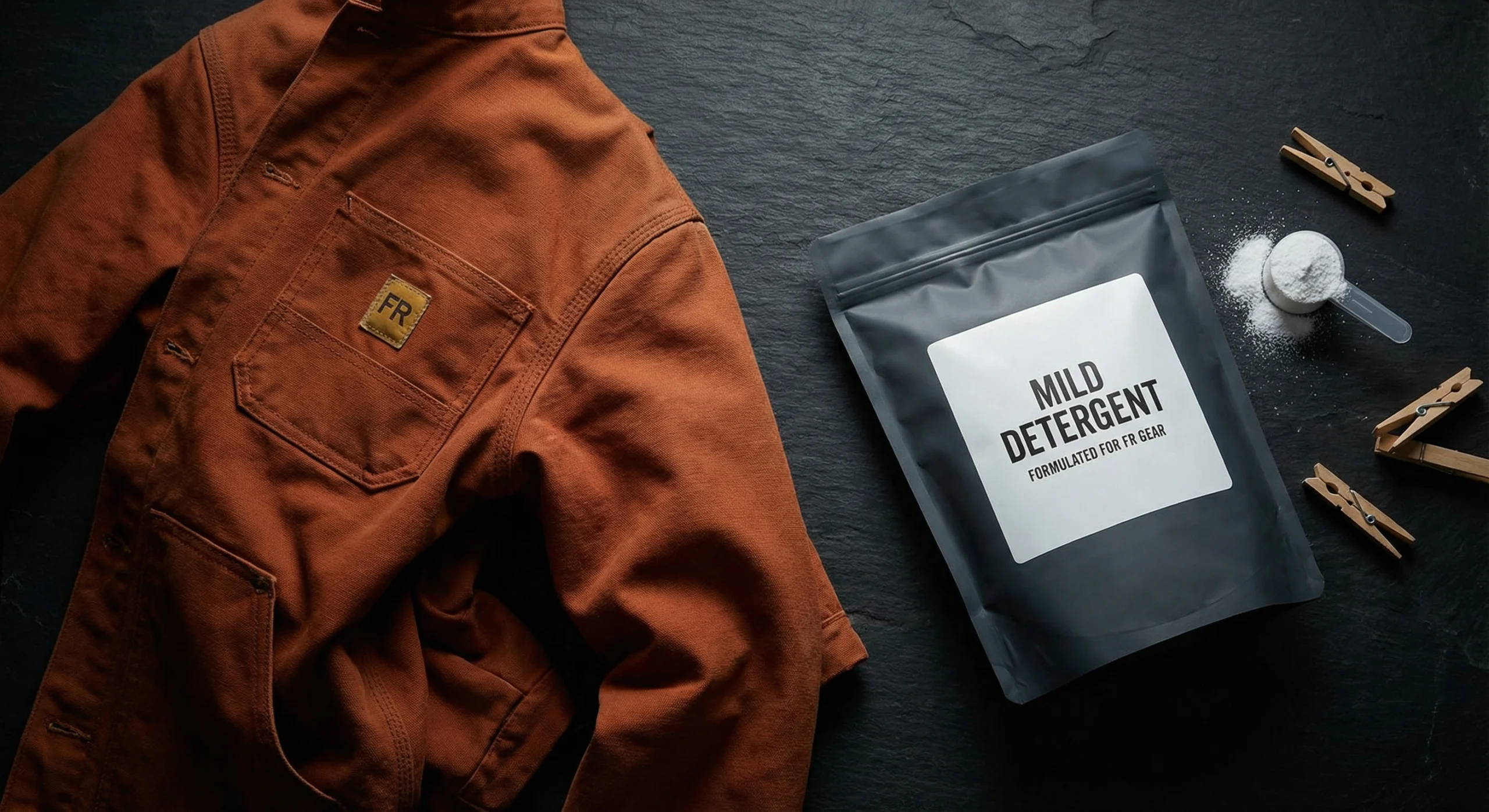
Best Detergent for FR Clothing (What to Use + What to Avoid)
“Best detergent” for FR (flame-resistant) or arc-rated clothing isn’t about the strongest stain-fighter—it’s about compatibility. Many FR manufacturers and NFPA-style user guidance include strict “do not use” lists (softeners, bleach, peroxide/oxygen products, starch) because the wrong laundry chemistry can shorten garment life or create unwanted residues.
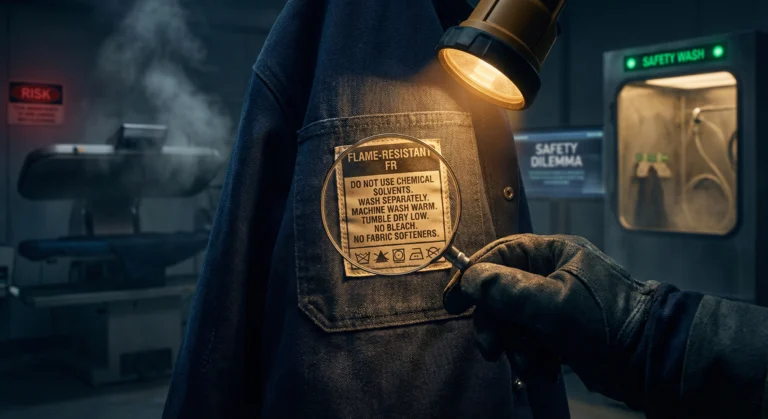
Use this guide as a safe baseline, then follow your garment’s care label and workplace policy.
Safety note: Always follow the garment care label and your workplace safety program.
Quick Links
-
/fr-clothing-care/ -
/oxygen-bleach-on-fr-clothing/ -
/hard-water-fr-clothing/ /ppe-decontamination-retirement-guide/- Why FR clothing labels ban fabric softener?
The safest default detergent choice
For most FR programs, the safest starting point is:
A mild, standard laundry detergent with no added bleach, no softener, and no “oxygen/peroxide” booster.
Some NFPA 2112 user guidance explicitly recommends using mild detergent and even gives an example routine for in-house washing. 1
1) What to avoid (the “red flag” checklist)
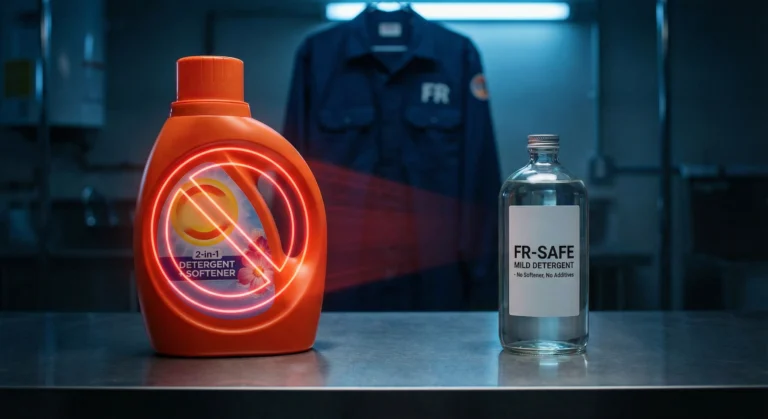
Avoid fabric softener and dryer sheets
NFPA 2112 user guidance (example: 5.11’s NFPA 2112 User Information Guide) says do not use fabric softeners and explains they are oil-based and can contribute to flammability.
Carhartt’s FR care instructions also prohibit softeners.
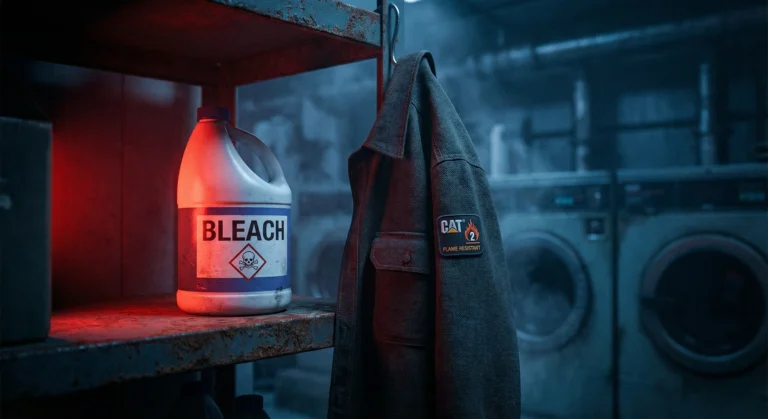
Avoid chlorine bleach
NFPA 2112 user guidance says never use chlorine bleach and warns it can cause fabrics to lose performance characteristics such as flame resistance and strength.
Carhartt’s FR care also prohibits chlorine bleach.
Avoid peroxide / “oxygen bleach” products unless your label explicitly allows
Many FR brands prohibit peroxide chemistry. For example:
- Carhartt prohibits hydrogen peroxide bleach for FR items.
- Ariat Crew’s FR care FAQ states chlorine bleach and oxygen bleach (hydrogen peroxide) must never be used, and also warns against products containing hydrogen peroxide.
If you’re wondering what “oxygen bleach” is chemically: sodium percarbonate is commonly sold as oxygen bleach and is described as a hydrogen peroxide adduct (i.e., it contains peroxide chemistry).
2) “Best detergent” criteria (what you actually want)
Criteria A: Mild + no extra additives
Look for a detergent that does one job: clean. Avoid “extras” like:
- “2‑in‑1 detergent + softener”
- fragrance boosters
- anti-static or “soil-release” additives (unless your FR program approves)
- “oxy” boosters bundled into the detergent
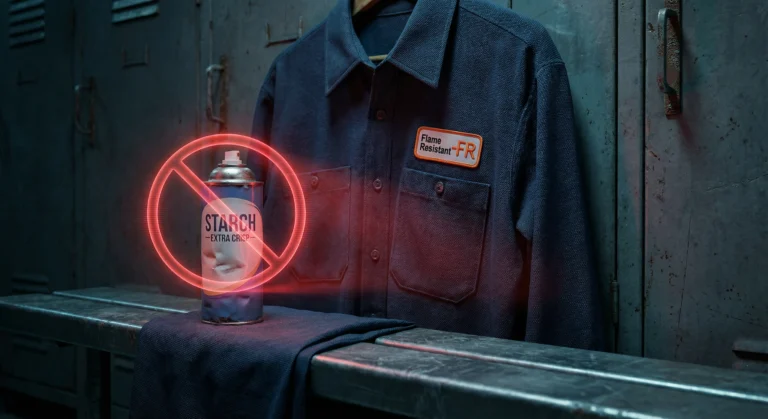
Ariat Crew’s FR care guidance specifically says to avoid starch, fabric softener, or any other laundry additives.
Criteria B: Works with your water hardness (without risky boosters)
If you have hard water, residue and odors are common. One NFPA 2112 user guide example suggests using more mild detergent when water is very hard and recommends double rinsing—meaning the fix is often process + rinse, not stronger chemistry. 1
Criteria C: Matches your garment label (brand rules differ)
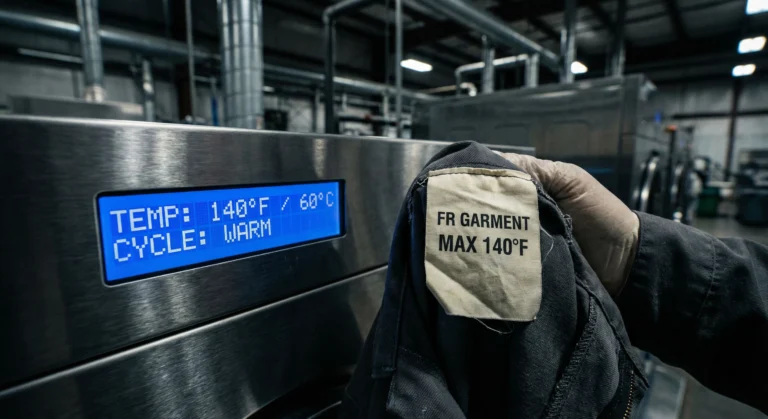
Example: Carhartt allows FR garments to be dry cleanable, but still prohibits bleach/softener/starch and sets temperature limits.
Example: Ariat’s FR FAQ discusses detergent choice and gives additional restrictions (including a warning about liquid detergents and hydrogen peroxide).
So the “best detergent” is the one that meets your label’s most restrictive rules.
3) A safe, label-friendly wash routine (detergent-focused)
Step 1 — Wash FR separately
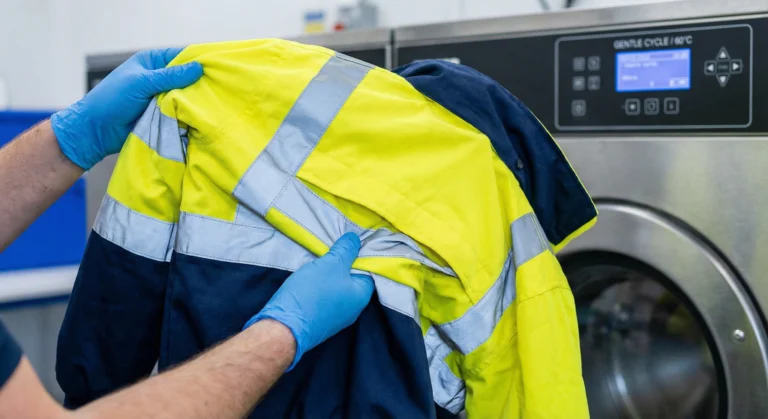
NFPA 2112 user guidance recommends turning FR garments inside out and washing separately from other clothing to reduce contamination spread.
Step 2 — Use a normal amount of mild detergent
Start with the label’s baseline. If cleaning is poor:
- add an extra rinse first
- then increase detergent slightly (not “double” immediately), especially in hard water
Step 3 — Double rinse (especially if you get residue/stiffness)
Some NFPA 2112 user guidance explicitly recommends a double rinse.
Step 4 — Dry conservative (low heat; don’t over-dry)
NFPA 2112 user guidance includes low-heat drying and “remove promptly; do not over dry” style advice.
4) Quick FAQ
Do I need a special “FR detergent”?
Not necessarily. NFPA-style guidance often points to mild consumer detergents.
But you do need to avoid prohibited additives listed by your brand (softeners, bleach/peroxide, starch).
Can I use stain removers?
Use caution. If your FR garment also has reflective trim, some reflective-trim manufacturers warn against harsh/high-alkaline stain treatments. (This is more a hi-vis, but it matters for combo garments.)
9 Comments