
Pre-Treat Stains On FR Clothing: A Safe Method That Won’t Break Care Rules
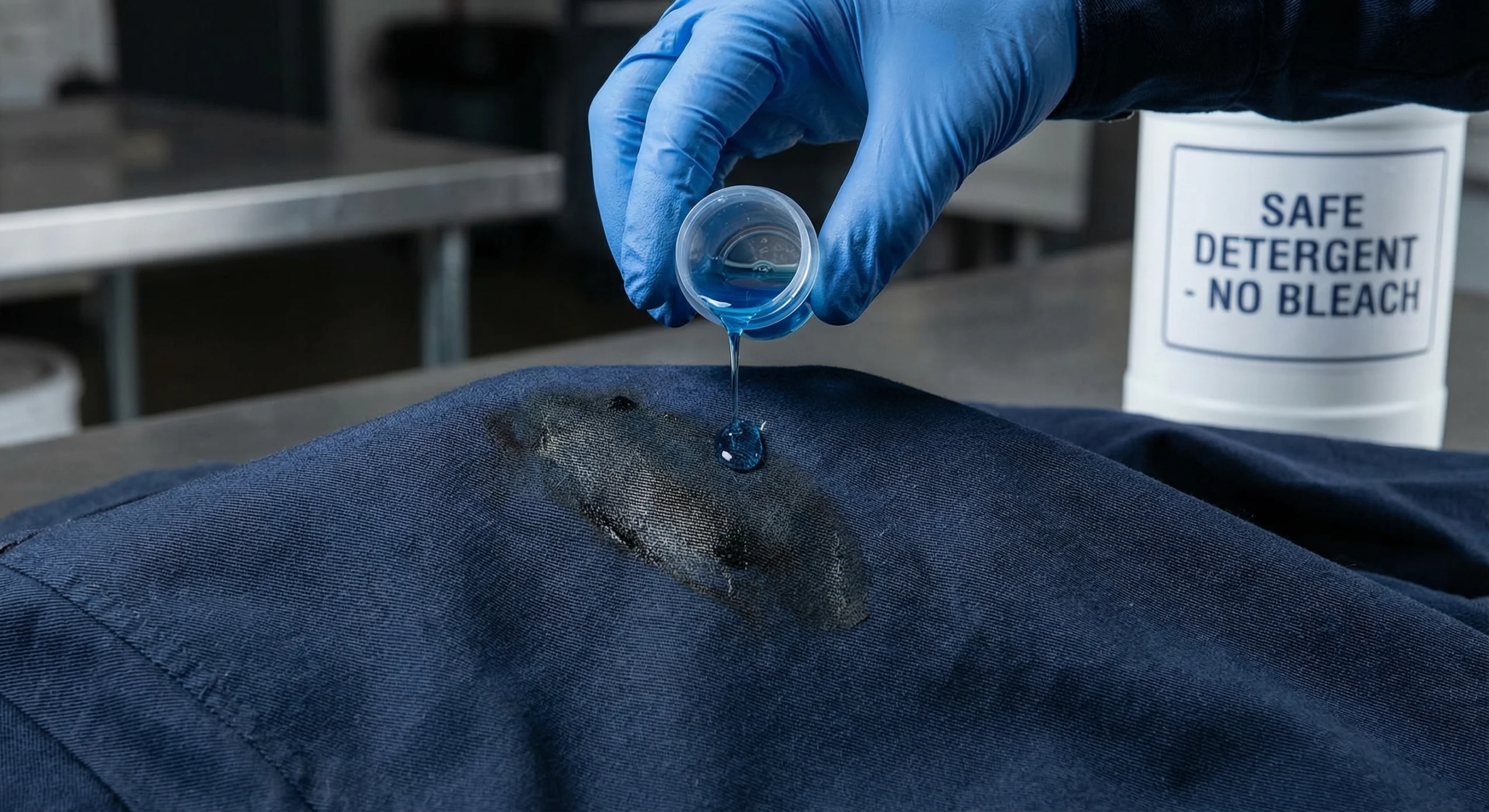
Wondering how to pre-treat stains on FR clothing the safe way? Blot the stain gently — never rub — then apply a small amount of mild, FR-safe detergent directly to the spot and let it sit for 10–15 minutes before washing normally. Skip chlorine bleach, peroxide “oxygen” boosters, and harsh solvents: they can damage FR fibers and reduce flame resistance. Most importantly, treat every stain before drying, because heat sets stains permanently.
Safety note: Always follow the garment care label and your workplace safety program. Do not use bleach, softeners, or additives unless the label explicitly allows them.
Quick Links:
- FR Clothing Care: the full washing guide
- Best detergent for FR clothing
- Can you use bleach on FR clothing?
- Best wash temperature for FR clothing
Pre-Treat Stains on FR Clothing: Quick Checklist
- Blot, don’t rub. Rubbing spreads the stain and grinds it deeper into FR fibers.
- Use liquid detergent as your first pre-treat — mild, bleach-free, and FR-safe.
- Avoid chlorine bleach, peroxide “oxygen” products, softeners, and starch unless your label explicitly allows them.
- Wash FR garments separately and inside out to protect the fabric surface.
- Use low heat and never dry a stained garment until the stain is gone — heat sets stains permanently.
1) Blot First: The Step Most People Skip
Blot the stain with a clean cloth or paper towel — don’t rub. Rubbing spreads the stain outward and grinds particles deeper into FR fibers, which makes removal harder. Work from the outside edge of the stain inward, and keep blotting until no more color transfers to the cloth.
This step takes less than a minute, but it removes the loose surface soil so your detergent can work on what’s actually bonded to the fibers. For fresh liquid spills, press the cloth firmly and lift — repeat with a clean section of the cloth each time. Skip brushes and scrub pads here; aggressive agitation can abrade treated FR fabrics and wear down protective finishes.
2) Apply Detergent Direct-to-Stain
For most everyday stains — dirt, sweat, food — apply a small amount of liquid detergent directly onto the stain. Use a mild, bleach-free detergent made for FR garments (see our guide to the best detergent for FR clothing). Gently work it in with your fingers, let it sit 10–15 minutes, then wash promptly.
- Dampen the stained area with cool water.
- Apply a small amount of liquid detergent directly onto the stain.
- Gently work it in with your fingers — no harsh brushing on delicate areas or reflective trim.
- Let it sit for 10–15 minutes. Don’t let the detergent dry on the fabric.
- Wash normally, following the garment care label.
This detergent-first method is the safest default because it adds no new chemistry beyond what the garment already tolerates in the wash. Some FR care guidance specifically recommends applying detergent directly to the spot for difficult cleaning.
How long should stain treatment sit on FR clothing?
Let a detergent-based pre-treatment sit for 10–15 minutes before washing. That gives the surfactants time to loosen the stain without drying onto the fabric. For heavier grease or oil, you can extend the dwell time to 30 minutes — then re-check the stain before washing rather than sending it through the dryer.
3) Soak Tough Stains Before Washing
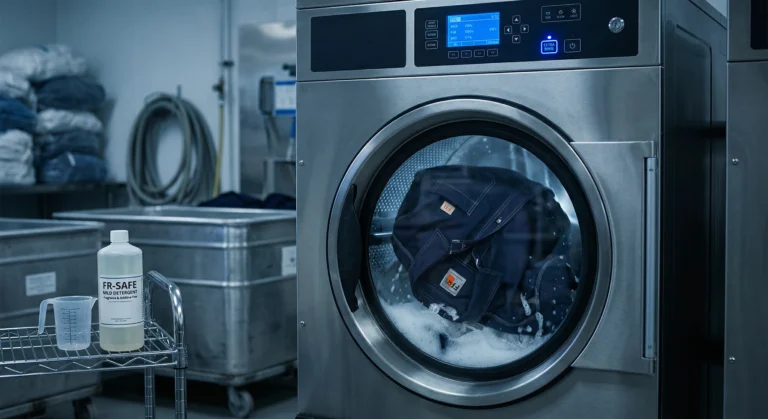
If one wash doesn’t remove the stain, soak the garment before laundering it again. Soak in cool water with a small amount of liquid detergent, or use a non-bleach, non-peroxide pre-wash stain remover — but only if it’s compatible with your FR program and the garment care label allows it.
- Detergent soak: cool water + a small dose of your regular FR-safe detergent, 30–60 minutes.
- Pre-wash stain remover soak: only a mild, bleach-free, peroxide-free formula your program approves.
- After soaking: wash normally and check the stain before drying — never dry a garment that still shows the stain.
This “soak first” approach appears in several FR laundry tip lists for tough stains, and it works because extended contact time lets surfactants break down soils that a single wash cycle can’t. Always check wash temperature guidance for FR clothing too, since water that’s too hot can set protein-based stains.
4) What Not to Use When You Pre-Treat Stains on FR Clothing
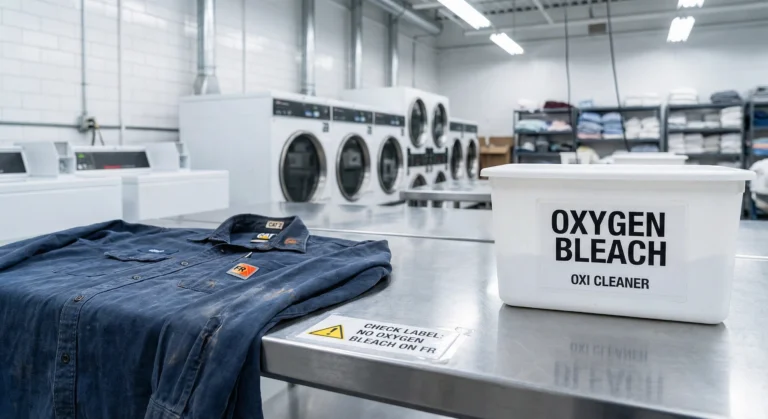
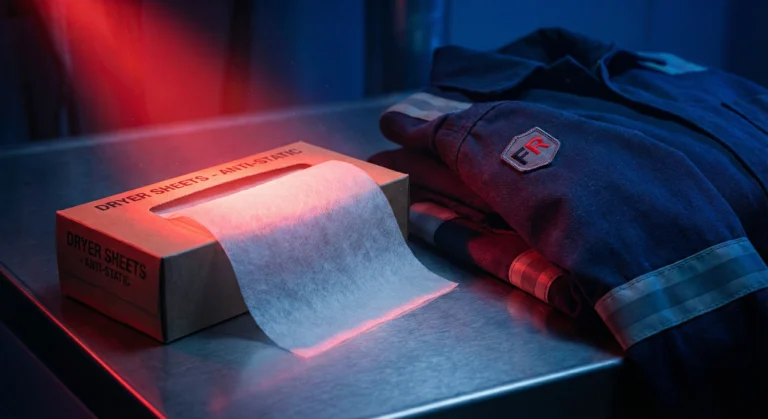
Don’t reach for chlorine bleach, peroxide or “oxygen” boosters, fabric softeners, dryer sheets, starch, or aggressive solvent-based stain sprays. These products can damage FR fibers, coat the fabric, or break care-label rules — and once a garment’s flame resistance is compromised, it may no longer protect you. Our full breakdown explains why bleach doesn’t belong on FR clothing.
| Product | Why it’s risky for FR clothing |
|---|---|
| Chlorine bleach | Attacks fibers and can destroy flame resistance permanently. |
| Peroxide / “oxygen” boosters | Oxidative chemistry that many FR care labels prohibit. |
| Fabric softener / dryer sheets | Coats fibers and can reduce FR performance. |
| Starch | Adds a flammable finish; against most FR care rules. |
| Harsh solvents | Can strip FR treatments and damage reflective trim. |
If your FR garment also has reflective trim (an FR + hi-vis combo), be extra careful: some reflective-trim guidance warns against high-alkaline stain treatments, which can dull or crack the reflective tape.
Can you use dish soap or vinegar on FR clothing?
Plain dish soap is usually too harsh and isn’t formulated for FR fabrics — stick with a mild laundry detergent made for FR garments. Vinegar is acidic and not approved by most FR care labels, so skip home remedies and follow the garment label instead. When in doubt, detergent-first is the answer.
5) Grease, Oil, and Fuel Stains Need Extra Care
Oil, grease, and diesel are the hardest stains to remove from FR clothing — and petroleum contamination is a safety issue, not just a cosmetic one. Pre-treat promptly with detergent, wash the garment separately, and never heat-dry it while any fuel odor remains. FR clothing is protective equipment, and OSHA’s personal protective equipment guidance emphasizes proper care and maintenance of PPE.
- Wash separately so fuels and oils don’t transfer to other garments.
- Don’t heat-dry if odor remains — residual fuel plus dryer heat is a fire risk.
- Re-treat and re-wash before drying if the stain or smell persists; set-in stains may need a second treatment.
- Escalate to your safety program if contamination is heavy or won’t come out.
6) Always Treat Before You Dry — Heat Sets Stains
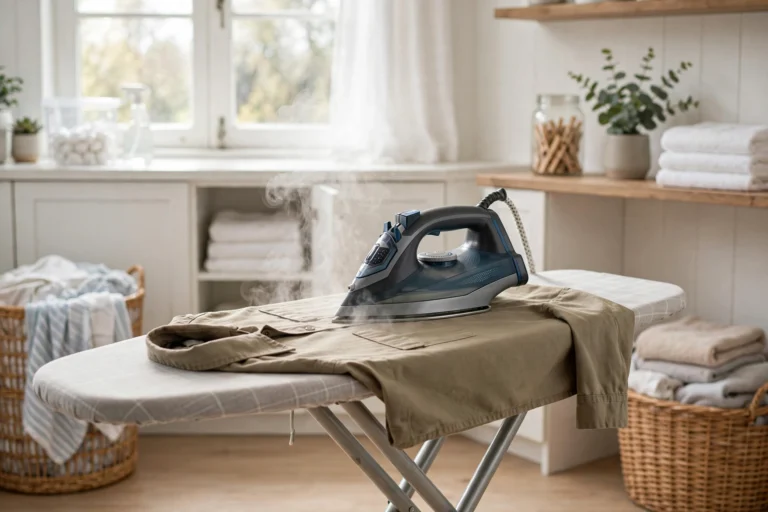
Never put a stained FR garment in the dryer. Heat from the dryer — or a hot iron — sets stains permanently by bonding them to the fibers. Always inspect the stain after washing, re-treat if any trace remains, and only dry the garment once the stain is fully gone. Then use low heat and don’t over-dry; check the best wash temperature for FR clothing to keep the whole cycle fabric-safe.
Air-drying is a good fallback when you’re unsure: it removes the risk of heat-setting a stain you missed, and it’s gentler on FR finishes. For the broader routine, our FR clothing care guide covers washing, drying, and storage in one place.
7) When to Consider Professional Cleaning
If stains are deeply set — especially oily or industrial soils — professional cleaning can help, but only if your garment label and workplace program allow it. Some FR guidance notes that dry cleaning may be more effective for certain stain types. Never improvise with solvents or spot-cleaning chemicals on your own; an unapproved chemical can void the garment’s FR rating.
Frequently Asked Questions
How do you pre-treat stains on FR clothing?
Blot the stain (don’t rub), apply a small amount of mild FR-safe detergent directly, let it sit 10-15 minutes, then wash normally.
Can you use stain remover on FR clothing?
Only mild, bleach-free stain removers — harsh solvents and chlorine bleach can damage FR fibers and reduce protection.
What stains are hardest to remove from FR clothing?
Oil, grease, and diesel — pre-treat them promptly; set-in stains may need a second treatment before drying, since heat sets stains permanently.
Further reading: Bulwark’s FR laundry tips.


3 Comments