Best Wash Temperature for FR Clothing (Safe Defaults + Label Examples)
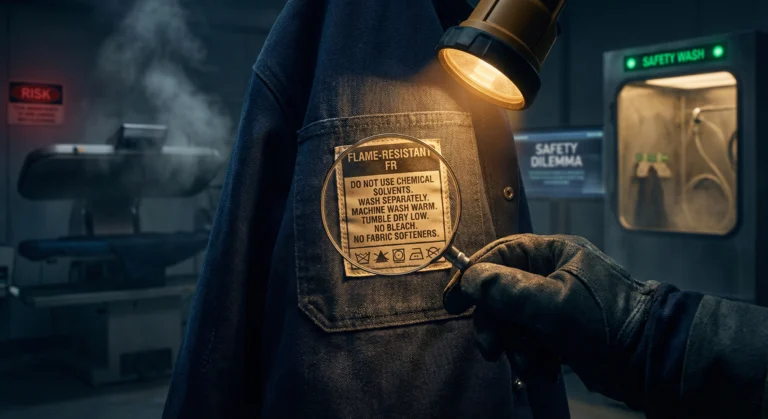
The best wash temperature for FR (flame-resistant) or arc-rated workwear is the temperature your care label allows—because different FR fabrics and components (linings, trims, threads) have different limits.
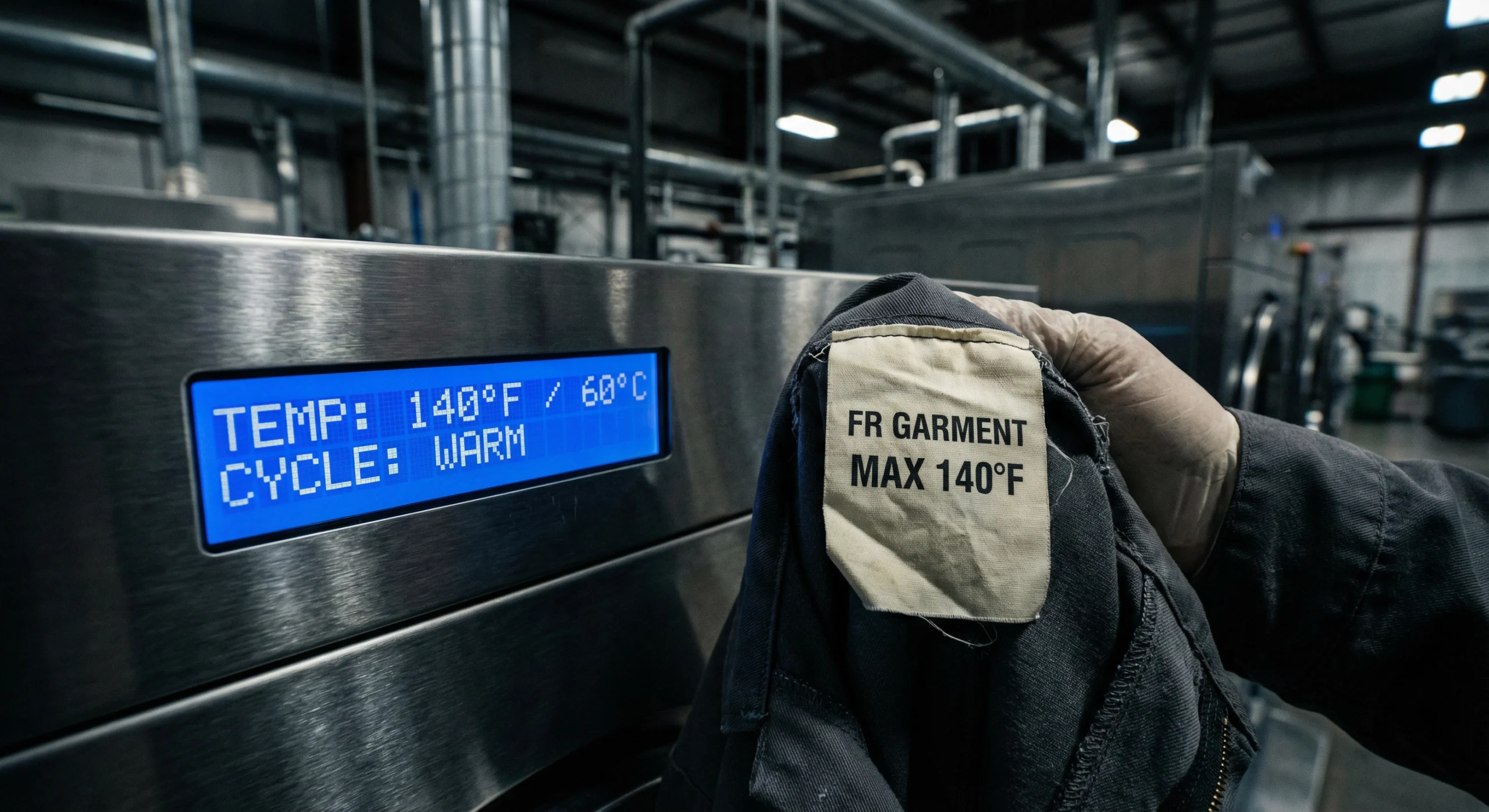
If you manage mixed FR garments and need a conservative baseline, many real-world care instructions cluster around warm washing at or below 60°C / 140°F, but you should always confirm your specific garment label.
Safety note: Always follow the garment care label and your workplace safety program.
Quick links:
- /fr-clothing-care/
- /best-detergent-for-fr-clothing/
- /hard-water-fr-clothing/
- /when-to-replace-fr-clothing/
- /ppe-decontamination-retirement-guide/
1) The “strictest label wins” rule
If your gear includes:
- lined FR garments
- FR + hi-vis reflective trim
- denim blends, knit base layers, or rainwear
…use the strictest temperature limit among the garment’s components and brand instructions.
2) Safe baseline temperatures (common patterns)
Here are common patterns seen in manufacturer guidance:
- Many brands recommend warm washing, with upper limits around 60°C / 140°F for certain items.
- Some FR instructions allow warmer water for heavy soil, but still place clear caps and strict “do not use” additive lists.
3) Label examples (so you can compare)
Examples you’ll find in the market:
- Some Carhartt FR guidance lists wash-warm limits like 160°F / 70°C (unlined) and 140°F / 60°C (lined), with strict restrictions on additives.
- LAPCO’s product care lists multiple FR fabric systems with limits such as 122°F / 50°C for certain cotton blends, and 140°F / 60°C as a common recommended wash temperature for some blends (with higher temps sometimes mentioned for heavy stains, depending on fabric line).
These examples show why you must check the specific label: “FR” isn’t one single fabric.
4) Shrinkage + fit: temperature is only half the story
Even at “allowed” temperatures, Fr clothing shrinkage usually comes from:
- hot drying
- over-drying
- repeated high-heat cycles
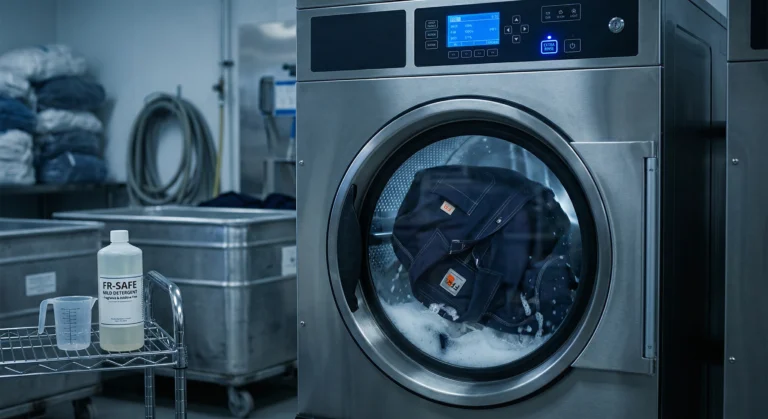
A conservative approach is warm wash (label-approved) + low heat drying + remove promptly.
5) Don’t “fix cleaning” by increasing temperature too far
If garments still look/smell dirty:
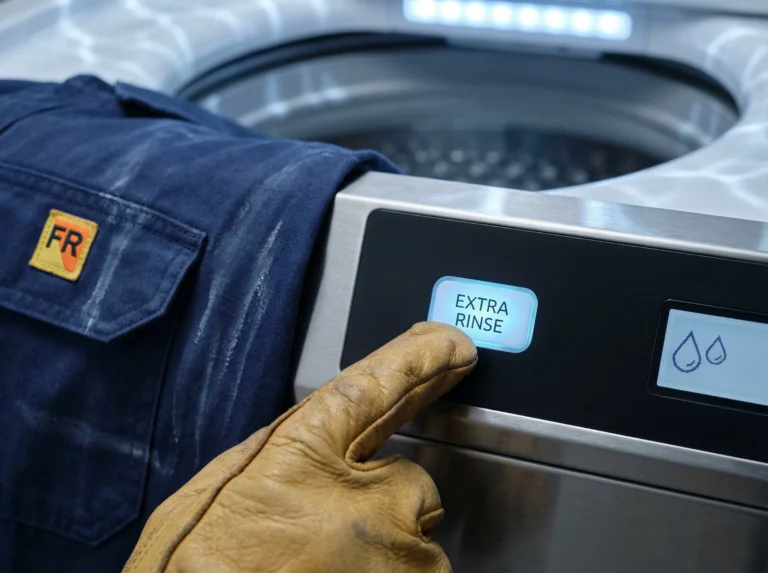
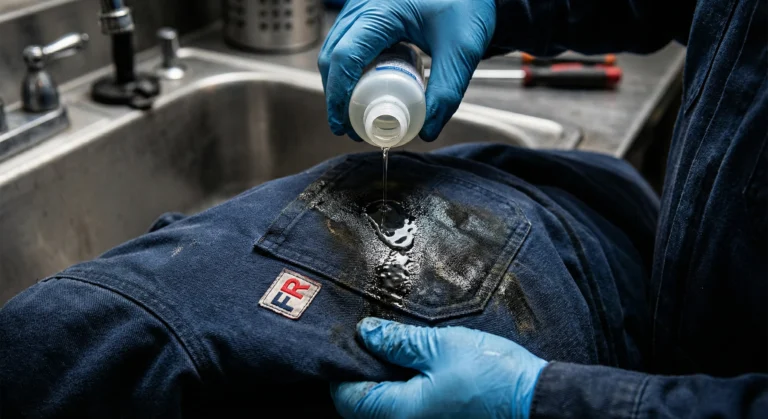
- improve process first (wash separately, inside-out, pre-treat with detergent, extra rinse)
- then adjust temperature only within label limits
This is especially important if the soil is petroleum-based (fuel/grease), because contamination is also a safety issue, not just a cleanliness issue.