
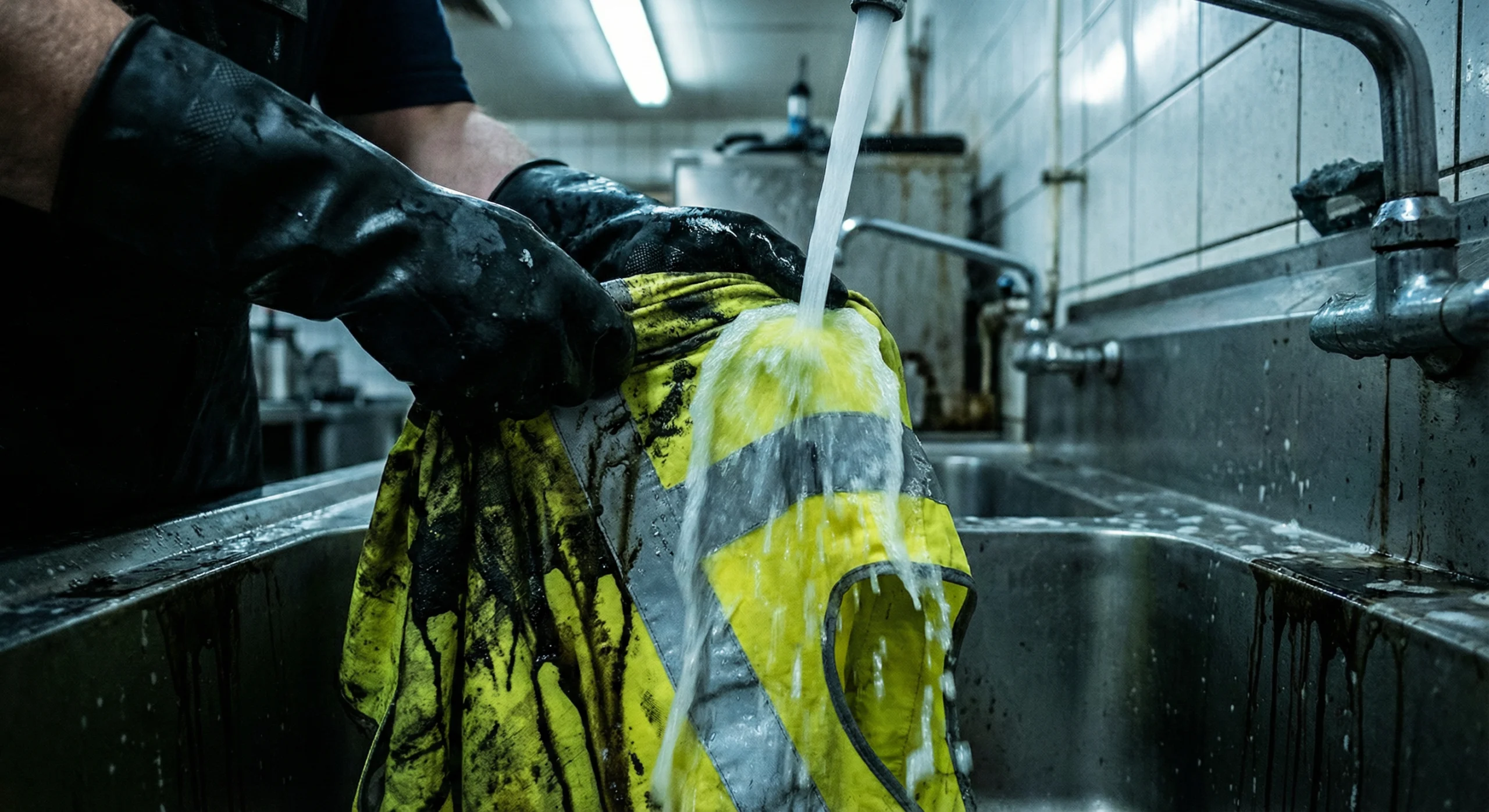
How to Wash Hi‑Vis Workwear in Oil & Grease Jobs (Without Killing Reflectivity)
If you work around oil mist, diesel grime, asphalt, or heavy industrial soils, and want to wash hi-vis oil grease film that reduces daytime brightness and can reduce nighttime reflectivity.
The safest approach is to increase cleaning effectiveness through process and rinsing, not harsh chemistry.
Safety note: Always follow the garment care label and your workplace safety program.
Quick links:
- Hi-vis hub: /hi-vis-reflective-care/
- /reflective-tape-peeling-cracking/
- /wash-fr-hi-vis-workwear/
- Safety: /ppe-decontamination-retirement-guide/
If you work around oil mist, diesel grime, asphalt, or heavy industrial soils, your hi‑vis gear can develop a film that reduces daytime brightness and can reduce nighttime reflectivity.
The safest approach is to increase cleaning effectiveness through process and rinsing, not harsh chemistry.
1) Why oily grime is a visibility problem (not just “dirt”)
Reflective trim manufacturers warn that exposure to contaminants can decrease retroreflectivity and that contaminated reflective apparel should be promptly cleaned according to care instructions.
Also Read: visibility is reduced—replace hi-vis gear
2) Safe wash routine (hi-vis + heavy soil)
Step 1: Pre-check and separate
- Wash hi-vis separately from heavily oily rags/cleanup cloths.
- Close Velcro/zippers to reduce abrasion.
Step 2: Turn inside out
- Protects reflective face from rubbing.
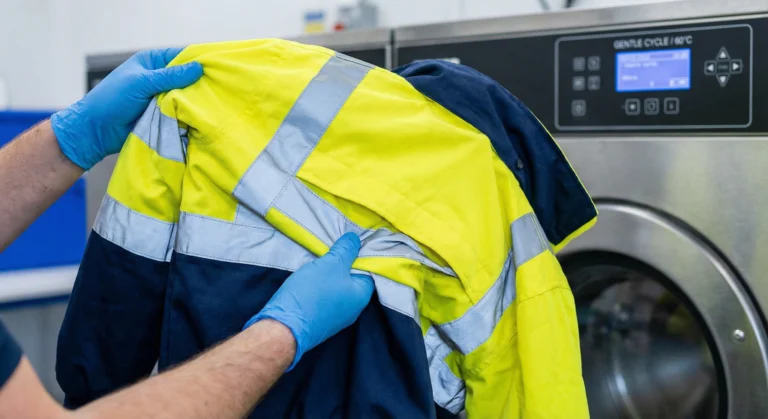
Step 3: Moderate temperature + normal detergent
- A common home-wash guideline for reflective fabrics is moderate temperatures (often up to 60°C / 140°F) with consumer detergent.
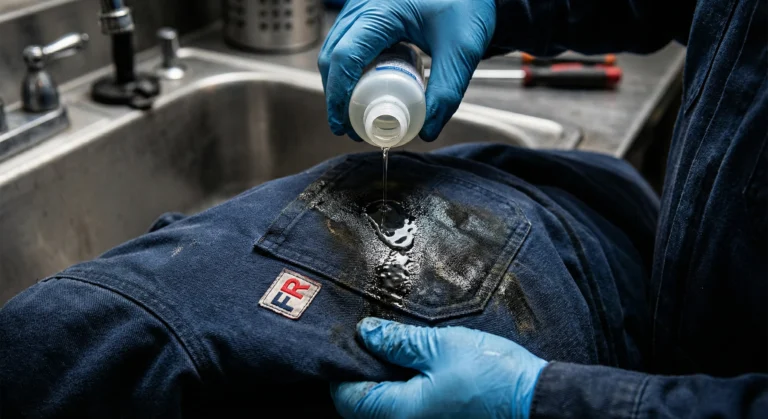
Step 4: Skip harsh stain removers
- Some reflective trim guidance warns against high-alkaline stain removal products.
Step 5: Extra rinse
- Helps remove detergent film and soils.
Step 6: Dry conservatively
- Keep dryer heat low or air dry. High temperature drying can shorten garment life.
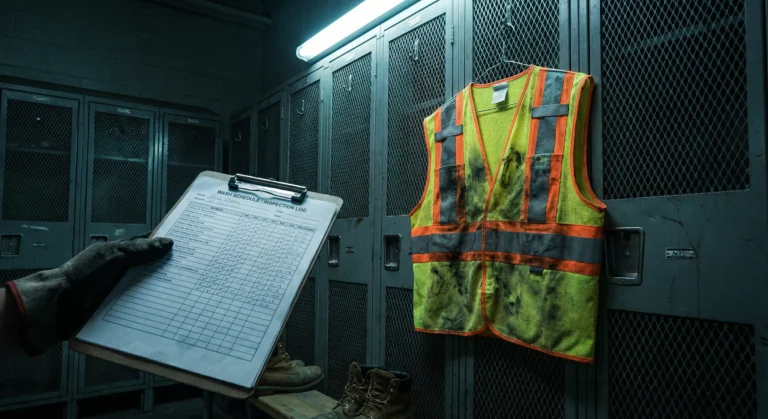
3) Post-wash inspection (30 seconds)
Look for:
- peeling edges
- cracking
- dull/gray reflective look
- fabric fading
If reflectivity looks noticeably reduced at night, replacement is often the safest choice.
4) Dryer safety note for oil-soiled items
If anything is heavily contaminated with oils, heat can create fire risk. Treat heavily oil-soiled items as a safety issue, and avoid heat-drying if oily residue remains.


One Comment