
Best Wash Temperature for FR Clothing (Safe Defaults + Label Examples)
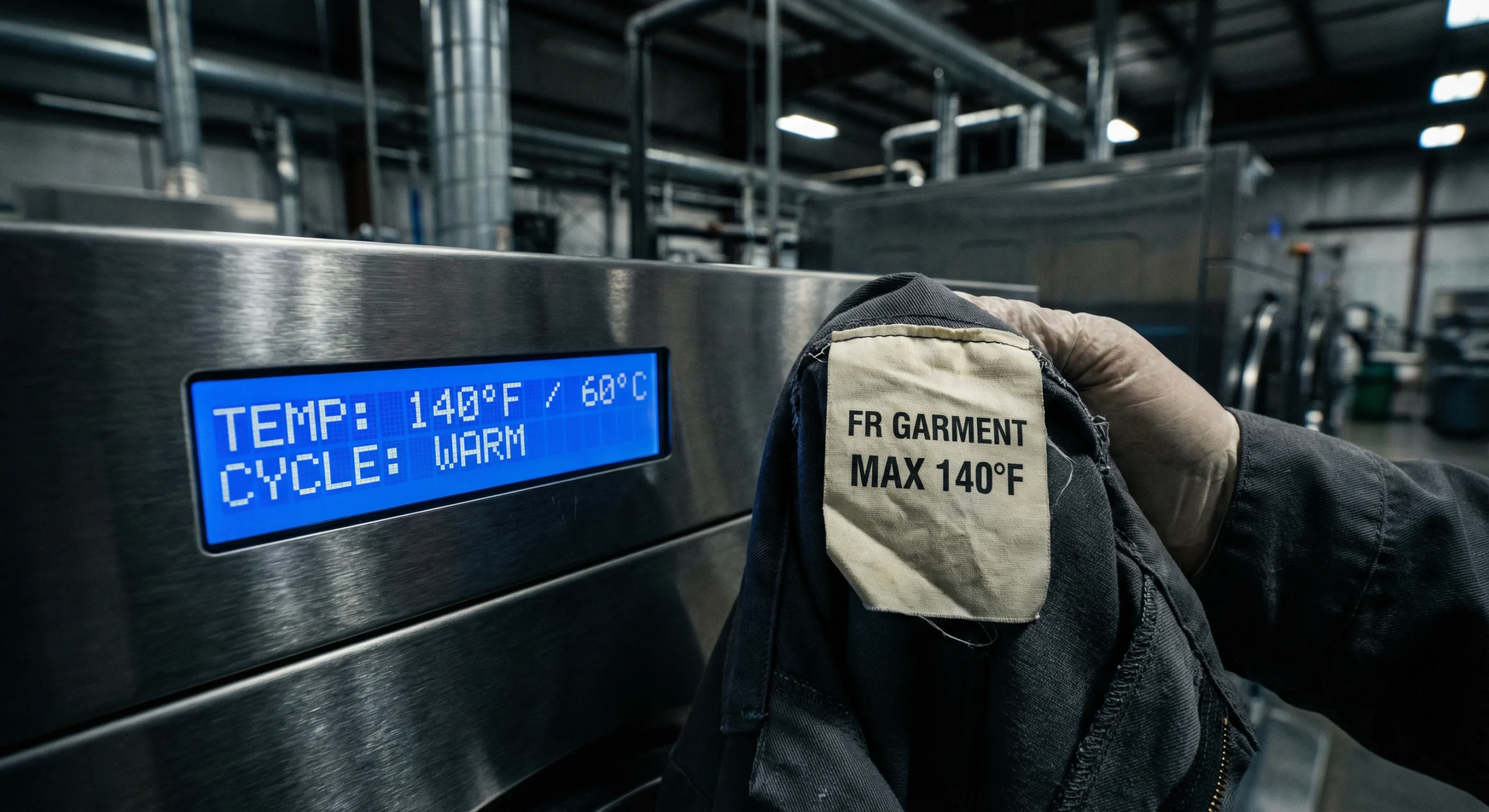
The best wash temperature for FR (flame-resistant) or arc-rated workwear is the temperature your care label allows—because different FR fabrics and components (linings, trims, threads) have different limits.
If you manage mixed FR garments and need a conservative baseline, many real-world care instructions cluster around warm washing at or below 60°C / 140°F, but you should always confirm your specific garment label.
Safety note: Always follow the garment care label and your workplace safety program.
Quick links:
- /fr-clothing-care/
- /best-detergent-for-fr-clothing/
- /hard-water-fr-clothing/
- /when-to-replace-fr-clothing/
- /ppe-decontamination-retirement-guide/
1) The “strictest label wins” rule
If your gear includes:
- lined FR garments
- FR + hi-vis reflective trim
- denim blends, knit base layers, or rainwear
…use the strictest temperature limit among the garment’s components and brand instructions.
The standards behind those labels agree on this point: both NFPA 2112 (flash fire) and NFPA 70E (arc flash) expect FR garments to be laundered exactly as the manufacturer instructs — see how NFPA 2112 and NFPA 70E compare on scope and care. For arc-rated garments, the tag is doing double duty: our guide to arc flash label requirements explains what the CAT rating and care symbols printed on it actually mean.
2) Safe baseline temperatures (common patterns)
Here are common patterns seen in manufacturer guidance:
- Many brands recommend warm washing, with upper limits around 60°C / 140°F for certain items.
- Some FR instructions allow warmer water for heavy soil, but still place clear caps and strict “do not use” additive lists.
Why warm, not hot? Two reasons:
- Most FR fabrics are validated by manufacturers around warm-water cycles — pushing past the label’s cap is where shrinkage, seam stress, and trim damage accelerate.
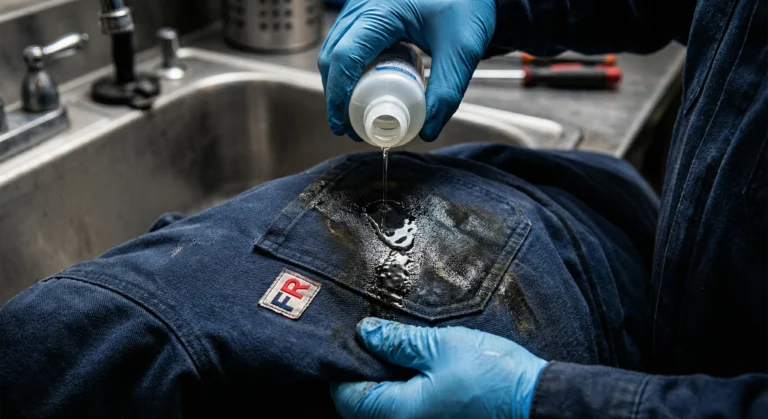
- Hotter water doesn’t automatically mean cleaner — for oily or ground-in soil, a pre-treatment step usually beats a temperature increase.
Is cold water safe for FR clothing?
Yes — if a garment is only lightly worn with no visible soil, a cold or cool wash within label limits is perfectly fine and extends its service life.
3) Label examples (so you can compare)
Examples you’ll find in the market:
- Some Carhartt FR guidance lists wash-warm limits like 160°F / 70°C (unlined), 140°F / 60°C (lined), with strict restrictions on additives.
- LAPCO’s product care lists multiple FR fabric systems with limits such as 122°F / 50°C for certain cotton blends, noting that higher temperatures are sometimes listed for heavier soil — always within the stated cap.
These examples show why you must check the specific label: “FR” isn’t one single fabric.
You’ll also notice arc ratings (CAT 1–CAT 4) printed on many of these labels. Our arc flash PPE categories guide decodes what those ratings mean — useful context, since you’re washing to preserve exactly that protection.
4) Shrinkage + fit: temperature is only half the story
Even at “allowed” temperatures, Fr clothing shrinkage usually comes from:
- hot drying
- over-drying
- repeated high-heat cycles
- A conservative approach — warm wash (label-approved)
- Low-heat drying
- Remove promptly
One more nuance: shrinkage isn’t always immediate. Repeated cycles at the very top of the allowed range can cause gradual shrinkage that only shows up after 20–30 washes — which is why staying comfortably under the cap, not right at it, pays off over a garment’s service life. And remember that tumble drying is usually the bigger lever than wash temperature: even a label-approved warm wash followed by high-heat drying can undo your good work.
5) Don’t “fix cleaning” by increasing temperature too far
If garments still look/smell dirty:
- improve process first (wash separately, inside-out, pre-treat with detergent, extra rinse)
- then adjust temperature only within label limits
This is especially important if the soil is petroleum-based (fuel/grease): oily contamination bonds to fabric and resists normal household wash temperatures, so pre-treat promptly and consider professional or industrial laundering rather than pushing past the label’s temperature cap.
Sources for references
- Carhartt provides FR laundering guidance
- LAPCO detailed product care instructions
- Bulwark’s FR laundry tips
Can I use hot water to sanitize FR clothing?
Stick to the care label — most FR garments top out at warm (around 60°C / 140°F or lower), and exceeding it risks shrinkage and trim damage without reliably sanitizing the fabric. If odor or bacteria is the concern, wash promptly after wear at the warmest label-approved temperature with a full detergent dose, add an extra rinse, and dry the garment fully (damp storage breeds odor). For shared gear or heavy contamination, industrial laundering is the safer route.



8 Comments