How Often To Wash Hi Vis Clothing: A Practical Schedule For Safety And Longevity
How often to wash hi vis clothing depends on one thing: how quickly your job makes it dirty. Dirt and oil reduce visibility, but over-washing can shorten garment life. The goal is a safe middle ground: keep it clean enough to stay visible, without destroying the trim with unnecessary cycles.
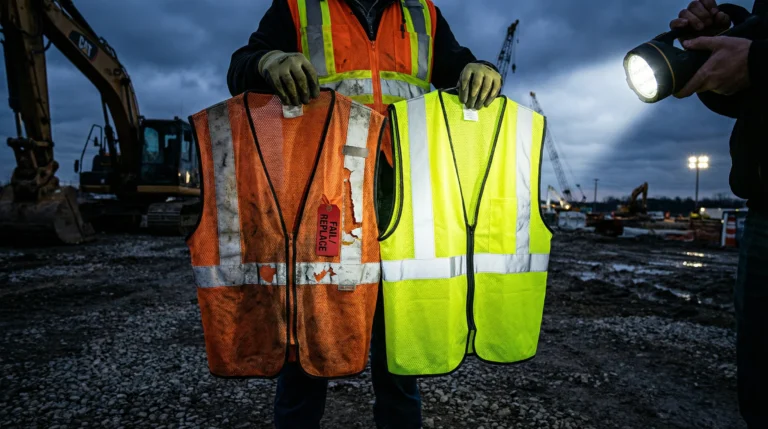
Safety note: Always follow the garment care label and your workplace safety program. Replace hi-vis gear if reflective trim is peeling/cracked or visibility is reduced.
Quick Links:
- /hi-vis-reflective-care/
- /wash-hi-vis-clothing-reflective-tape/
- /best-way-to-dry-hi-vis-clothing/
- /ppe-decontamination-retirement-guide/
How Often To Wash Hi Vis Clothing: The Best Rule Of Thumb
- If it looks dirty, it’s time to clean it.
- If you work around oil/grease/dust daily, clean more often and inspect more often.
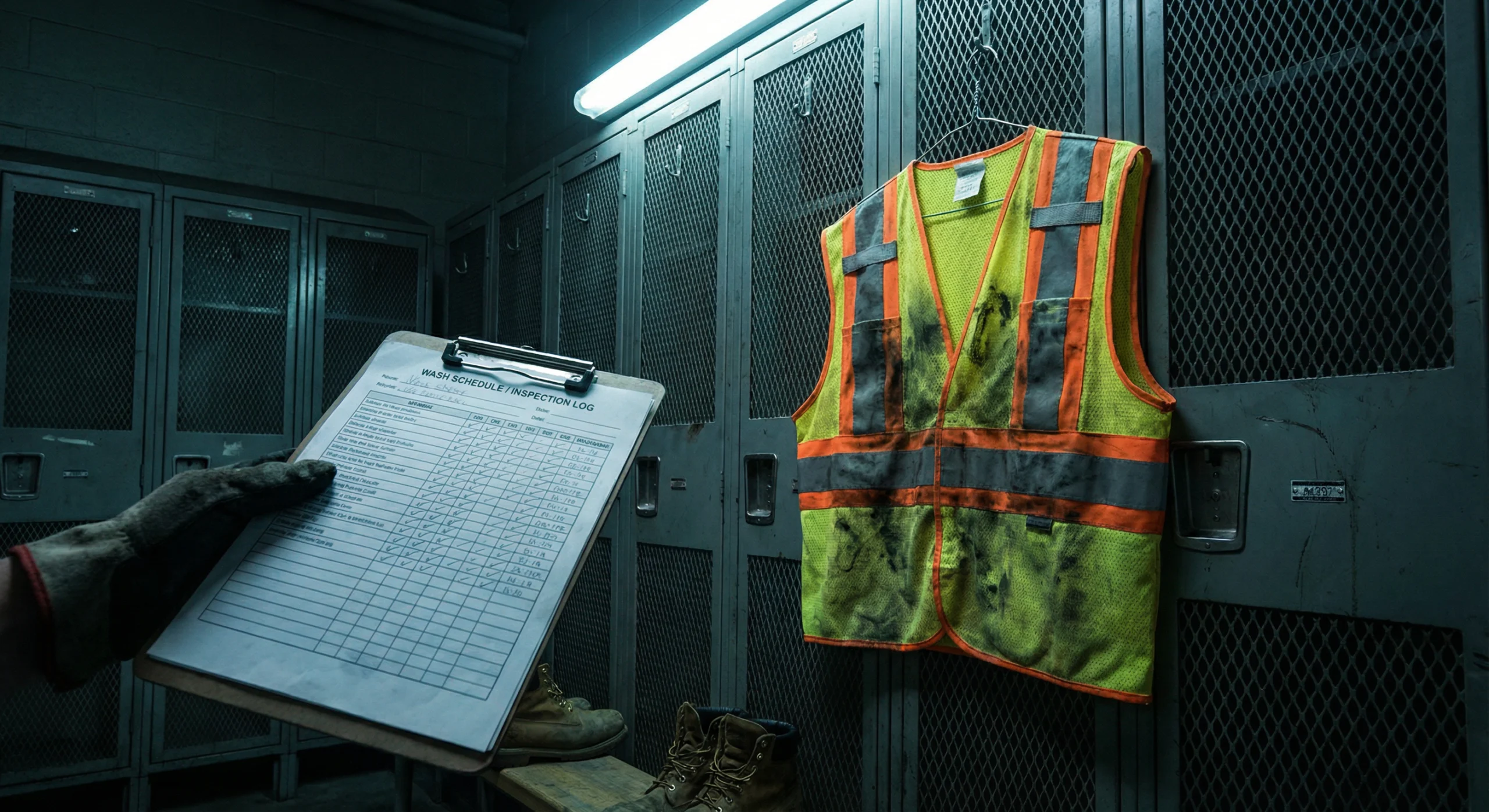
UK HSE guidance emphasizes that high-visibility (HV) clothing must be maintained in a clean state and in good working order—because damaged or ill-fitting clothing won’t protect properly.
Also Read: When To Replace Hi Vis Clothing?
1) How Often To Wash Hi Vis Clothing By Work Type (Practical Schedule)
Use this as a starting point, then adjust to your soil level and label limits.
Light Soil (warehouse, site walking, low grime)
- Spot clean: after shifts as needed
- Full wash: every 1–2 weeks (or sooner if visibly dirty)
Medium Soil (construction, regular outdoor work)
- Spot clean: after each shift
- Full wash: 1–2 times per week depending on dirt level
Heavy Soil / Oil Exposure (road work, rail, utilities, asphalt, oil & gas)
- Spot clean: after each shift
- Full wash: at least weekly, often more frequently if the garment gets oily or grimy
Important: if your hi-vis garment is heavily contaminated with oil/grease, treat drying carefully (avoid high heat if residue remains).
2) “Wash Immediately” Situations (Don’t Wait)
Wash as soon as practical if:
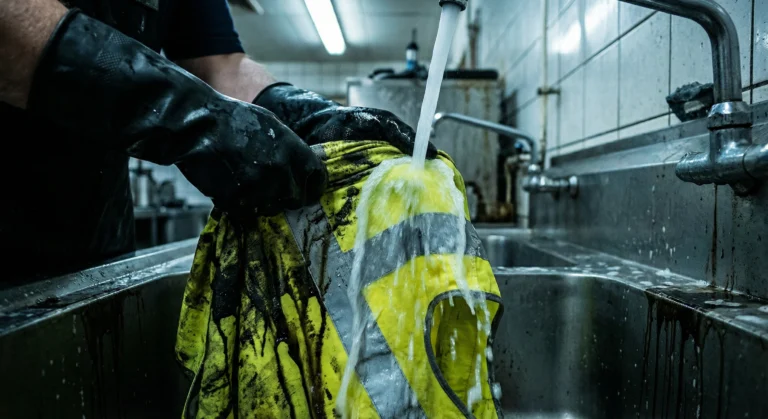
- the garment is visibly soiled with oil/grease film
- reflective trim is coated with grime
- there’s chemical smell or suspicious contamination
- you need it to remain compliant for high-risk environments
HSE’s PPE maintenance guidance notes that hi-vis clothing effectiveness can be significantly reduced if it’s not kept clean, and that hi-vis items must be cleaned regularly so retroreflective strips remain easily identifiable.
Also Read: Can oil and grime can reduce hi-vis visibility?
3) How To Reduce Wash Frequency Without Reducing Safety
- Wipe down dust and light dirt after shifts
- Spot clean small marks early (easier than full washing later)
- Store clean and dry (damp storage destroys fabrics faster)
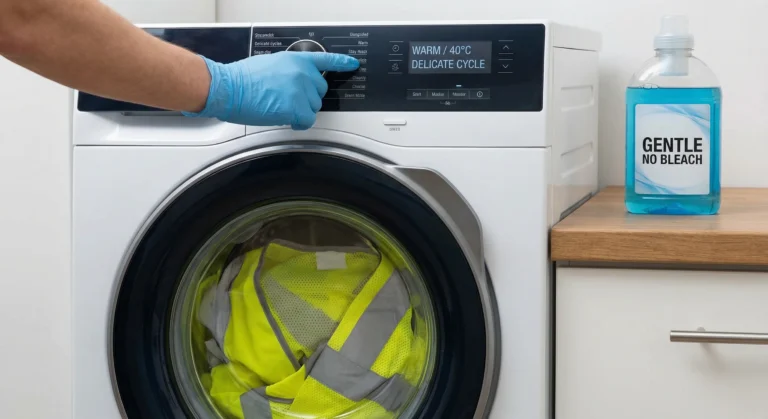
4) Don’t Ignore Wash-Cycle Limits On The Label
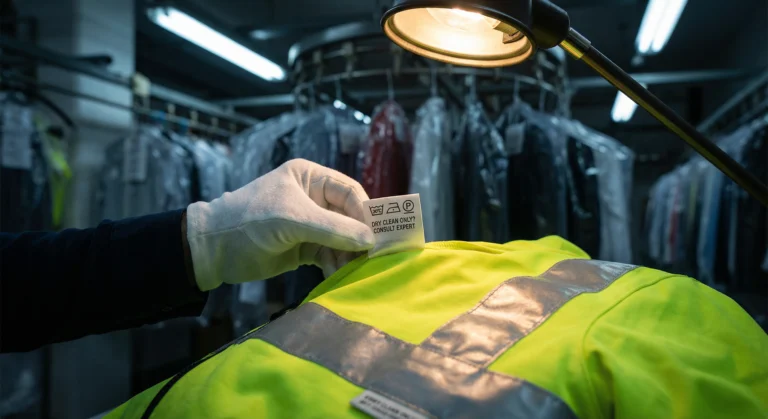
Some hi-vis garments are tested to a defined number of wash cycles for certification. If your label lists a maximum wash count, track it—because reflectivity and fluorescence can decline over time.