
Hi‑Vis Workwear Care: How to Wash Reflective Tape Without Ruining Visibility
Hi-vis workwear is safety equipment you wear. Its whole job is keeping you seen — and good hi-vis workwear care protects the two systems that make that possible: fluorescent fabric that pops in daylight, and reflective tape that bounces headlights back at night. Wash it wrong, and you can strip brightness and crack tape long before the garment itself wears out.
This pillar guide covers the complete label-safe routine: how hi-vis gear works, wash temperature and detergent rules, drying that protects tape, what destroys visibility, a 60-second inspection checklist, when to retire the garment, and storage tips.
How hi-vis gear actually works
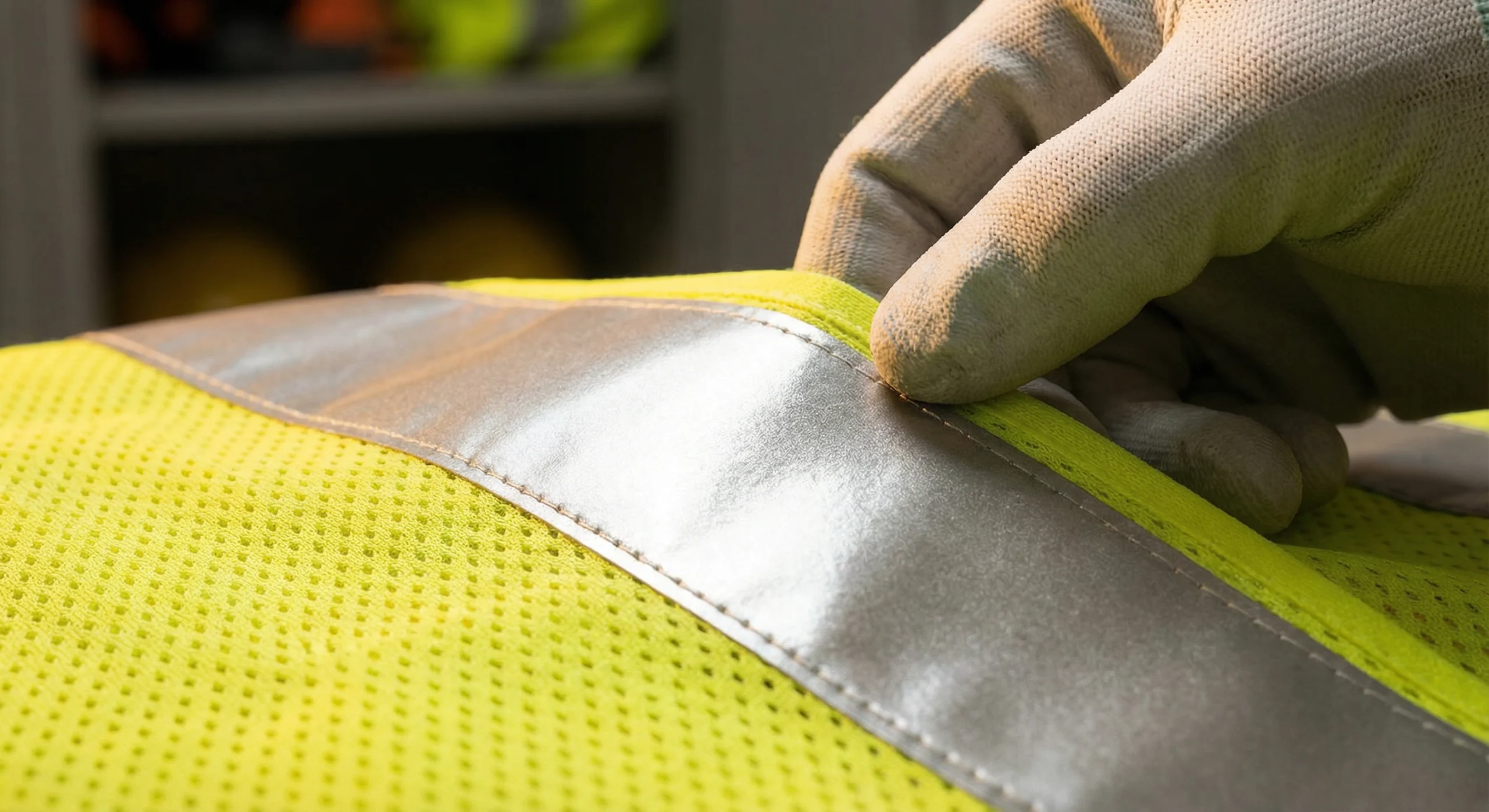
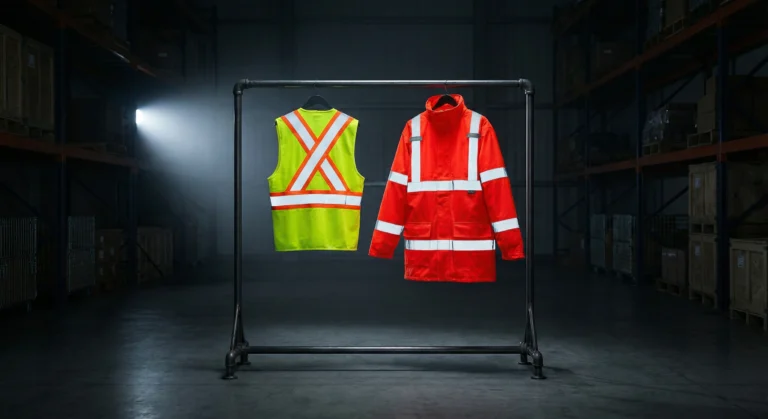
Two systems work together on every hi-vis garment. The fluorescent background fabric absorbs UV light and re-emits it as intense visible color — usually yellow-green, orange-red, or red — so you stand out against any background in daylight. The retroreflective tape contains tiny glass beads or prisms that bounce light from headlights straight back toward the driver, making you glow after dark. Dirt, grease, chemical residue, and abrasion degrade both systems, which is why washing technique matters as much as washing frequency. Most garments are built to standards such as ANSI/ISEA 107, which set minimum brightness and coverage requirements.
The label-safe wash routine
Always start with the garment’s care label — it controls both the warranty and worksite compliance, and garments made of several components (shell, tape, prints, FR treatment) must follow the strictest instruction. When the label gives a range, use this baseline hi-vis workwear care routine.
How do you wash reflective tape?
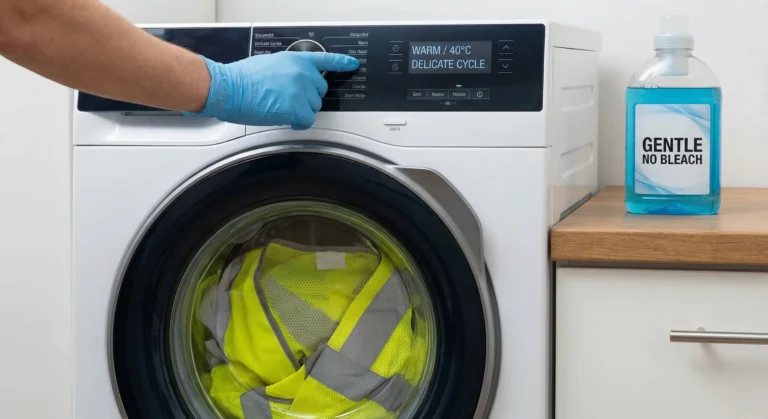
Turn the garment inside out, close all zippers and Velcro, and machine wash cold or warm (30–40°C / 85–105°F) with a mild liquid detergent. Wash hi-vis items separately from rough or greasy loads. Skip bleach and fabric softener, add an extra rinse, and tumble dry low or line dry. Always follow the care label first.
In practice, the routine looks like this:
- Close zippers, snaps, and Velcro, then turn garments inside out so the tape faces away from abrasion.
- Wash hi-vis separately from heavy, oily, or rough-textured workwear — or alone with similar lightweight items.
- Use a mild liquid detergent dosed for a normal load; skip pods with added softeners.
- Wash cold or warm (30–40°C / 85–105°F) unless the label says otherwise.
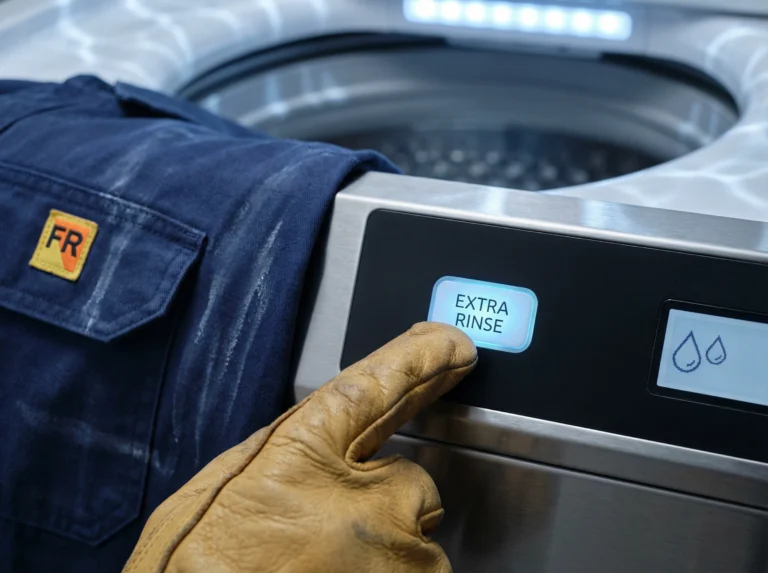
- Run an extra rinse to clear detergent film that can dull tape.
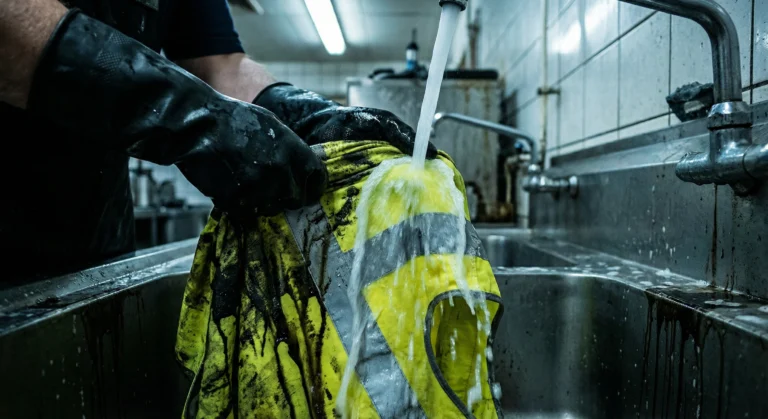
- Pre-treat stains only with a label-safe, non-chlorine product, then rinse well.
- If your garment also carries flame-resistant treatment, follow the stricter routine in our guide to washing hi-vis workwear.
Can you machine wash hi-vis vests?
Yes — most hi-vis vests are designed for machine washing. Turn the vest inside out, fasten closures, and wash it alone or with similar lightweight garments in cold or warm water with mild detergent. Avoid bleach, softener, and high heat, which degrade reflective tape. Check the label for temperature limits before every wash.
Vests are the simplest hi-vis garment to launder because they have no heavy hardware and wash evenly. Wash them whenever they are visibly soiled, and if you run a scheduled laundry program, follow our guidance on how often to wash hi-vis to balance cleanliness with garment life.
What destroys visibility
Normal wear fades hi-vis slowly. These four mistakes destroy it fast:
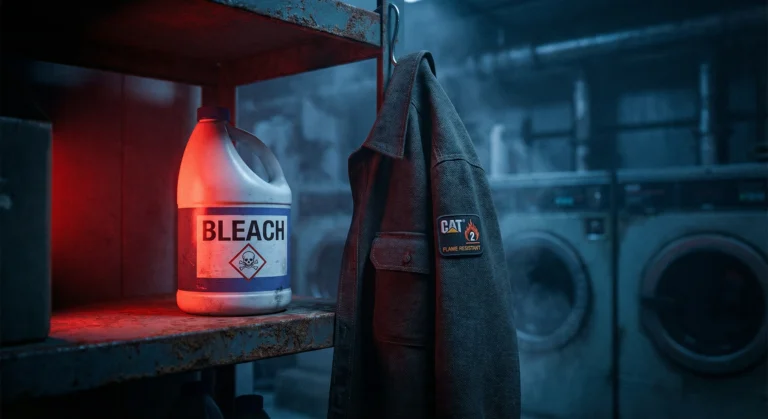
- Chlorine bleach and harsh stain solvents — they dissolve tape adhesive and strip fluorescent dyes.
- Fabric softener and dryer sheets — they coat fibers and tape with residue that dulls reflectivity.
- High heat — hot tumble drying and hot ironing crack tape and fade fluorescent color.
- Abrasion and harsh agitation — washing with heavy workwear or overloading the machine grinds tape edges.
Hi-vis care at a glance
| Care factor | Do | Don’t |
|---|---|---|
| Water temperature | Cold or warm (30–40°C / 85–105°F) | Hot water above the label limit |
| Detergent | Mild liquid detergent, correct dose | Harsh detergents or pods with softener |
| Bleach | Non-chlorine, label-safe stain treatment only | Chlorine bleach or strong solvents |
| Fabric softener | Skip it entirely | Softener or dryer sheets |
| Drying | Tumble dry low or line dry in shade | High heat or over-drying |
| Ironing | Iron fabric only, low heat, never on tape | Ironing directly over reflective tape |
Drying rules that protect reflective tape
Heat is the tape’s worst enemy after harsh chemistry. Tumble dry low or line dry in the shade — prolonged direct sun also fades fluorescent fabric. Remove garments promptly so they don’t bake in a hot drum, and pull them while seams and cuffs still feel faintly warm rather than over-drying. For the full ranked method list, see our guide to drying hi-vis clothing.
60-second inspection checklist
Inspect tape and brightness regularly — most safety programs check gear before each use. Hold the garment under good light, flex the tape gently, and retire or escalate anything that fails this checklist:
- Tape peeling, cracking, or lifting at the edges
- Tape looking gray or noticeably duller than new — compare against a new garment
- Fluorescent fabric faded or uneven in daylight
- Tears, holes, or missing strips reducing coverage on the torso, arms, or legs
- Broken zippers or closures that leave the garment hanging open
- Any sign the garment no longer meets its standard’s visibility requirements
When to retire the garment
Retire hi-vis workwear when reflective tape cracks, peels, or loses brightness; when fluorescent fabric fades significantly; or when the garment no longer meets its visibility requirements. No wash routine restores dead tape — replacement is a safety decision, not a cosmetic one. See our full criteria for when to replace hi-vis, and note that OSHA’s PPE guidance requires protective equipment to be kept in safe, reliable condition.
Storage tips
Storage is the last step of hi-vis workwear care. These habits protect what careful washing preserved:
- Store garments clean and fully dry — trapped moisture breeds mildew that stains fluorescent fabric.
- Hang or fold loosely; don’t crush reflective tape under heavy items.
- Keep gear away from direct sunlight and chemical fumes (solvents, exhaust) during storage.
- Never store hi-vis with dirty, oily gear that can transfer grease to the tape.
Frequently asked questions
How do you wash hi-vis without ruining reflective tape?
Turn garments inside out and wash cold or warm with a mild detergent. Skip bleach, fabric softener, and harsh stain solvents — they attack the tape’s adhesive and dull fluorescent fabric. Tumble dry low or line dry, and never use high heat.
When should hi-vis workwear be replaced?
When reflective tape cracks, peels, or loses brightness, when fluorescent fabric fades significantly, or when the garment no longer meets ANSI/ISEA 107 visibility requirements. Inspect tape and brightness regularly — most safety programs check gear before each use.
Can you use stain remover on hi-vis clothing?
Only a label-safe, non-chlorine stain treatment, applied gently and rinsed well. Harsh solvents and chlorine bleach can dissolve tape adhesive and strip fluorescent dyes, so test any treatment on a hidden area first.


4 Comments