
Reflective Tape Peeling or Cracking? Causes, Prevention, and When to Replace Hi‑Vis Gear
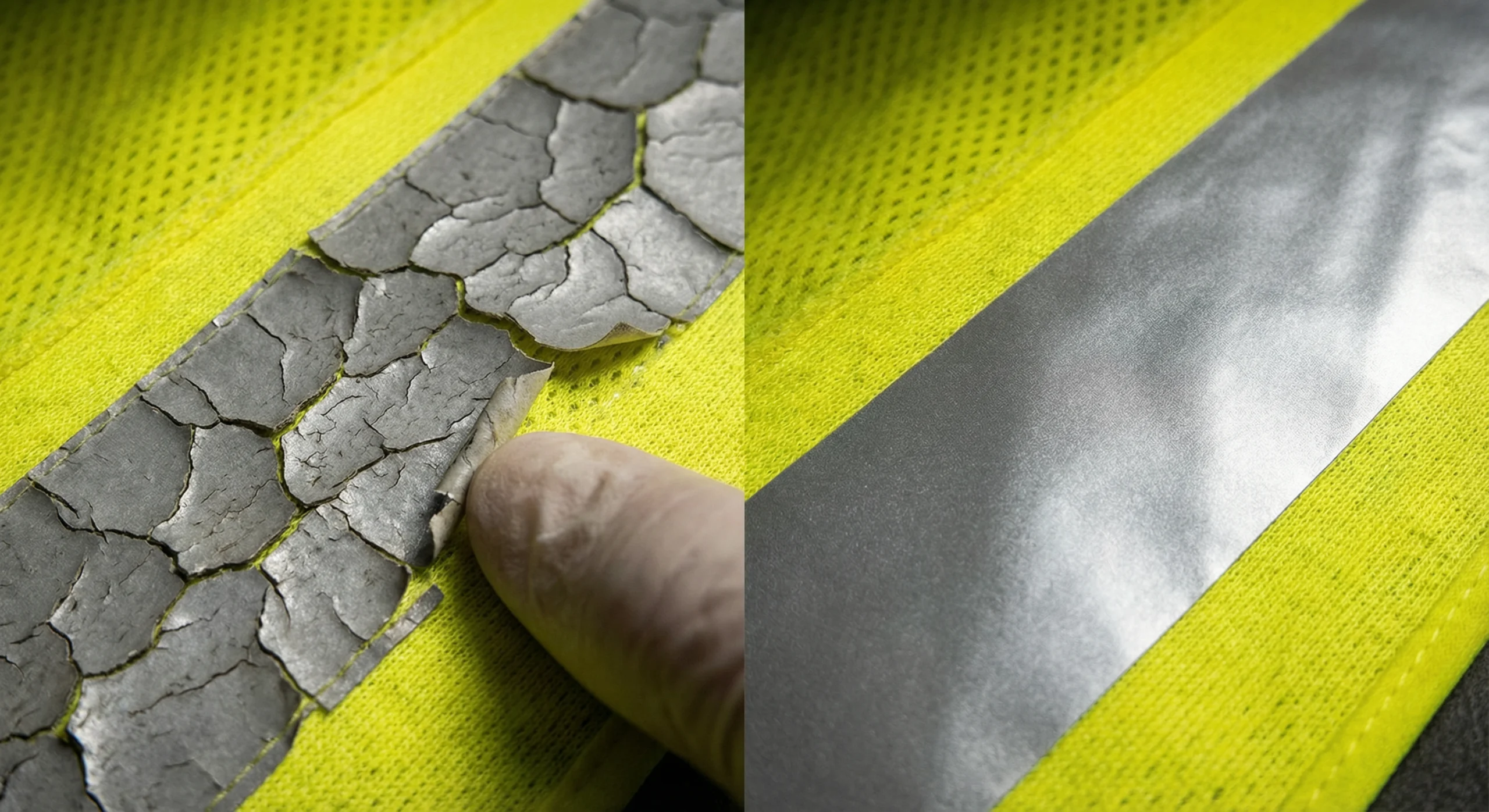
Reflective tape peeling off hi vis clothing is a clear warning sign: the trim that keeps you visible at night is failing. When tape starts peeling, cracking, or turning dull gray, your garment may still “look fine” in daylight—but nighttime visibility can drop sharply. Knowing why reflective tape peels off hi vis clothing helps you stop the damage early, handle minor lift the right way, and recognize when the garment has reached the end of its safe service life.
This article explains:
- Why reflective tape fails
- What you can do to slow damage
- Whether you can re-attach peeling tape
- How to decide when replacement is the safest move
Safety note: Always follow the garment care label and your workplace safety program. Replace hi-vis gear if reflective trim is peeling/cracked or visibility is reduced.
Why does reflective tape peel off hi-vis clothing?
Reflective tape peels off hi-vis clothing when heat, harsh chemistry, or repeated flexing breaks down the adhesive or the trim’s film. High-heat tumble drying softens the bond; bleach, solvents, and high-alkaline stain removers attack it chemically; and constant bending at elbows, knees, and seat creases cracks the trim until the edges lift.
Heat: the #1 tape killer
Heat is the most common reason reflective tape fails. Tumble drying on medium or high heat softens the adhesive behind the trim, while hot ironing and leaving garments in a hot drum after the cycle bakes the damage in. 3M’s reflective fabric technical data sheet warns that high-temperature drying can limit garment life. You will see cracking first, then a hard, brittle feel, then edge lift — follow the best way to dry hi-vis clothing to keep heat away from trim.
Harsh wash chemistry
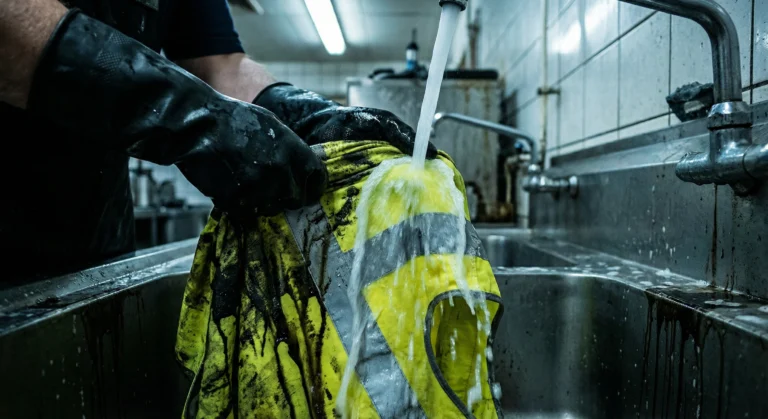
Chlorine bleach, strong stain solvents, and highly alkaline stain removers attack both the adhesive and the reflective film. 3M’s home wash guidance says to use non-chlorine bleach only if bleach is needed at all, and warns against high-alkaline treatments. Fabric softener and dryer sheets are quieter culprits: they coat the tape with residue that dulls reflectivity and loosens adhesion over time. Learn the safe settings in our guide to washing hi-vis without ruining reflective tape.
Age, wash cycles, and flex stress
Reflective tape has a finite life. Repeated wash cycles, UV exposure, and constant bending at stress points — elbows, knees, shoulders, and seat creases — fatigue the film until micro-cracks spread across the trim. Most hi-vis garments are rated for roughly 25 wash cycles, so a vest washed weekly can reach its tape’s limit within about six months of heavy use.
Abrasion from washing and wearing
Washing hi-vis with heavy workwear, overloading the machine, or leaving zippers and Velcro open grinds tape edges with every spin. On the job, rubbing against harnesses, seat belts, and rough surfaces wears the trim thin. Turning garments inside out before every wash is one of the simplest ways to protect reflective tape from abrasion.
Cause → prevention at a glance
| Cause | What it does to the tape | Prevention |
|---|---|---|
| High dryer heat | Softens the adhesive and cracks the reflective film | Tumble dry low or line dry in the shade |
| Chlorine bleach and harsh solvents | Attacks the adhesive bond and the trim’s surface | Use non-chlorine, label-safe stain treatment only |
| High-alkaline stain removers | Accelerates chemical aging of the bond | Skip them, or rinse the area thoroughly |
| Fabric softener and dryer sheets | Coats the tape, dulling it and loosening adhesion | Skip softener entirely |
| Flexing, rubbing, and wash abrasion | Lifts edges and cracks the film at stress points | Turn garments inside out; wash separately |
| UV exposure, age, and wash cycles | Gradually weakens the bond over time | Inspect regularly; retire on condition, not age |
How can you prevent reflective tape from peeling?
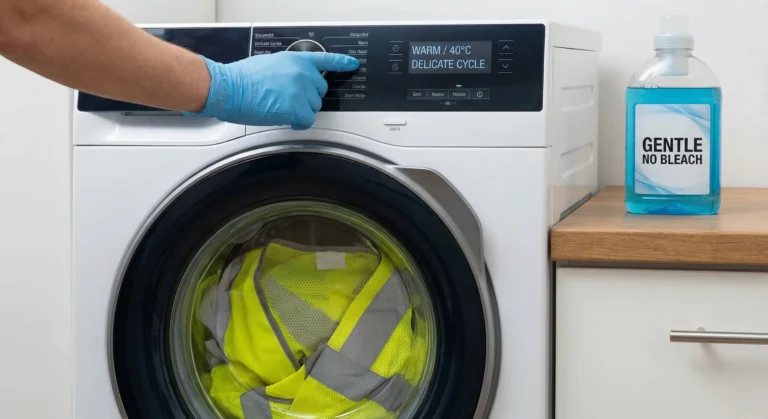
You can prevent reflective tape from peeling by controlling heat and chemistry every time the garment is washed or dried. Turn garments inside out, wash cold or warm (30–40°C / 85–105°F) with a mild detergent, skip bleach and fabric softener, and tumble dry low or line dry in the shade. These four habits remove the causes behind most peeling.
- Turn the garment inside out and fasten all closures before washing — this shields the tape from abrasion. See the full routine in our hi-vis reflective care guide.
- Wash cold or warm with a mild liquid detergent — never hot water above the label limit, and never chlorine bleach. Our guide to washing hi-vis without ruining reflective tape covers the safe settings.
- Skip fabric softener and dryer sheets — they coat reflective tape with residue that dulls it and weakens adhesion.
- Dry with low heat only — air dry or tumble dry low, and remove the garment promptly. Learn the best way to dry hi-vis clothing to keep heat damage away from the trim.
- For FR-rated hi-vis, follow the stricter of the two care routines — see our guide to washing FR and hi-vis workwear together safely.
Can you re-attach peeling reflective tape?
You can sometimes re-seat a small lifted edge of reflective tape, but you cannot reliably restore tape that is cracking across wide areas. A manufacturer-approved re-application is the only safe fix; DIY glue or heat guns can damage the trim further and may violate your worksite’s compliance rules for certified hi-vis garments.
What that means in practice:
- If a tiny edge is lifting on a garment that is otherwise bright, have it repaired by the manufacturer or an approved service — don’t use household adhesives, superglue, or a heat gun.
- Never cover peeling trim with non-certified reflective or silver tape. Improvised patches are not tested to any visibility standard and can create a false sense of safety.
- If the tape is cracking across working areas or looks gray at night, re-attaching won’t restore reflectivity — replacement is the safer move.
When does peeling tape mean it’s time to retire the garment?
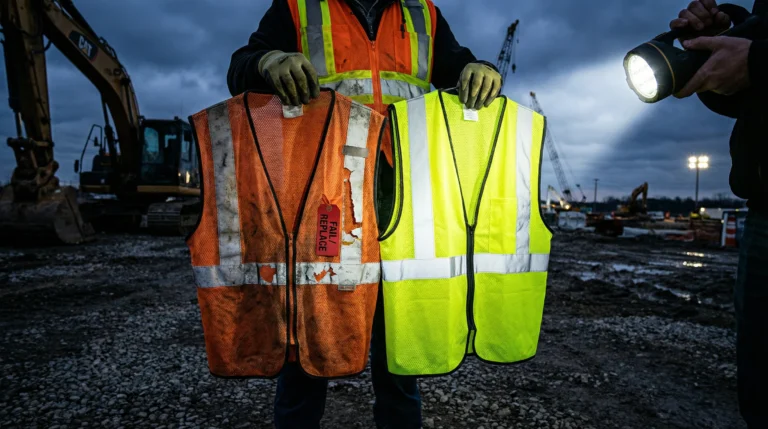
Peeling tape means it’s time to retire the garment when the damage covers working areas rather than a tiny edge, when the tape looks gray or dull under headlights at night, or when the garment no longer meets your site’s visibility expectations. At that point the garment is no longer doing its job as safety equipment — retire it and replace it.
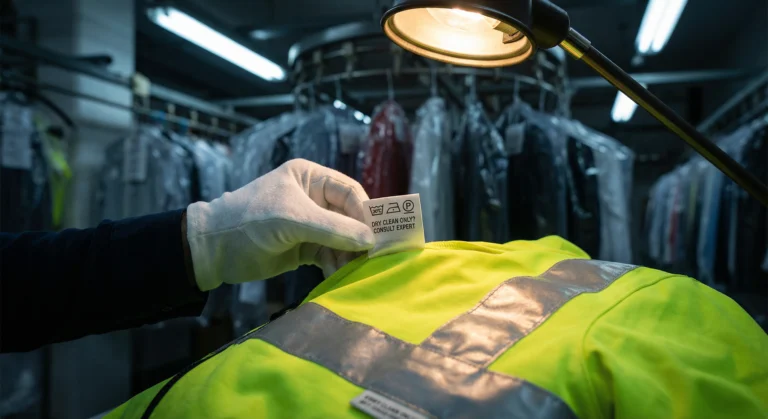
- Inspect tape before each wear: lifting edges, cracks, gray patches, and missing strips all count as failures.
- Test at night: shine a light on the tape — healthy trim flashes back brightly, while degraded tape looks flat and gray.
- Check your employer’s policy: many road, rail, and utility sites require retirement at set inspection intervals regardless of appearance. See the full decision checklist in our guide on when to replace hi-vis clothing.
OSHA’s PPE guidance requires that personal protective equipment be maintained in a clean and reliable condition — damaged or degraded gear no longer counts as compliant protection.
How long should reflective tape on hi-vis clothing last?
Reflective tape on hi-vis clothing should last for roughly 25 wash cycles under label-safe care — about six months of weekly washing. Heat, bleach, and rough handling shorten that life considerably. Retire on condition — peeling, cracking, or dimming — rather than on a calendar date.
Does washing hi-vis in hot water ruin reflective tape?
Yes — washing hi-vis in hot water above the label’s limit accelerates reflective tape damage. Hot water softens the adhesive behind the trim and stresses the film, leading to cracking and edge lift. Wash cold or warm (30–40°C / 85–105°F) unless the care label specifically allows hotter water.
Frequently asked questions
Why is my reflective tape peeling after washing?
Heat and harsh chemistry are the usual culprits. Tumble drying on high heat softens the tape’s adhesive, while bleach, solvents, and high-alkaline stain removers attack the bond. Repeated tumbling also lifts edges. Wash garments inside out in cold or warm water with a mild detergent, skip bleach and softener, and dry low or air dry to stop the peeling.
Can you iron reflective tape back onto hi-vis clothing?
No — never iron directly over reflective tape. Concentrated heat melts and distorts the trim and will not restore a failed adhesive bond. If an edge is lifting on an otherwise sound garment, have the manufacturer or an approved service re-apply certified trim. Improvised heat or glue fixes can void compliance with visibility standards.
Is hi-vis clothing still safe if the reflective tape is cracking?
No — cracked reflective tape no longer returns light reliably, so nighttime visibility drops even when the garment looks fine in daylight. If cracking covers working areas or the tape looks gray under headlights, retire the garment. Damaged gear may also fail site inspections and no longer count as compliant PPE.
Sources
- 3M’s “Scotchlite Reflective Material – Fabric” technical data sheet (home wash guidance for reflective trim)
- 5.11 “NFPA 2112 User Information Guide” (garment care warnings, including fabric softener)


5 Comments