
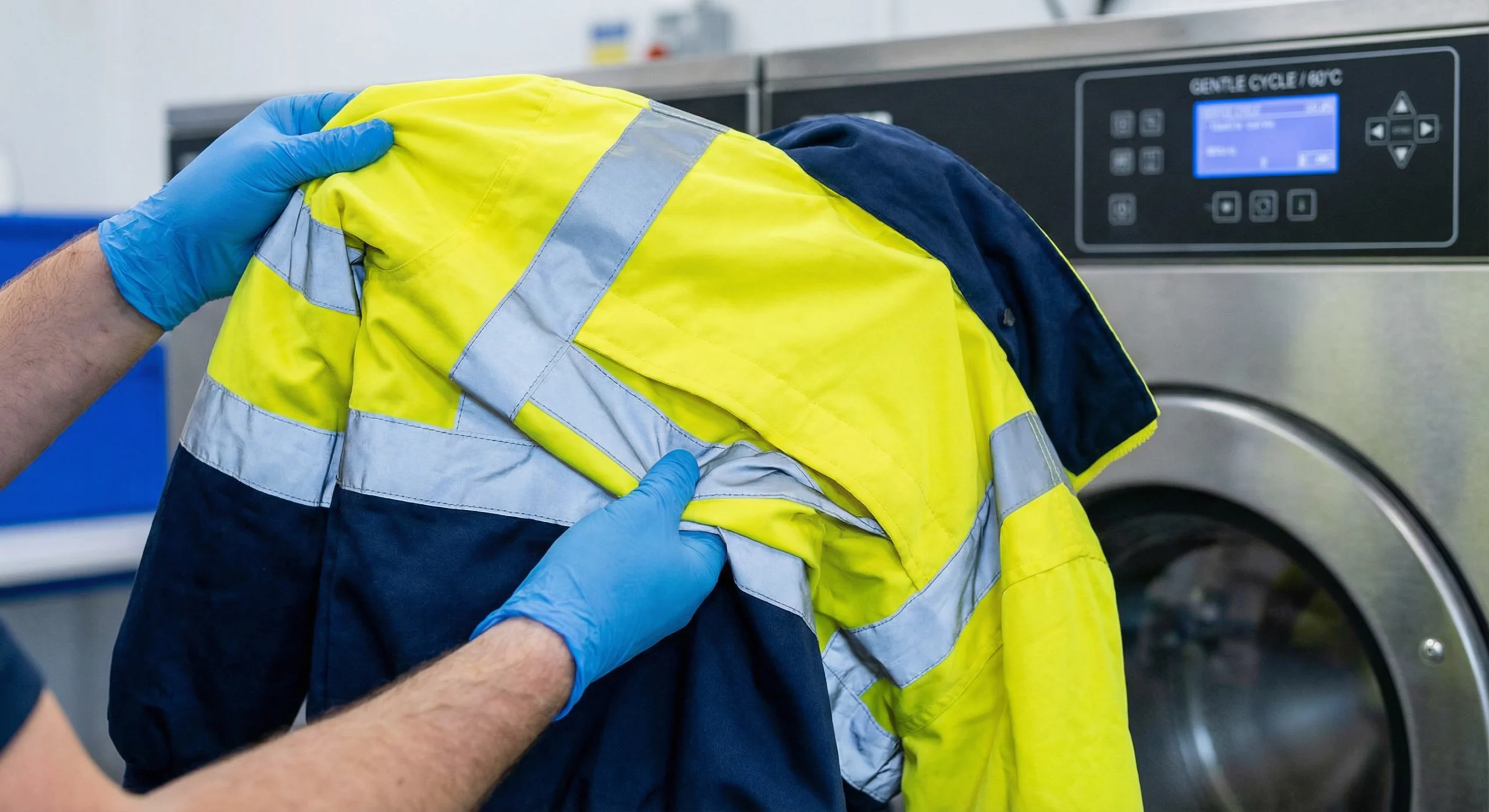
How to Wash FR + Hi‑Vis Workwear (Protect Flame Resistance + Reflective Tape)
FR + hi‑vis garments are common in utilities, oil & gas, rail, and road work. They combine:
- FR/arc-rated fabric (flash fire / arc hazards)
- retroreflective trim (night visibility)
The challenge: what’s “fine” for normal laundry can damage one component or the other. This guide shows a conservative routine based on manufacturer-style rules: FR labels plus reflective trim guidance & NFPA 2112 user-guide warnings.
Safety note: Always follow the garment care label and your workplace safety program. If gear is contaminated with fuel or hazardous chemicals, remove it from service and follow workplace procedures.
Quick Links
-
/fr-clothing-care/ -
/wash-hi-vis-clothing-reflective-tape/ -
/reflective-tape-peeling-cracking/ -
/ppe-decontamination-retirement-guide/
1) The “strictest rule wins” principle
Your garment is a system (fabric + trim + thread + closures). When rules conflict:
- follow the garment care label
- if unclear, follow the strictest compatible rule across components
3M’s reflective trim technical sheet explicitly notes that garment care guidance should consider both the garment fabric and components like retroreflective trim.
Also Read: hi-vis reflective workwear care guide
2) Washing settings (safe baseline)
Temperature
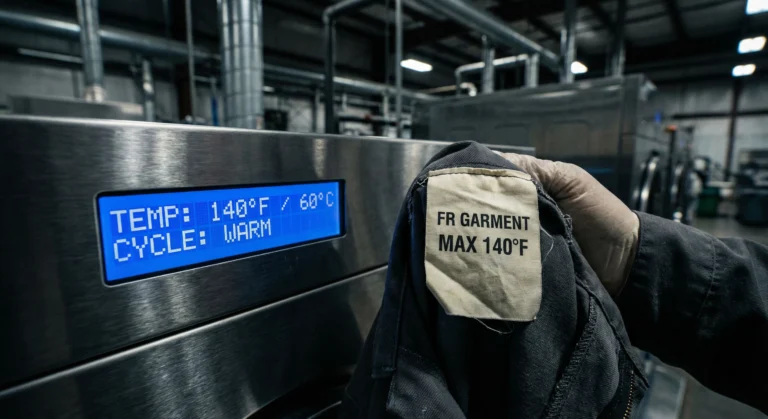
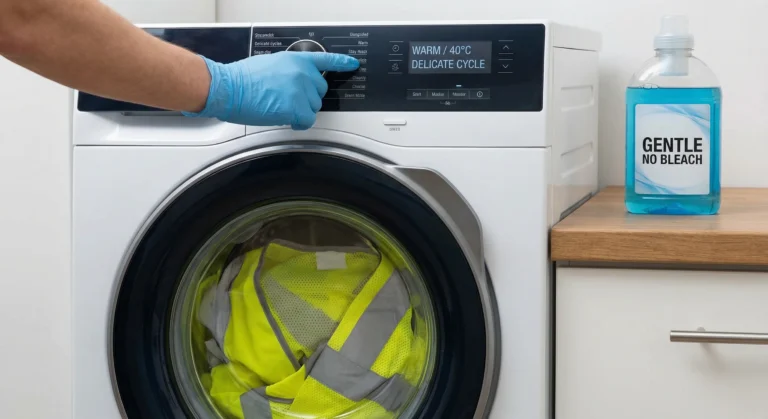
3M’s reflective fabric technical data sheet defines home laundering as using consumer detergent at moderate temperatures up to 60°C / 140°F.
Carhartt’s FR care instructions allow warm washing with caps like:
- up to 160°F / 70°C for unlined FR
- up to 140°F / 60°C for lined FR
Practical baseline: Warm wash at ≤ 60°C / 140°F (if label allows). That’s compatible with reflective trim guidance and lined FR limits.
Cycle + loading
- normal cycle
- don’t overload
- turn inside out
- wash separately from heavy abrasive items
NFPA 2112 user guidance (example: 5.11) recommends washing FR garments inside out and washing separately.
3) Detergent and additives (what to use / avoid)
Detergent
Use a standard consumer detergent unless your employer specifies something else.
Bleach
3M’s guidance: If bleach is needed, use non-chlorine bleach only (and avoid high alkaline stain removers).
But many FR brands prohibit bleach entirely. For example, Ariat’s FR care guidance says bleach must never be used, and explicitly says chlorine bleach and oxygen bleach (hydrogen peroxide) must never be used.
Practical baseline: Don’t use bleach unless your garment label explicitly permits a specific type.
Fabric softener / dryer sheets
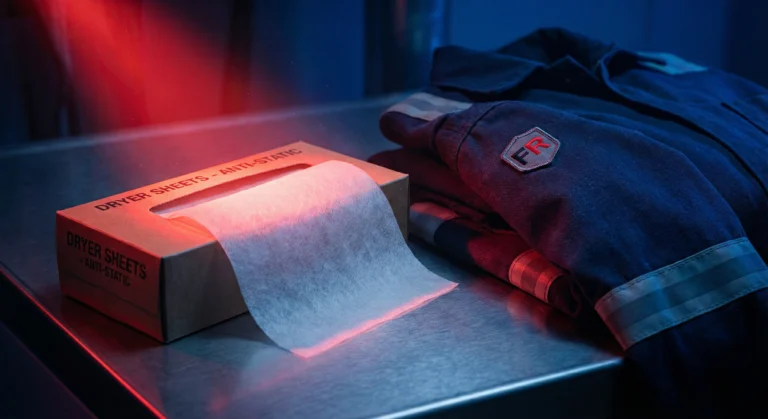
NFPA 2112 user guidance warns not to use fabric softeners (oil based; can contribute to fabric flammability).
Carhartt FR care also prohibits softeners.
4) Drying: the most common “reflective trim killer”
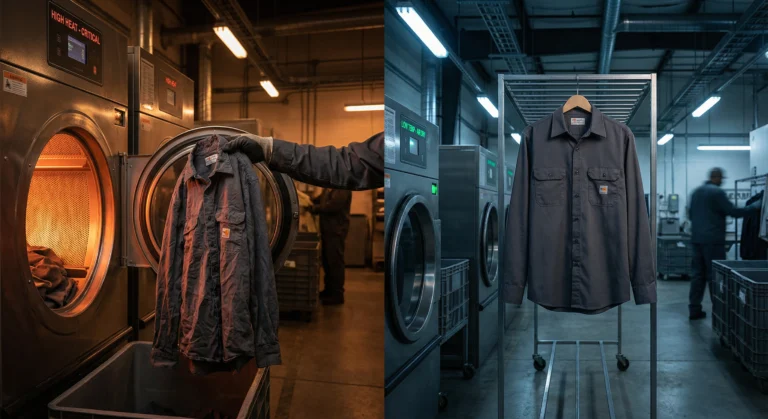
3M warns that tumble drying at high temperatures can limit garment life and should be considered part of the cleaning process.
Some NFPA 2112 user guidance (example: 5.11) goes further and warns not to use automatic dryers if the garment has reflective trim because dryers can damage trim and negate visibility effectiveness.
Practical baseline:
- air dry when possible, or
- tumble dry low and remove promptly (if label allows)
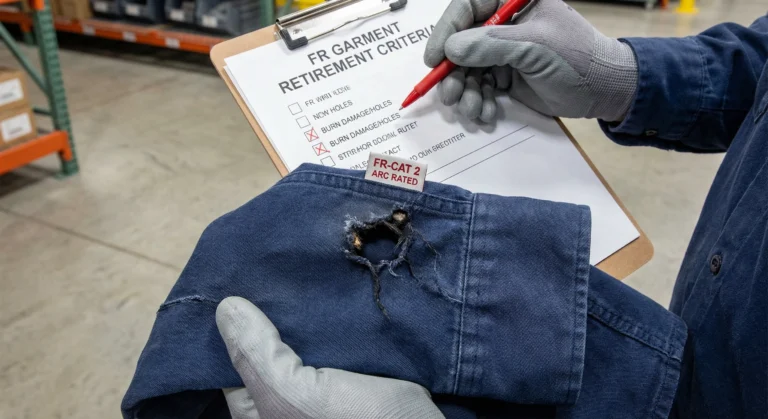
5) After-wash inspection (30 seconds)
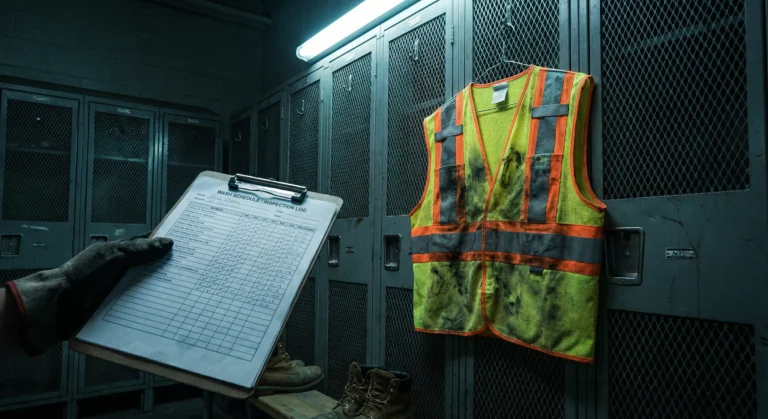
- reflective tape: peeling, cracking, dulling
- seams and closure function
- contamination smell check (fuel/solvent smell is a red flag)
3M notes performance can vary by use/maintenance and that exposure to contaminants may decrease retroreflectivity; reflective apparel exposed to contaminants should be promptly cleaned per care instructions.
FAQ
Can I treat stains aggressively on FR + hi-vis gear?
Be careful. 3M warns high alkaline stain removal treatments should not be used for reflective fabrics.
For FR, harsh chemistry can conflict with brand rules—use label-approved methods only.
What if my garment label allows a hotter wash than 60°C?
Reflective trim may still prefer 60°C for home laundering. If you must prioritize one setting across a mixed uniform load, choose the strictest rule that protects the trim and the lined FR items.
6 Comments